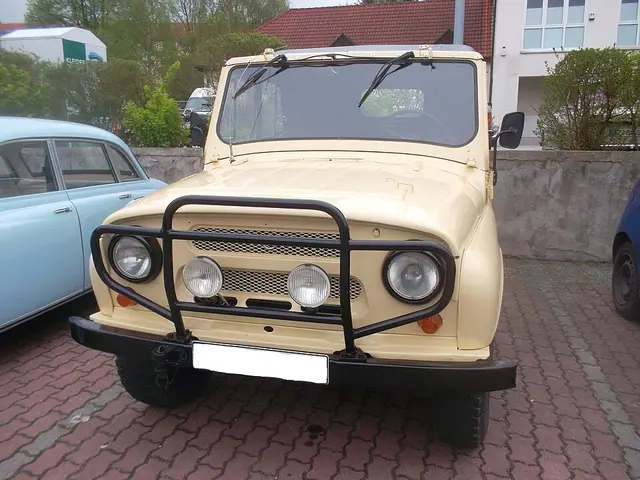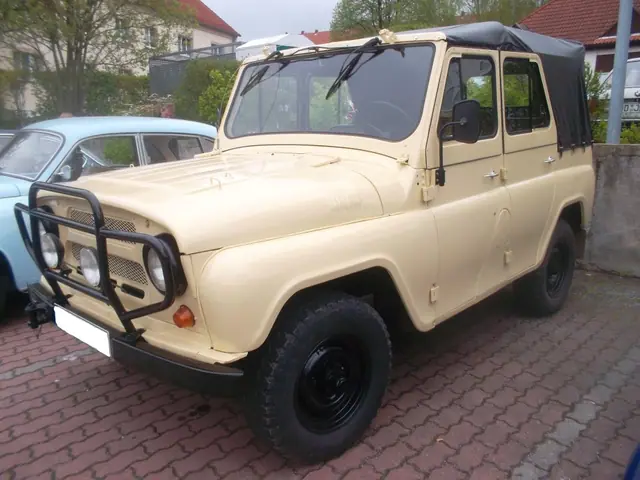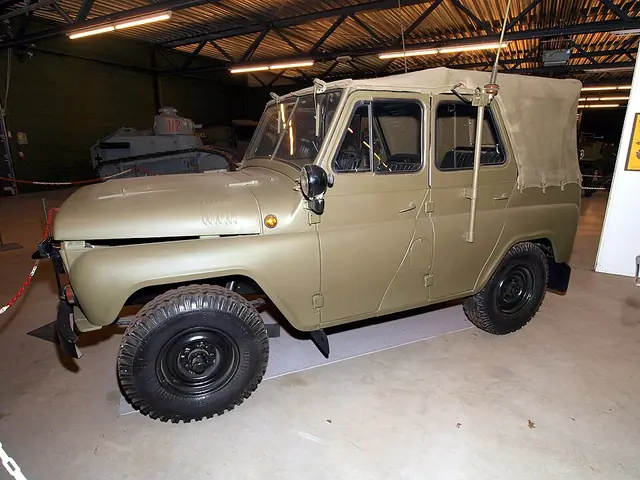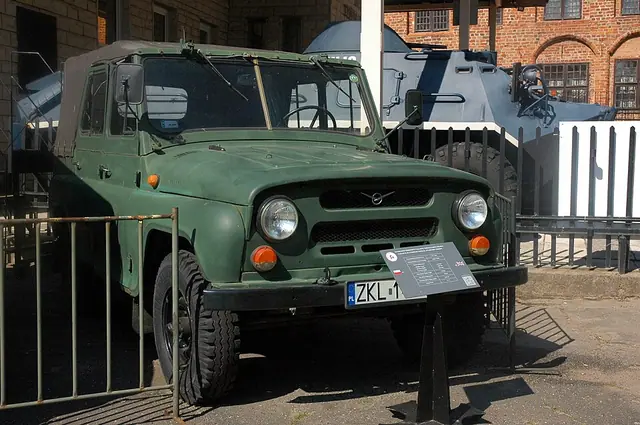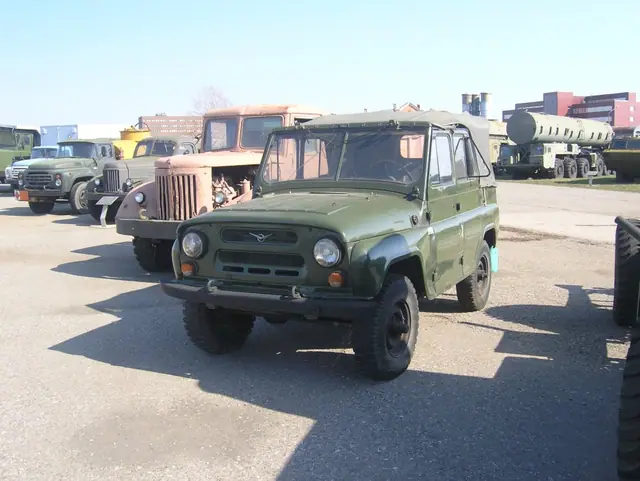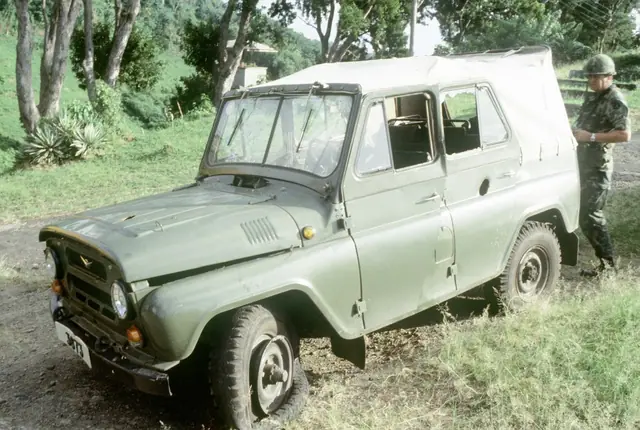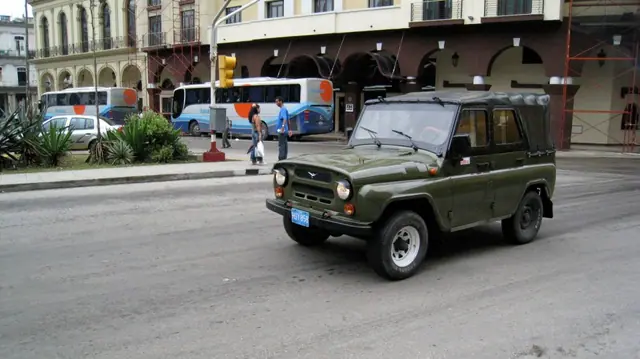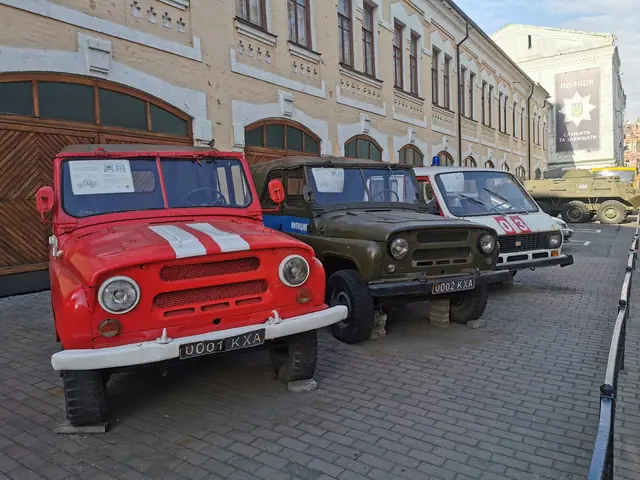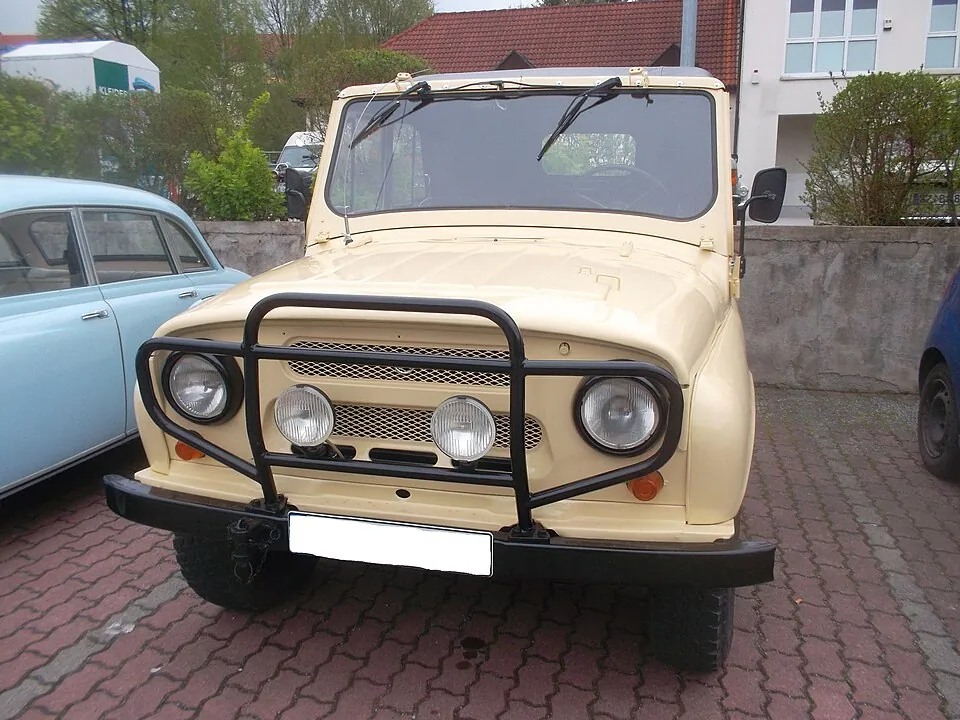
The UAZ-469 was the off-roader of the Warsaw Pact: armies, border guards, police, collective farms and geologists drove it from Cuba to Vietnam, and it is still built today, more than fifty years later, in almost the same shape. It was as simple as a tool, could be repaired at the roadside with a few spanners, and went across country where other cars could not. In 1974 three ordinary UAZs became the first cars to climb Mount Elbrus, to 4,200 m above sea level.
Story
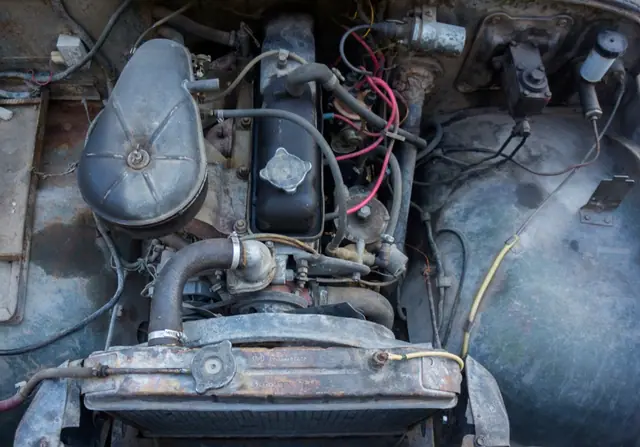
In 1956 the Soviet Army asked the Ulyanovsk plant for a successor to the outdated GAZ-69. The first requirements were ambitious, including an amphibious car with a rear engine, but they were gradually simplified. The first UAZ-460 prototypes, built on the chassis of the UAZ-452 van, had a ground clearance of no less than 400 mm and rolled over easily, and a version with a unitary body was dropped because it would have meant rebuilding the whole factory. The first UAZ-469 was built in 1961, with 300 mm of clearance and the same 2.45 l, 75 PS engine as the UAZ-452 van and the GAZ-21 Volga saloon. The engine could even run on 72-octane petrol, which mattered a great deal in the Soviet Union.
The car was ready, but the state was building the expensive new VAZ plant in Tolyatti and KamAZ at the time, so production started only in 1971, ten years after the first prototype. At first only the military version was built, with hub reduction gears and 300 mm of clearance, and in 1973 the civilian UAZ-469B arrived with 220 mm. It was bought mostly by the army and state agencies, but many were later sold off as surplus to private owners. Because of its looks and the way it bounced along bad roads, it was popularly nicknamed "kozlik" (little goat).
In 1974 three completely standard UAZ-469Bs climbed Mount Elbrus, the highest peak of the Caucasus, and became the first cars to reach 4,200 m. The expedition was led by engineer Aleksei Berberashvili of the high-mountain geophysics institute in Nalchik, and that same day the cars also carried equipment to rescue people stranded on the mountain. The drivers said the engines lost about 40 per cent of their power at that altitude, but not one car broke down.
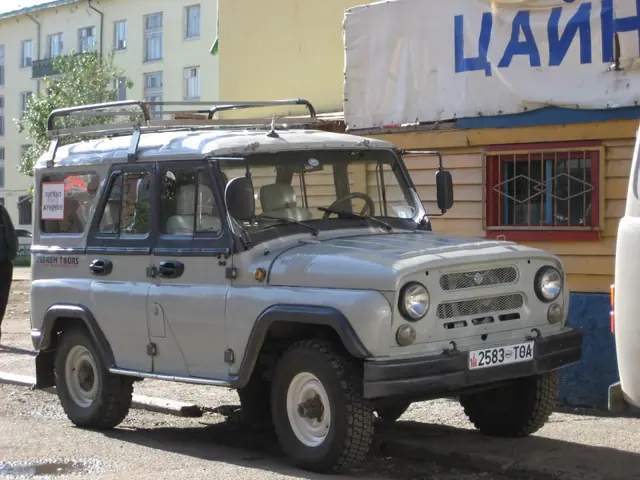
In 1985, under new Soviet designation rules, the models were renamed UAZ-3151 (military) and UAZ-31512 (civilian), and they gained a one-piece windscreen, new lights and dual-circuit brakes. From 1980 a hardtop version was built for the border troops, and in the 1990s civilian versions with a hard top, a long wheelbase and a pickup followed. The UAZ-469 was exported to some eighty countries and took part in almost every war of the second half of the twentieth century, from the Yom Kippur War and Afghanistan to Angola. In Italy the Martorelli company converted it with Peugeot and Fiat engines, and in West Germany it was sold as the UAZ Tundra.
In 2003 the updated hardtop model was renamed the UAZ Hunter, and the military 31512 was built for the Russian Army until 2011. The Hunter was due to be discontinued in 2015, but the factory reversed its decision the very next year. In 2010 the Hunter entered the Guinness Book of Records when 32 people, students of a Moscow circus school, squeezed into it. For the model's 50th birthday in 2022, UAZ built 50 soft-top cars under the original UAZ-469 name. Between 1.65 and 2 million cars of this family have been built in all.