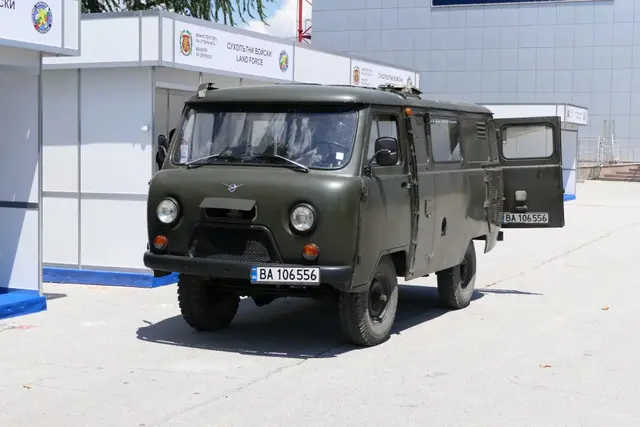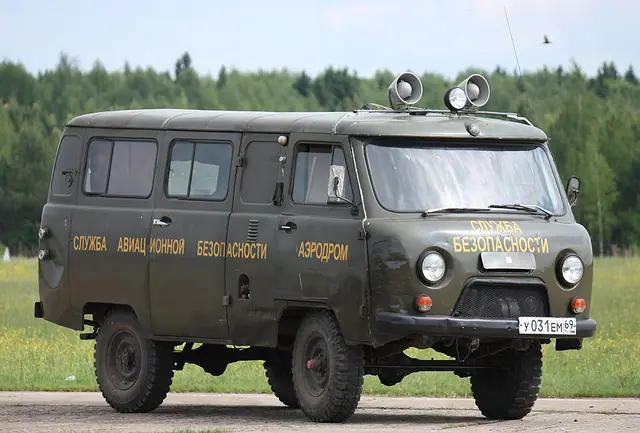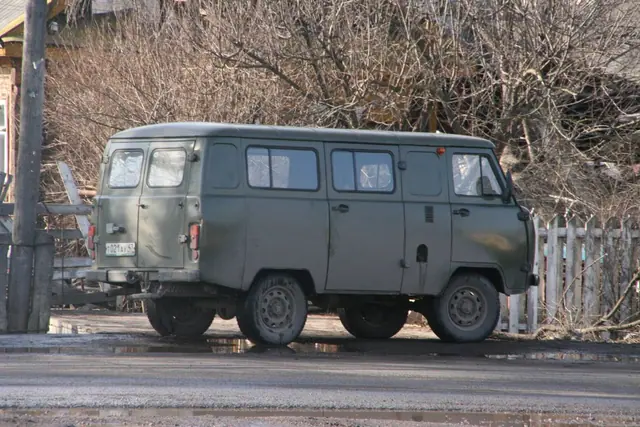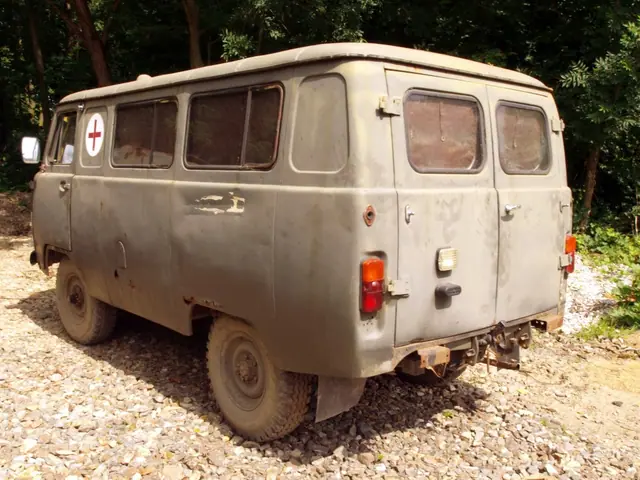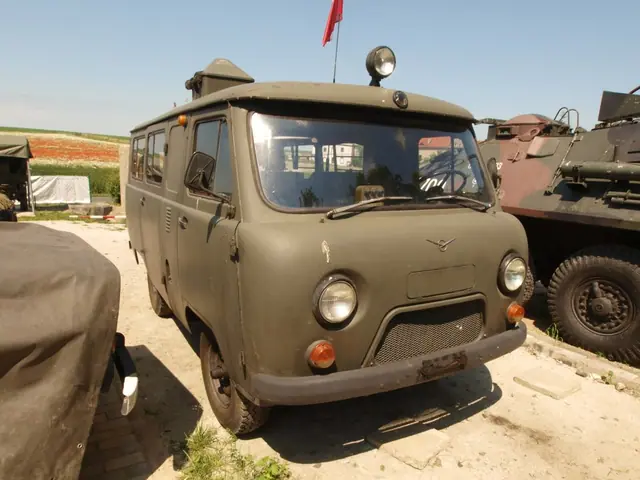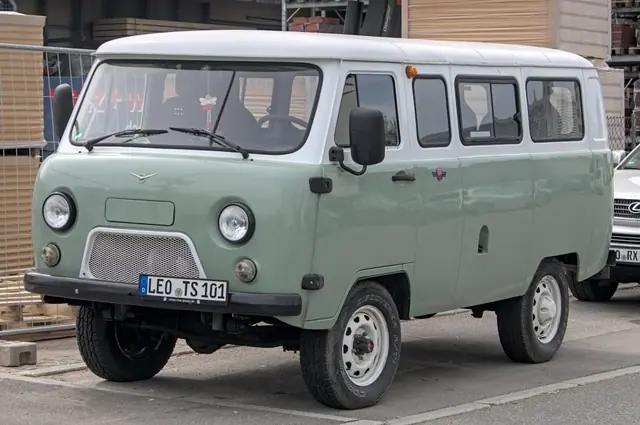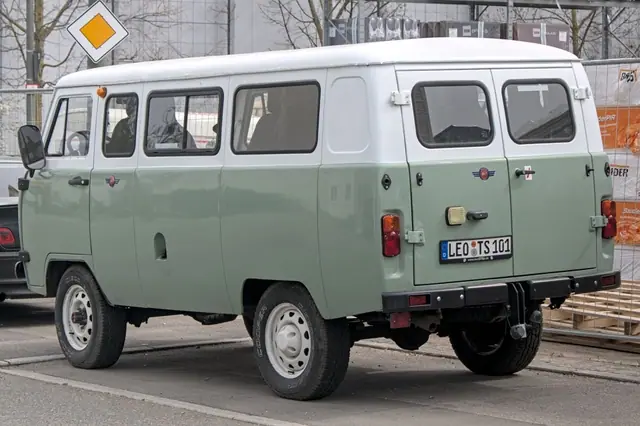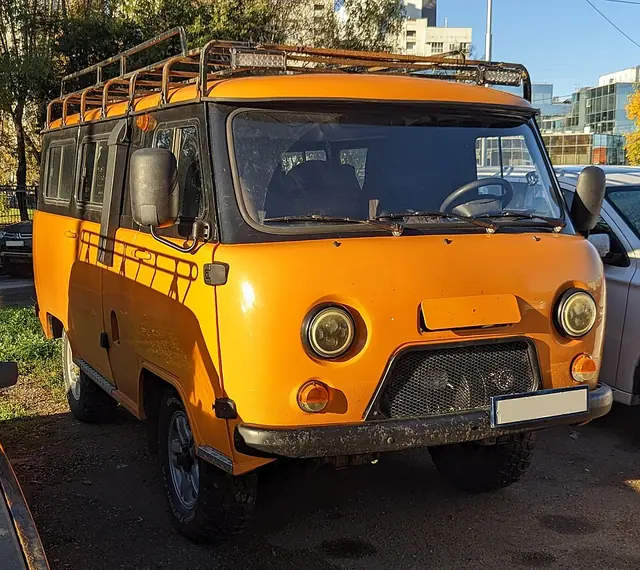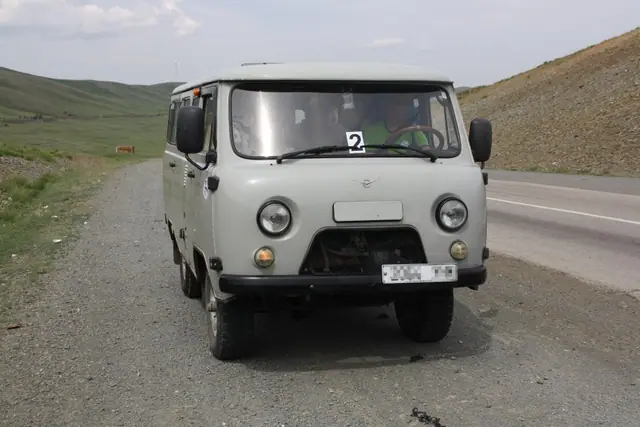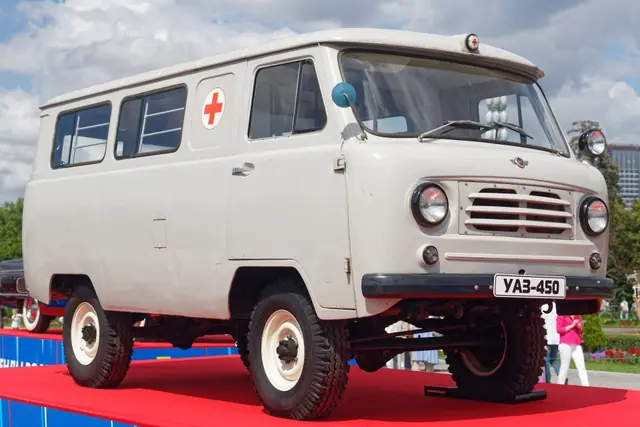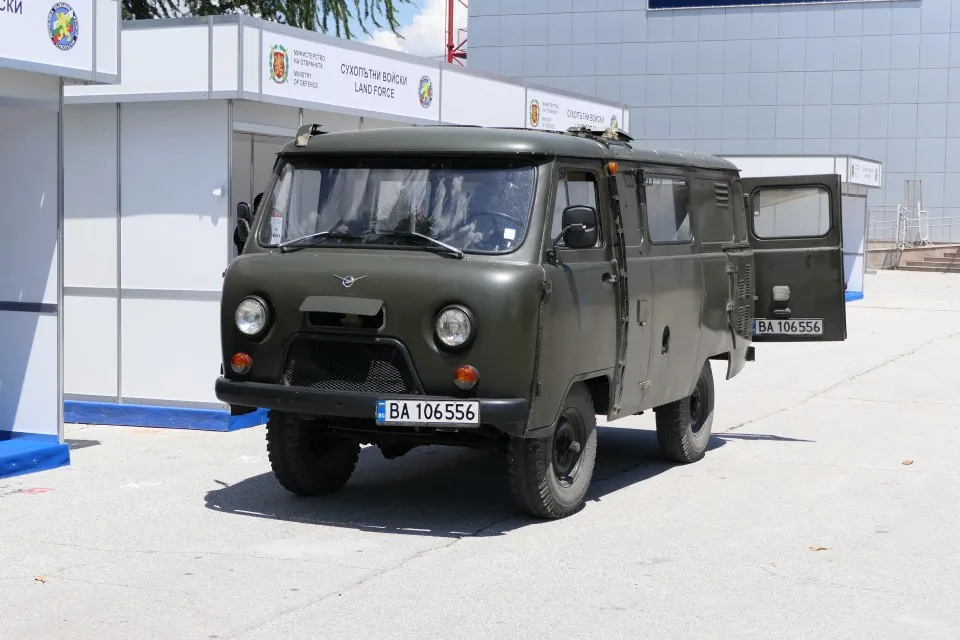
The "Bukhanka" (loaf of bread) is the oldest car design still in production, almost unchanged since 1958. It got its name from a shape that resembles a loaf of rye bread, and in 2026 that became its official name too. As a four-wheel-drive ambulance, which Russians call the "tabletka" (pill), it still reaches villages that no other vehicle can.
Story
In 1954 the Soviet Ministry of the Automotive Industry asked the Ulyanovsk plant for a light off-road cargo vehicle for the army. The chassis and engine of the GAZ-69 off-roader, then being built in Ulyanovsk, served as the basis, and after debates with specialists from the NAMI institute a forward-control layout was chosen, the first of its kind in the Soviet Union. The first prototype was drawn by Vladimir Ariamov, with a large grille and a roof sloping towards the rear, and because of its black-and-white paint it was nicknamed "magpie". It was tested in the Karakum Desert, the Pamirs, Kazakhstan and Oymyakon, the coldest inhabited place on Earth. Evgeny Starostin and Lev Shemarin then made the grille smaller, so it would be easier to build, and straightened the roof so that two tiers of stretchers would fit inside. Shemarin finished the final drawing a few hours before it was due to be sent to Moscow for approval.
The UAZ-450 went into production in 1958 and was shown at the VDNKh exhibition in Moscow in June that year. The first examples had front doors hinged at the rear. It was built as a van, ambulance, minibus and pickup, and was used mostly as an ambulance with room for four stretchers. The engine sat inside the cab between the driver and the passenger, and there were fuel fillers on both sides, because the van had two tanks. After updates between 1960 and 1963 it got an overhead-valve engine from the GAZ-21 Volga, a four-speed gearbox and a new designation, UAZ-452, under which it was built from the mid-1960s. From 1967 there was also the eleven-seat UAZ-452V minibus, which was intended for public transport too but, because too few were built, served the army and state agencies like the others.
Because of its rounded shape the van was popularly called the "bukhanka", a loaf of bread; the ambulance became the "tabletka" and the pickup the "golovastik", tadpole. In 1979 it got amber indicators and rectangular rear lights, and in 1985, under new Soviet designation rules, the family was split into the UAZ-3741 (van), 2206 (minibus), 3962 (ambulance), 3909 (crew van with a table and seats) and 3303 (pickup), with a stronger 99 PS engine and new brakes. After 2000 it got mirrors from the GAZ Gazelle and head restraints, and from 2011 ABS, power steering and seat belts.
The Bukhanka has been built without a break since 1958, longer than any other car in the world. It is simple, with live axles, leaf springs and a separate chassis, and in Russia it is still a common sight as a rural ambulance, police and utility vehicle. For its 60th birthday in 2018, UAZ built an anniversary series in two-tone paint with the factory's old badge. In 2026 UAZ made the Bukhanka nickname the model's official name.