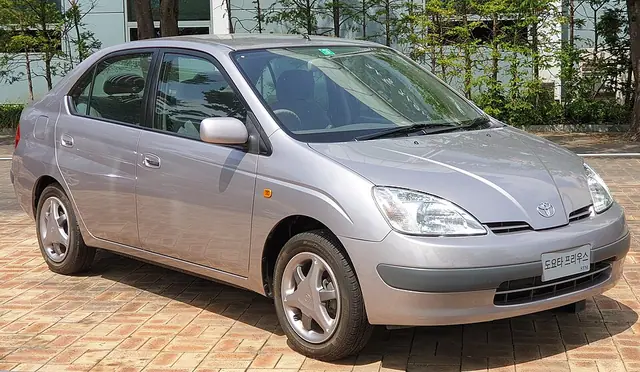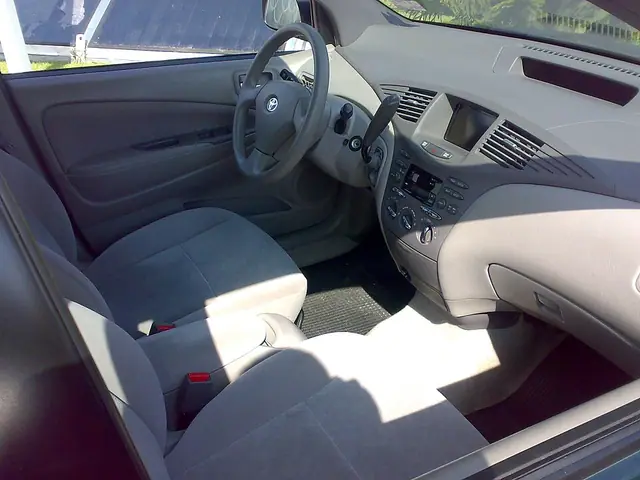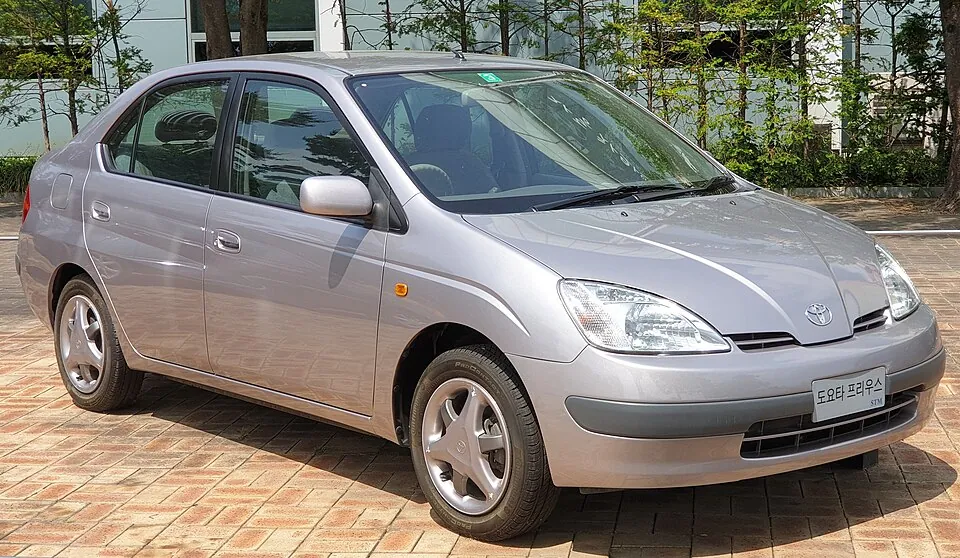
The Prius was the first petrol-electric hybrid car to be produced in large numbers, at a time when many even within Toyota thought such a powertrain would not be ready before the 21st century. It used half as much fuel as comparable cars, became a symbol of environmental awareness, and the system developed for it is now found in tens of millions of Toyota cars.
Story
In the summer of 1993 Toyota's honorary chairman Eiji Toyoda asked the engineers to think about what a car for the 21st century should be like. In September of that year a group of ten engineers and designers was assembled under the code name G21, where "G" stood for "Globe" and "21" for the twenty-first century. By the end of the year they had proposed a small car with a roomy cabin, a long wheelbase and fuel consumption of 20 km per litre, or about 5 litres per 100 km. The project then continued under the leadership of Takeshi Uchiyamada, an engineer from the technical administration who later became chairman of Toyota's board, and was officially launched on 1 February 1994.
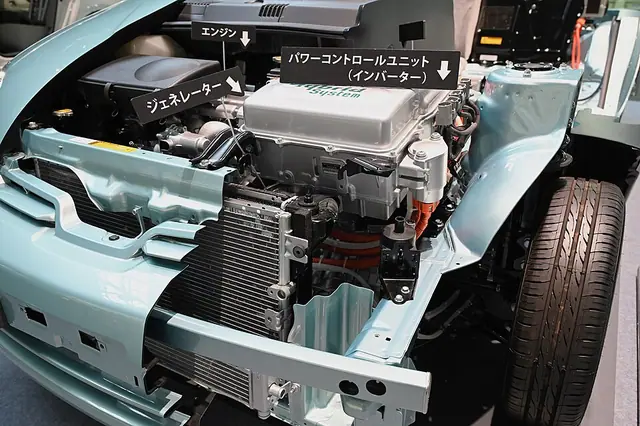
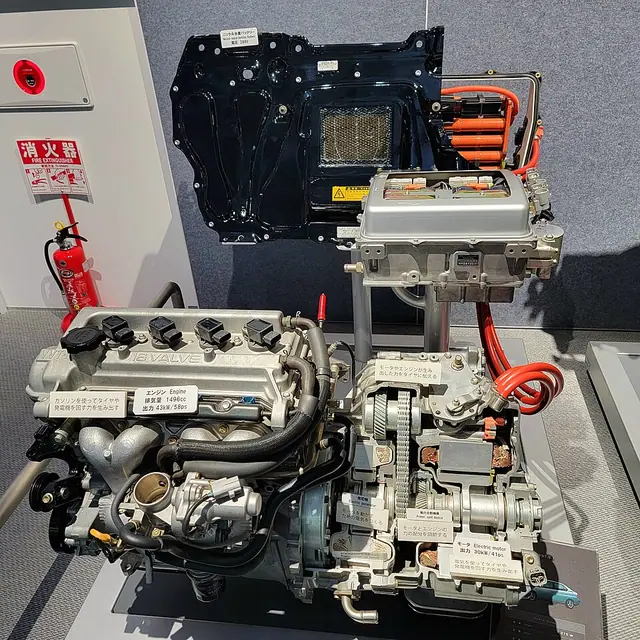
The team first planned a direct-injection engine and an efficient automatic gearbox, which would have given consumption about 1.5 times lower than comparable cars. They considered a hybrid drive too risky. In November 1994 the executive vice-president in charge of engineering, Akihiro Wada, ordered Uchiyamada to make the new car a hybrid and to halve fuel consumption, warning that otherwise the project would be cancelled. After about six months of studying various solutions, the team chose a system with two electric motors and a planetary gearset that splits the power of the petrol engine between driving the wheels and generating electricity. The system was named the Toyota Hybrid System (THS). Toyota developed the motors and control electronics itself, and the batteries together with Matsushita.
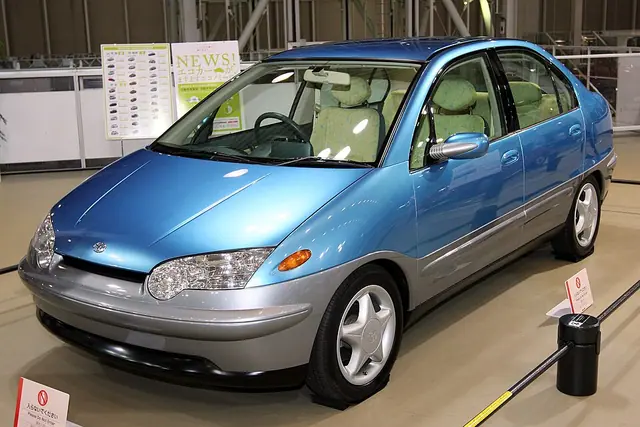
At the Tokyo Motor Show in October 1995 a Prius concept car was shown, a name that in Latin means "prior" or "first". The first running prototype of the production hybrid was assembled at the beginning of November 1995, and it took the engineers 49 days to get it moving. When it finally moved, it covered about 500 metres and stopped. Even so, management decided to shorten the schedule by a year, so that the car would come out before the United Nations climate conference in Kyoto in December 1997. The batteries delivered half the planned performance, and the semiconductor modules in the inverter overheated and cracked on the test benches. On 25 March 1997 Toyota president Hiroshi Okuda publicly announced a hybrid for the end of the year, before the engineers were sure they could achieve the target consumption.
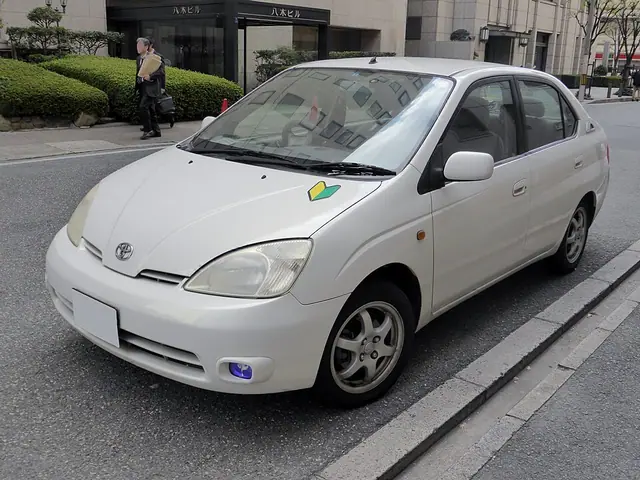
The Prius was unveiled on 14 October 1997 in Tokyo with fuel consumption of 28 km per litre on the Japanese test cycle, about 3.6 litres per 100 km, and a price of 2.15 million yen. The first production car rolled off the line at the Takaoka plant on 10 December 1997, when sales also began. The plan was 1,000 cars a month, and 3,500 orders came in the first month. The Prius was named Japan Car of the Year, and at the Kyoto conference it served as a taxi for participants. Under the bonnet was a 1.5-litre petrol engine running on the Atkinson cycle and producing only 58 hp, since a 30 kW electric motor helped it when moving off and accelerating. According to its executives, Toyota lost money on every first-series car it sold. Early cars also had a turtle-shaped warning light that indicated the hybrid system was losing power, which happened in great heat and at higher altitudes.
For export, a revised NHW11 version was prepared, with a stronger 71 hp engine and a 33 kW electric motor, so that it could cope with higher speeds on European motorways and the heat of American deserts. It was built from May 2000 at the Motomachi plant, sold in Europe from September 2000, and in the USA it cost 19,995 dollars and was the second production hybrid on that market, after Honda's Insight. With this version, according to its executives, Toyota covered its costs for the first time. The first generation was built until June 2003.
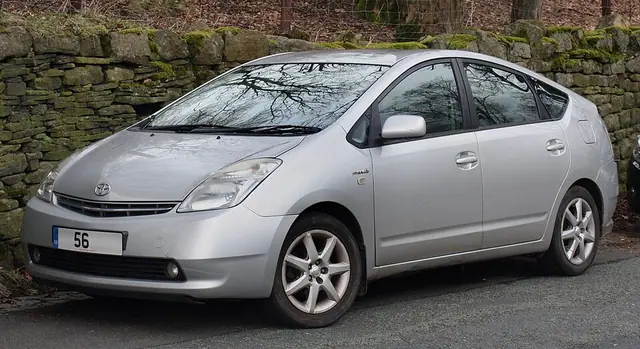
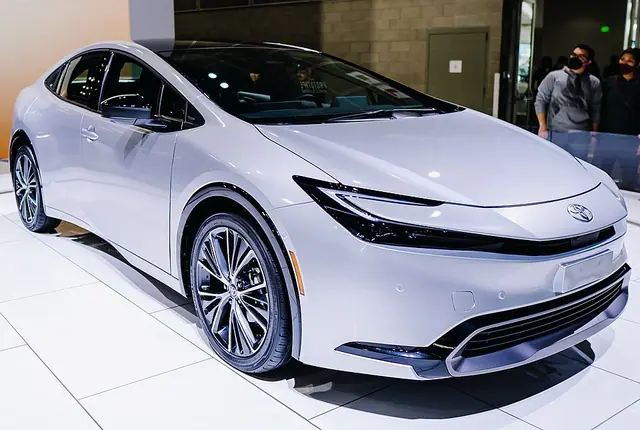
The second generation of 2003 became a five-door liftback with a distinctive wedge shape, and it was this one that turned the Prius into a worldwide success. Hollywood stars bought it, and about 1.2 million were sold. The third generation of 2009 got a 1.8-litre engine and from 2009 to 2012 was the best-selling car in Japan. The fourth generation of 2015 moved to Toyota's new TNGA modular platform and also offered four-wheel drive, and the fifth, unveiled on 16 November 2022, got a much lower and sportier shape and is sold in Europe only as a plug-in hybrid. By 2022 more than 5 million Priuses had been sold, and by then Toyota and Lexus had sold more than 20 million electrified cars. In 2025 alone Toyota sold about 4.6 million hybrids, mostly with a powertrain that grew out of the system developed for the first Prius.