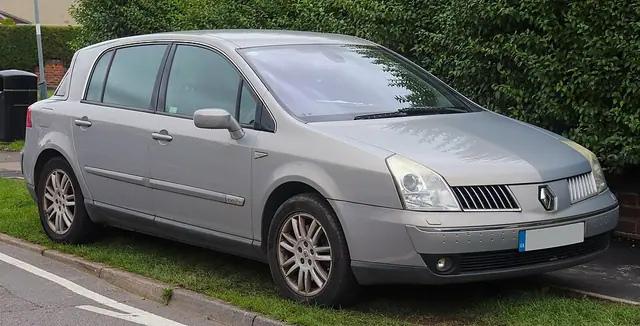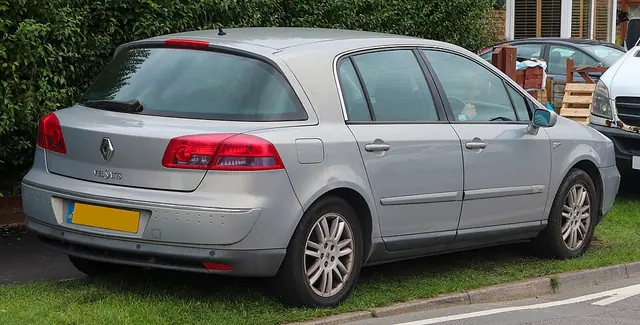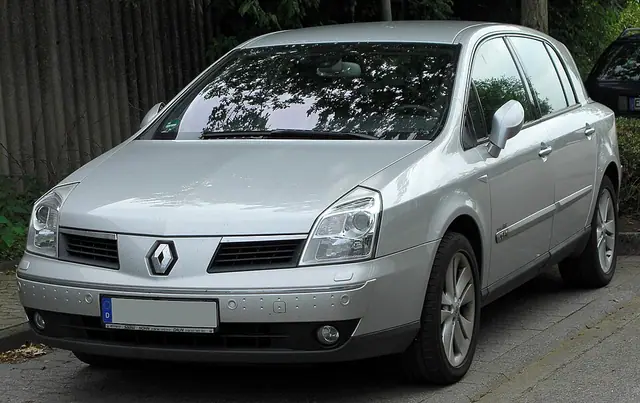
The Vel Satis was Renault's attempt to reinvent the prestige saloon "the French way": instead of a low, long saloon on the German model, it got a tall body with lots of space inside. It was comfortable, safe and full of equipment, but buyers did not take to it, so it became one of the most expensive flops in French industry, and Renault is estimated to have lost about 18,700 euros on every car.
Story
By the late nineties, under designer Patrick Le Quément, Renault had earned a reputation as a marque that could invent new kinds of car. The Renault Espace had started the fashion for one-box vehicles in 1984, the Twingo had shown in 1992 that a small car could be different, and the Mégane Scénic had created the compact MPV class in 1996. At the top of the range, however, the Safrane sold poorly, and Renault never managed to establish itself in a class ruled by Mercedes, BMW and Audi. Le Quément therefore decided that prestige should be redefined rather than copying the Germans.
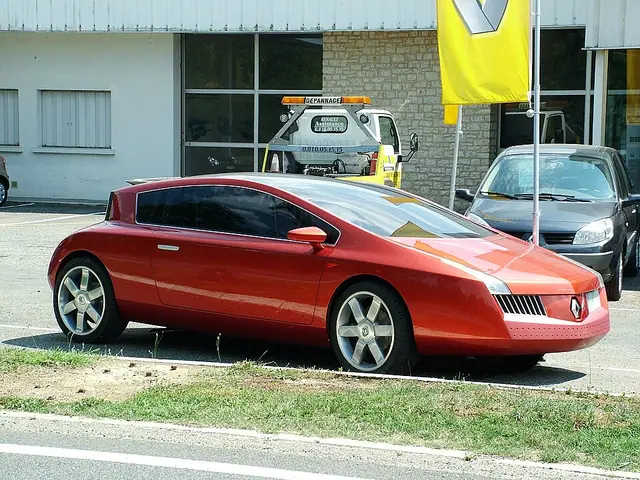
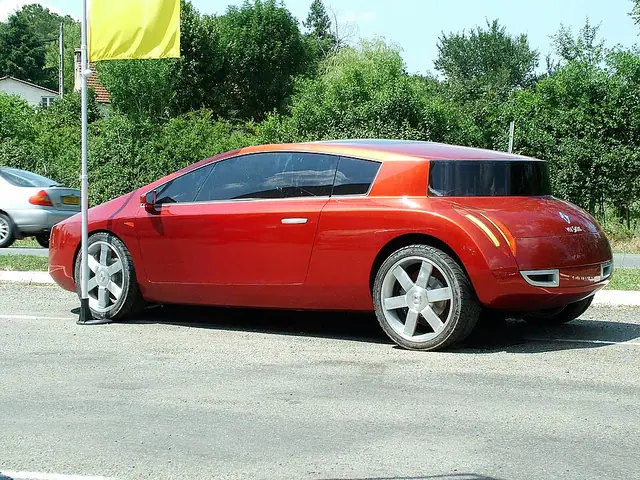
The first step was the VelSatis concept, shown at the 1998 Paris Motor Show, the year Renault celebrated its centenary. It was a low four-seat coupé with a single unbroken arc from the pointed nose to the rear window, and its sharp lines and narrow slots instead of a grille drew on the big Renaults of the interwar years, especially the 40 CV. The exterior was drawn by Florian Thiercelin under Le Quément's direction. The name was coined from the words "velocity" and "satisfaction". A year later came the Renault Avantime concept, and both cars belonged to the same wave of bold Renault design, together with the later Mégane II.
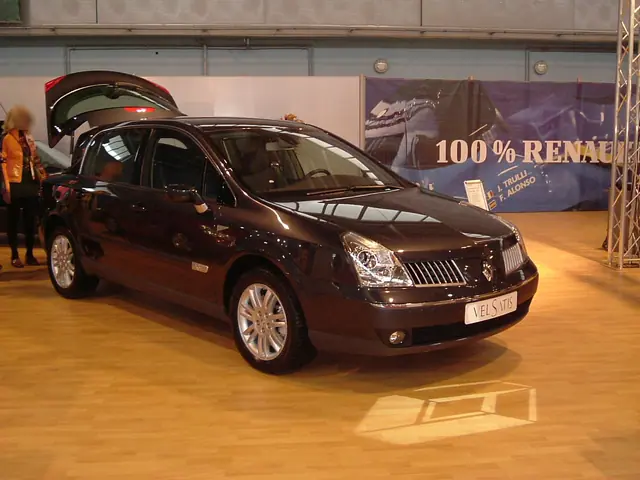
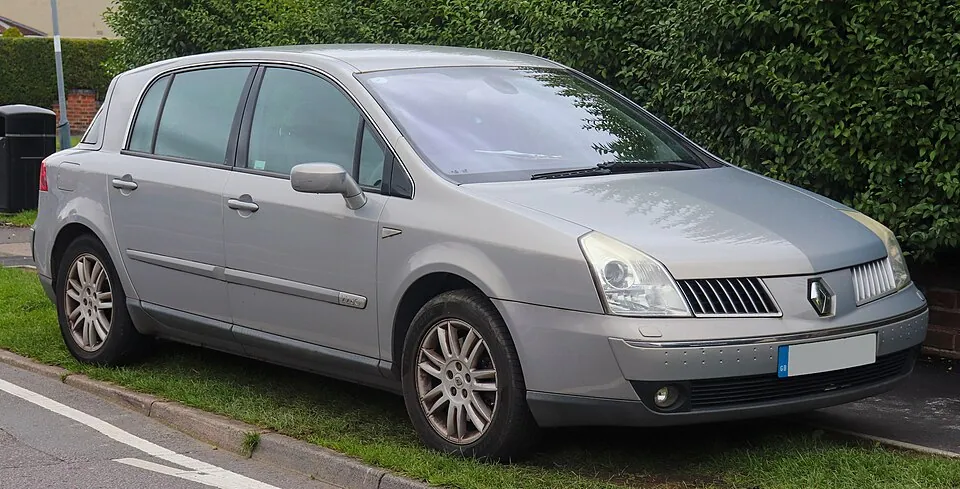
The production Vel Satis, internally designated X73, was unveiled in March 2001 at the Geneva Motor Show and went on sale in March 2002. From the concept it kept the pointed nose and some details, but it became a five-door car 1.58 m tall, a full 13 cm taller than the Safrane. The height brought excellent passenger space and a high seating position, but the car lost the elegance of the concept and looked as if it could not decide whether it was a saloon or an MPV. It shared its platform and production line at the Sandouville plant with the Laguna II and the Espace IV. While Renault was selling the Vel Satis, the Avantime was in the same showrooms at the same time, so buyers often confused these two unusual cars.
Technically, the Vel Satis was a serious car. It was the first Renault with adaptive cruise control, and in the Euro NCAP test it got five stars, only the second car ever after the Laguna II. The most powerful engines were Nissan's 3.5-litre petrol V6 with 245 hp and Isuzu's 3.0-litre diesel V6 with 181 hp, while most buyers chose the 2.2-litre and later 2.0-litre four-cylinder diesels. According to various estimates, Renault invested between 550 and 630 million euros in development and production preparation, and expected to sell 50,000 cars in Europe in the first year alone.
Reality was quite different. In 2002 Britain's Car magazine described the Vel Satis as ugly and "very French", and reviewers also criticised the suspension, which was unpleasantly hard on bad roads, as well as the automatic gearbox. Early cars also had reliability problems because development had not been fully finished, which further damaged its reputation. Sales in Britain were so poor that in 2005 Renault did not even prepare a right-hand-drive version of the facelifted model, which got a new grille, chrome door handles and better cabin materials.
The Vel Satis did nevertheless find a place at the top of the state. It was used by French government ministers, together with the Peugeot 607 and Citroën C6 saloons, and Nicolas Sarkozy had an armoured, stretched version with richer equipment. As official partner of the Cannes Film Festival, Renault used the Vel Satis to deliver stars to the famous steps of the Palais des Festivals.
Production ended in November 2009, after 62,201 cars, just a fifth of the roughly 310,000 Safranes built. According to an estimate cited by French sources, Renault lost about 18,710 euros on every Vel Satis built. Its successor, the Renault Latitude, was an entirely conventional saloon, and after that Renault stayed away from the prestige class for a long time. Today the Vel Satis has a small but loyal following who see in it a brave, if unhappily executed, attempt to make French luxury look different.