The Quattro showed that four-wheel drive was not just for off-roaders: it was the first car to combine permanent all-wheel drive, a front engine and a turbocharger, and it changed rallying forever. With it Audi won two world manufacturers' titles and two drivers' titles, and Michèle Mouton became the first woman to win a round of the World Rally Championship. Audi still uses the quattro name for all its four-wheel-drive models.
Story
The idea was born in the winter of 1977, during Audi tests in Scandinavia. Engineer Jörg Bensinger noticed that the fastest vehicle in the convoy was the small Volkswagen Iltis military off-roader, with four-wheel drive and a modest 75 hp. He persuaded Ferdinand Piëch, then head of development, to let a small team build a prototype: an Audi 80 with a turbocharged five-cylinder engine and four-wheel drive. With Walter Treser he developed a car that left all others behind on snow and steep climbs, and Volkswagen approved production.
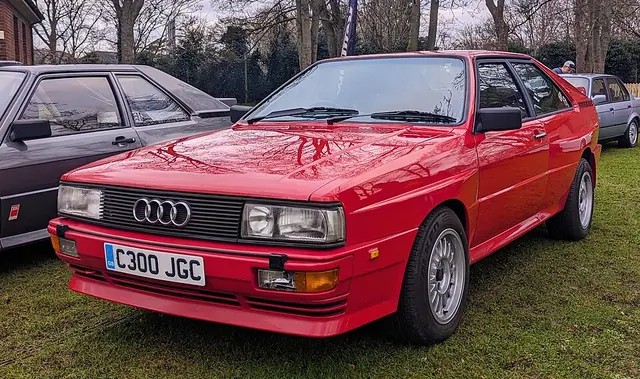
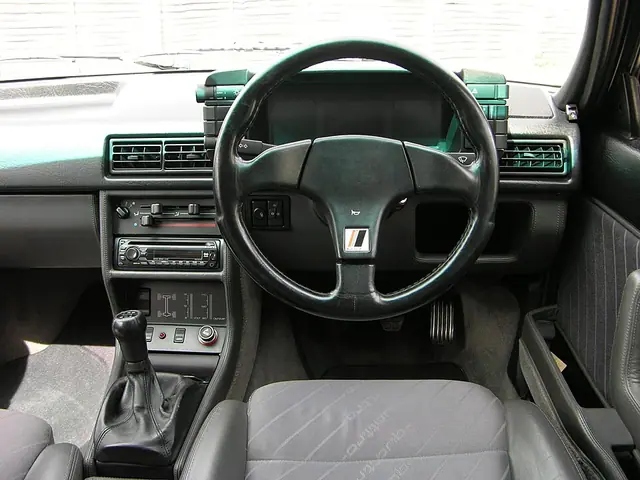
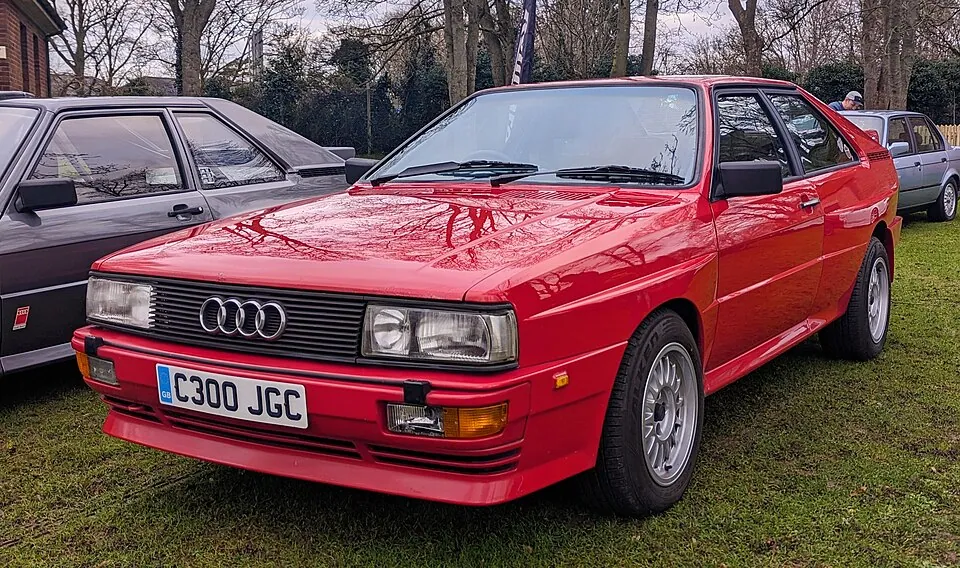
The Audi Quattro was unveiled on 3 March 1980 at the Geneva Motor Show and went on sale that summer. The body came from the Audi 80 Coupé, with flared wheel arches, and under the bonnet was the 2.1-litre engine from the Audi 200, turbocharged and intercooled, producing 200 hp. It reached 100 km/h in 7.1 seconds, and its top speed was about 222 km/h. The car was partly hand-built on a separate line, and in eleven years its looks hardly changed. The most important changes were digital instruments from 1983, the 2.2-litre engine and Torsen centre differential from 1987 and, finally, the 20-valve, 220 hp engine from 1989. The last Quattro was built on 17 May 1991, after 11,452 cars.
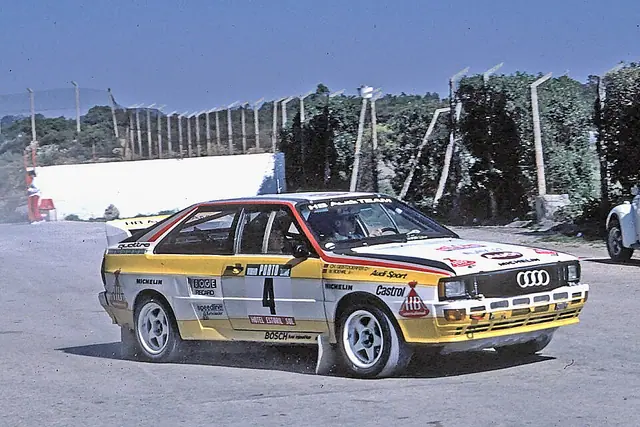
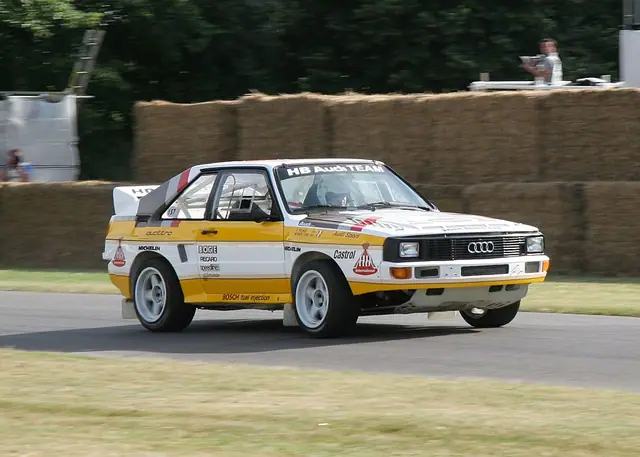
The Quattro entered the World Rally Championship in 1981, when the rules first allowed four-wheel drive. Hannu Mikkola was winning straight away, and at the Sanremo Rally Michèle Mouton became the first woman to win a world championship event. In 1982 Audi won the manufacturers' title, and Mouton was second among the drivers. Mikkola became world champion in 1983, but the manufacturers' title went to Lancia with the lighter, rear-wheel-drive 037. In 1984 Audi took both titles, with Stig Blomqvist as champion.
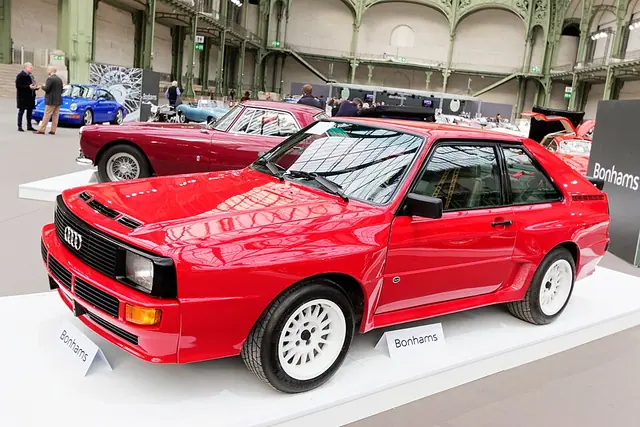
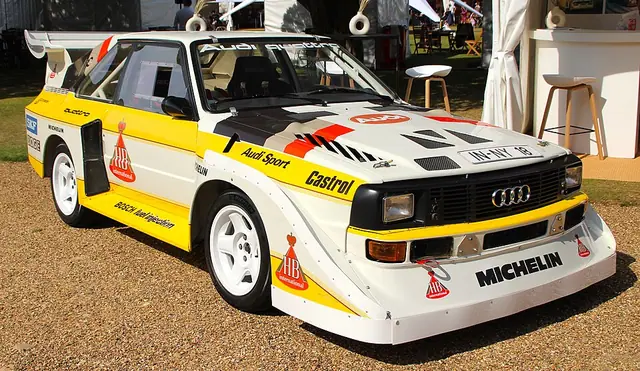
The new Group B rules required only 200 road cars, so at the 1983 Frankfurt show Audi showed the Sport quattro, with a wheelbase 32 cm shorter, a body of aramid-fibre composite and a 306 hp engine. The road cars were sold from autumn 1984 for about 200,000 marks. From it came the Sport quattro S1 rally cars and, in 1985, the S1 E2 with large wings and more than 500 hp, with which Walter Röhrl and Christian Geistdörfer won the 1985 Sanremo Rally. Even so, the engine ahead of the front axle was a handicap against the new mid-engined cars, above all the Peugeot 205 Turbo 16, which won the titles in 1985 and 1986.
After the fatal accidents of the 1986 season Audi withdrew from the championship after the Rally of Portugal, and Group B was banned from 1987. Rallying moved to Group A cars, which in the following years were dominated by the Lancia Delta Integrale. At the famous Pikes Peak hill climb in America the Sport quattro won in 1985 with Michèle Mouton and in 1987 with Walter Röhrl. Today the Ur-Quattro is one of the most highly regarded German cars of the eighties, and its drive system became Audi's trademark.