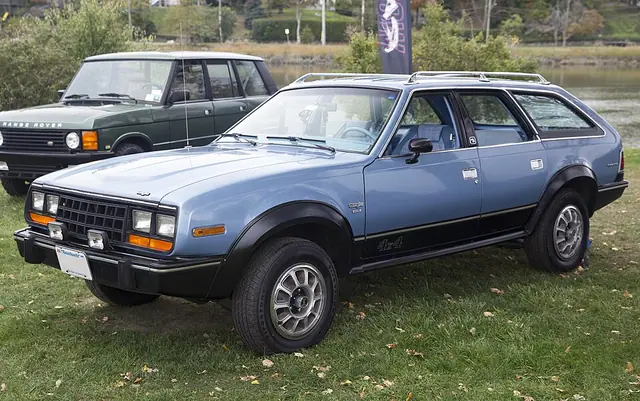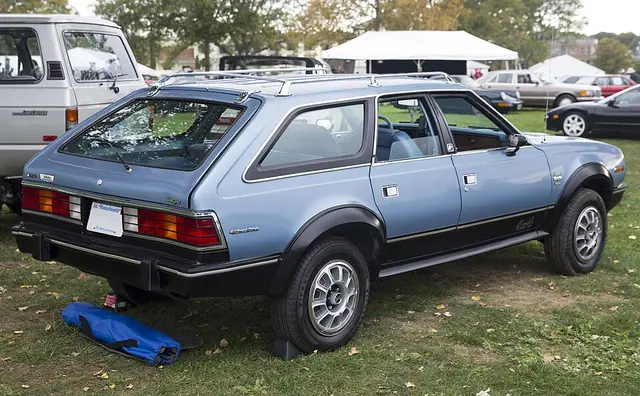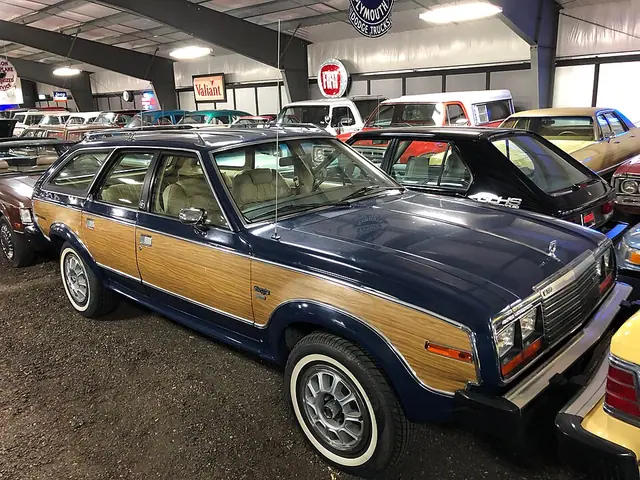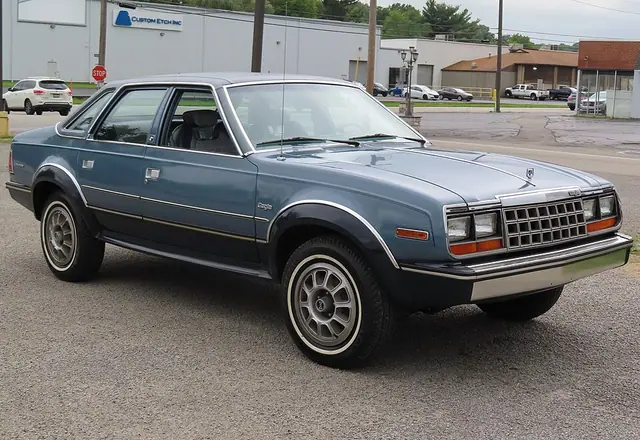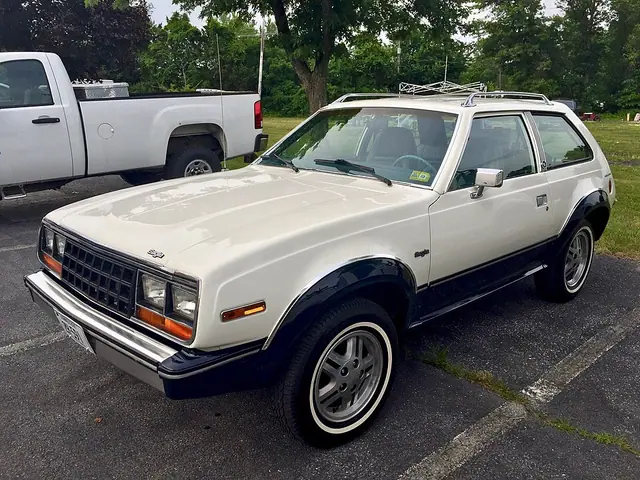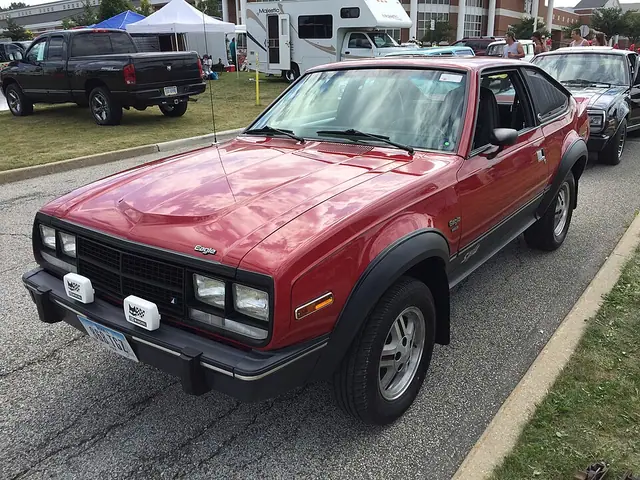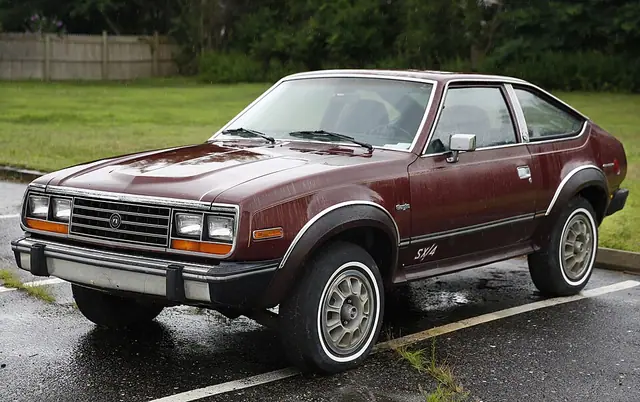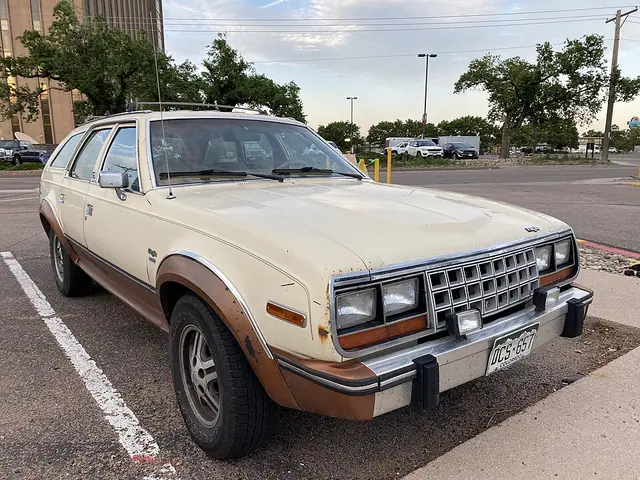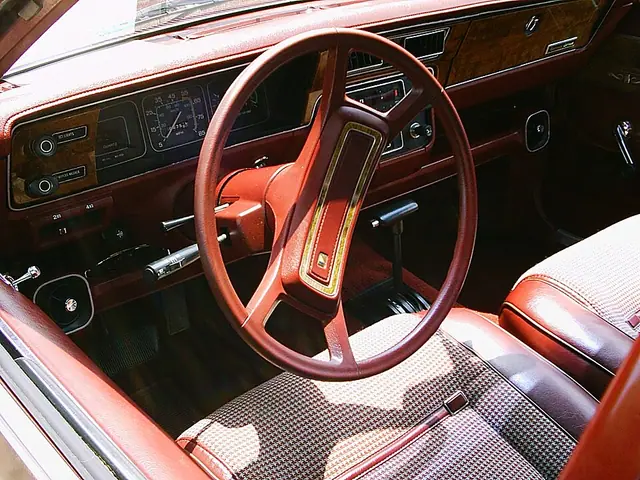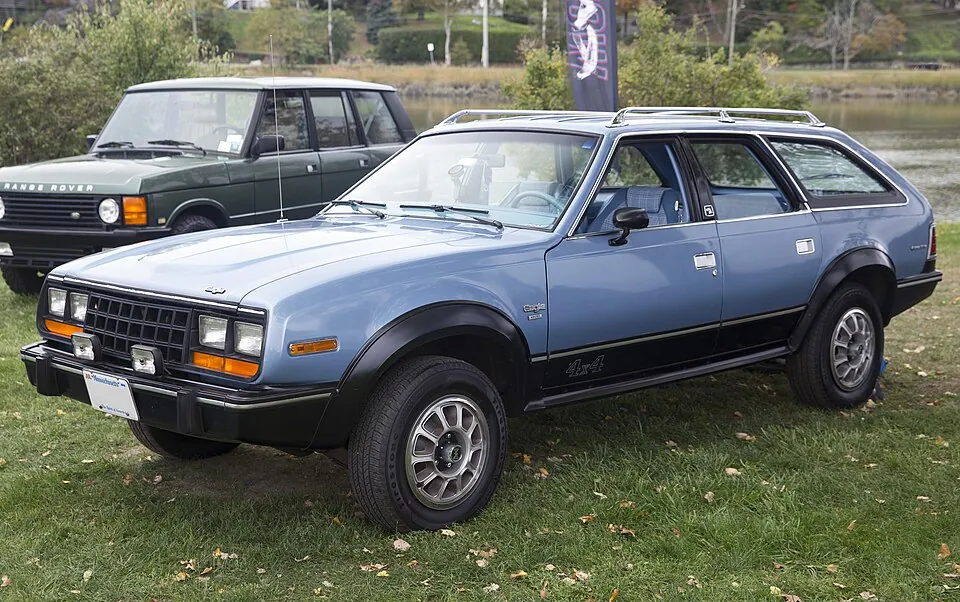
The Eagle was a passenger car with the comfort of an ordinary saloon or estate, but with four-wheel drive and a higher floor, created by combining an AMC car with Jeep technology. Such a vehicle had no name at the time, but today it is often regarded as the first "crossover" and a forerunner of models such as the Subaru Outback and the Audi Allroad. It was made by a small company in a difficult financial position, from parts it already had.
Story
At the end of the 1970s AMC was in a difficult position: the second oil crisis of 1979 cut sales of its profitable but thirsty Jeeps, and its passenger cars were ageing. AMC and Jeep chief engineer Roy Lunn, who had earlier led Ford's GT40 programme, proposed a line of passenger cars with four-wheel drive and the road manners of an ordinary car, under the working name "Project 8001 plus Four". In February 1977 AMC hired the British firm FF Developments, known for the Ferguson Formula system, to build a prototype based on a V8 Hornet. Tests showed that the better solution was more ground clearance, 15-inch wheels, a torque split close to 50 : 50 and AMC's six-cylinder engine with an automatic gearbox.
The Eagle was unveiled in August 1979 as a 1980 model, as a two- and four-door saloon and an estate, based on the AMC Concord. The body was raised by 3 inches (76 mm), and the wider wheels were covered by plastic wheel-arch extensions. The full-time four-wheel drive had a New Process 119 transfer case with a viscous coupling, in which plates ran in silicone fluid and automatically sent power to the axle with better grip, so the drive could also be used on dry tarmac. There was no low range, and the front differential was attached to the engine, which allowed independent front suspension. The Eagle was the only four-wheel-drive passenger car then built in the USA. The base price was 6,999 dollars, and the body had factory rust protection with a five-year warranty.
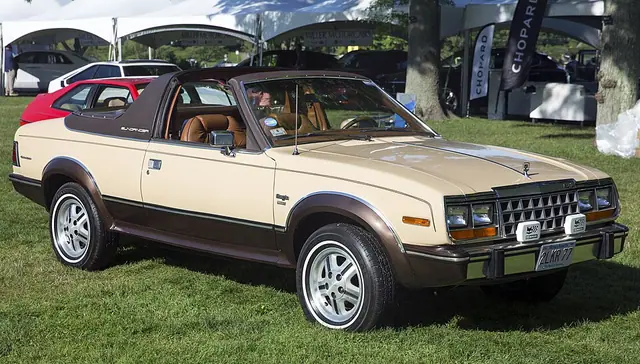
The Eagle sold well from the start: 45,379 were built for 1980, and in December 1979 AMC dropped the slow-selling AMC Pacer to free up space for the Eagle at the Kenosha plant. For 1981 came smaller models based on the Spirit, the sporty SX/4 hatchback, advertised as "the sports car that doesn't always need a road", and the Kammback, and in 1981 and 1982 the Griffith company converted Eagles into the Sundancer convertible. A 2.5 l four-cylinder engine was also offered, and from 1981 the Select Drive system, which allowed the front drive to be disconnected to save fuel; from 1985 this could also be done on the move. The Eagle also competed in rallies of the SCCA ProRally series.
From 1983 the range shrank: the Kammback and the two-door saloon disappeared, in 1984 the SX/4 as well, leaving the saloon and the estate, which was always the best seller. From 1984 the Eagle was built at AMC's plant in Brampton, Canada, because Kenosha was building Renault's Alliance and Encore models. AMC advertised the Eagle less and less, and production fell to 8,217 for 1986. Chrysler bought AMC on 5 August 1987, and for 1988 the Eagle was sold only as an estate under the name Eagle Wagon, although it still carried AMC badges. The last one was built in Brampton on 14 December 1987, and in total about 197,000 were made. Chrysler kept the Eagle name for a new brand, which existed until 1998.
In its day the Eagle surprised the experts, who had not expected a small, financially weak company to create an entirely new kind of vehicle. Four Wheeler magazine called it "the beginning of a new generation of cars" in 1980, and later journalists and the BBC have singled it out as the ancestor of today's crossovers. The idea of an estate with four-wheel drive, a raised floor and an automatic gearbox later became one of the best-selling types of vehicle in the world.