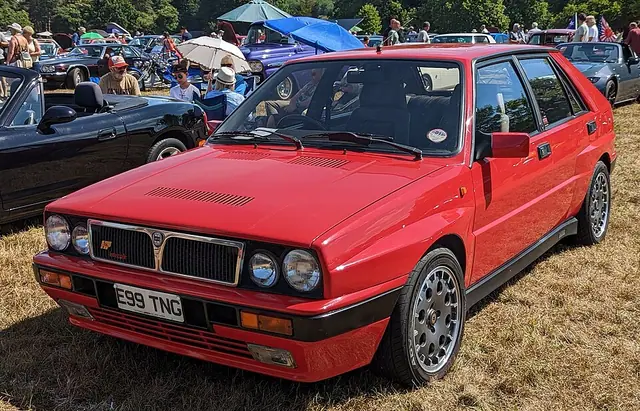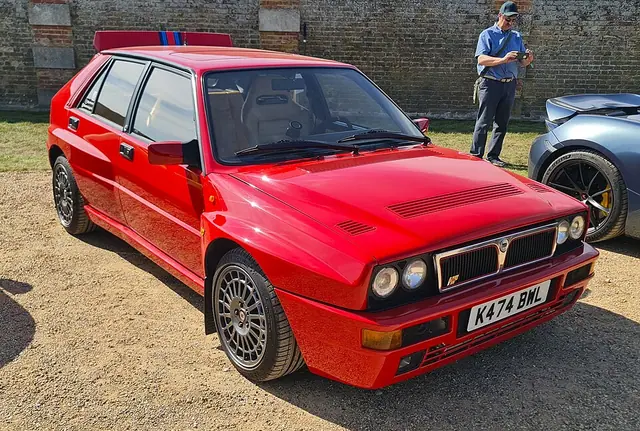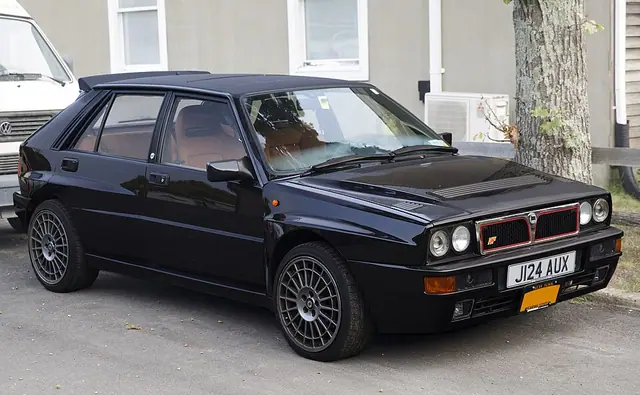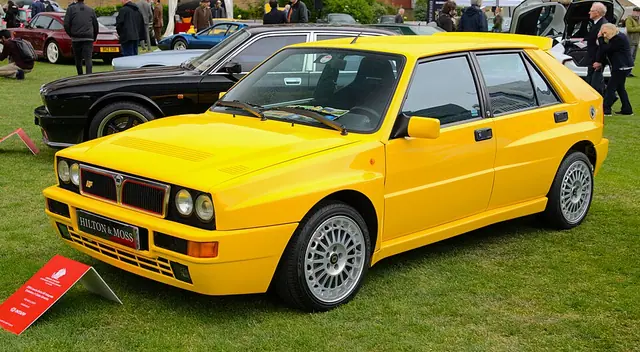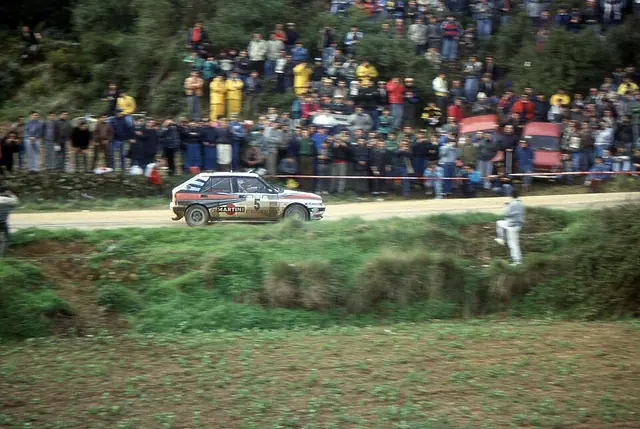
The Delta Integrale is the most successful car in the history of the World Rally Championship: with the Delta, Lancia won the manufacturers' title six times in a row, from 1987 to 1992, a feat no other marque has repeated. Behind that success is an ordinary five-door family hatchback, given a turbo engine and permanent four-wheel drive under flared wheel arches. That is why it became the model for all later "rally cars for the road", from the Subaru Impreza to the Mitsubishi Lancer Evolution.
Story
The basic Lancia Delta appeared in 1979 as a modest compact hatchback drawn by Giorgetto Giugiaro, and in 1980 it was named European Car of the Year. Nothing hinted at a sporting career until the mighty Group B rally cars, among them Lancia's own Delta S4, were banned after 1986. Group A rules required a competition car to be based on a model sold in at least 5,000 units a year, and in the Delta Lancia already had a suitable basis.
The first step was the 1986 Delta HF 4WD, with a 2 l turbo engine and 165 hp. With it Lancia won the manufacturers' title in 1987, and Juha Kankkunen the drivers' title. The same year came the HF Integrale with widely flared wheel arches, bigger wheels and 185 hp. The 16-valve version with 200 hp won on its very first outing, at the 1989 San Remo Rally. Miki Biasion was world champion with the Delta in 1988 and 1989, and Kankkunen again in 1991.
The Delta was a car that simply kept winning: in total it took 46 World Championship victories. For 1992 the works team formally withdrew, but the Jolly Club team, with Lancia's support, won a sixth consecutive title with the Delta Evoluzione. Lancia thus continued the tradition begun in the seventies by the Lancia Stratos.
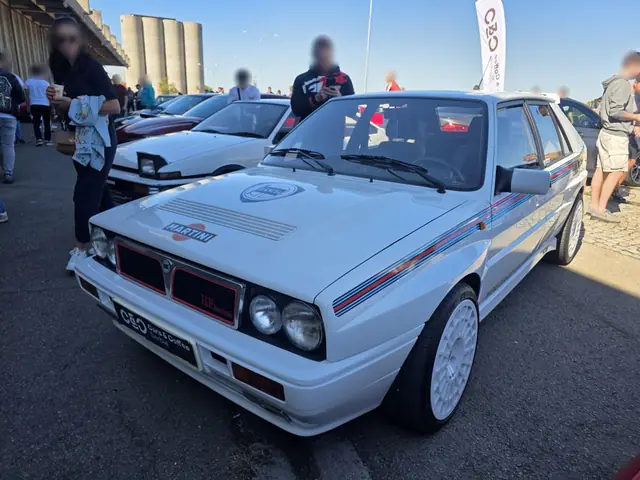
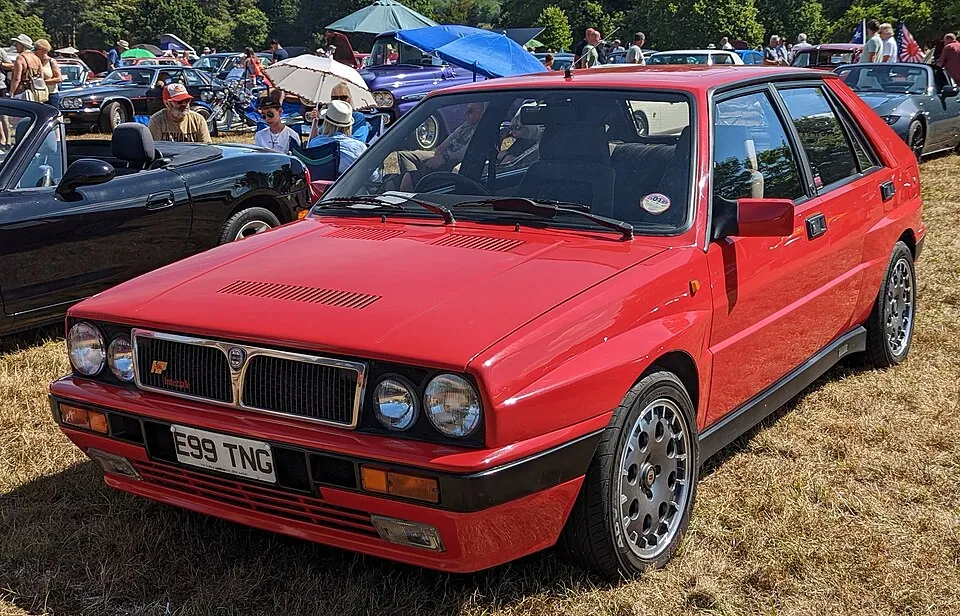
For the road, the Delta Integrale Evoluzione arrived in 1991, nicknamed Deltona, with even wider wheel arches, an adjustable roof spoiler and 210 hp. Special series in Martini colours followed, as did the Evoluzione II of 1993 with a catalytic converter and 215 hp. The last cars were assembled by the Turin firm Maggiora, and production ended in 1994, with a few final series for collectors. Today well-preserved Integrales are among the most sought-after cars of the eighties and nineties.