Founding and founders
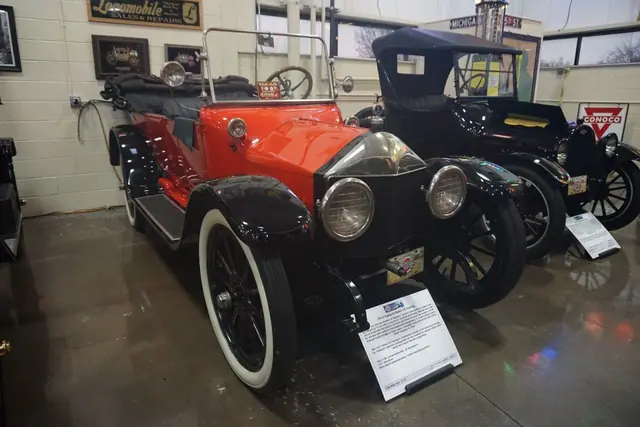
Pontiac was not founded by one man; it was created as a new make within General Motors. Its roots go back to Edward M. Murphy, who in 1893 founded the carriage firm Pontiac Buggy Company in the city of Pontiac, Michigan. In 1907 Murphy, together with the engineer Alanson P. Brush, who had earlier worked on the single-cylinder Cadillac, founded the car factory Oakland Motor Car Company. In early 1909 he sold half of the company to William C. Durant's General Motors, and when Murphy died suddenly in the summer of that year, GM took over the rest.
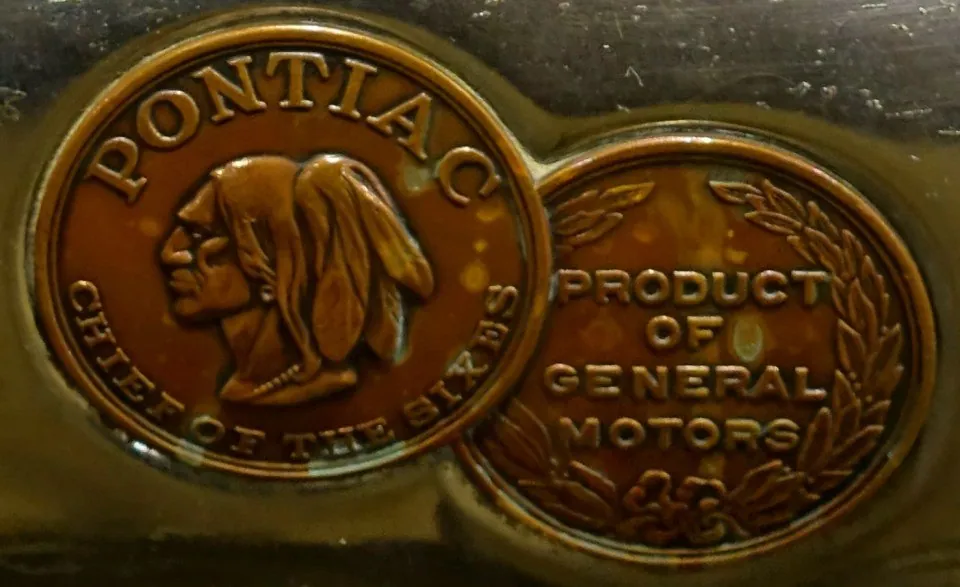
The Oakland was a medium-priced car. As a cheaper "companion" to the Oakland, sitting just above Chevrolet in GM's ladder of brands, a car with a six-cylinder engine was developed. It was presented in January 1926 at the New York auto show under the name Pontiac, and it was the first car to bear that name. It was advertised as the "Chief of the Sixes".
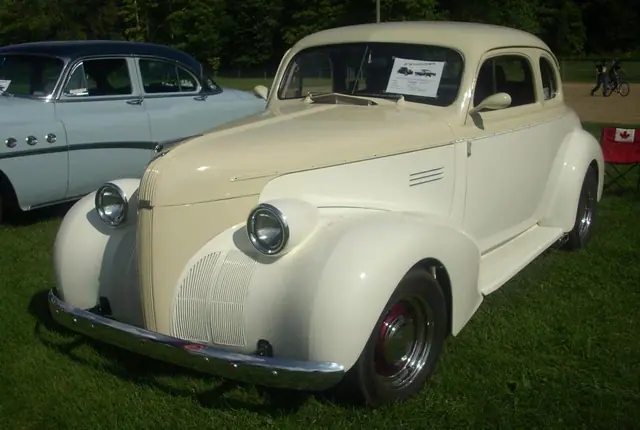
Within a few months the young Pontiac was selling better than the Oakland, its "parent" make. During the Great Depression GM dropped Oakland in 1931, and Pontiac became a make and division of General Motors in its own right. It was a car for middle-class families, solid and somewhat conservative, recognisable by the chrome "Silver Streak" strips running over the bonnet.
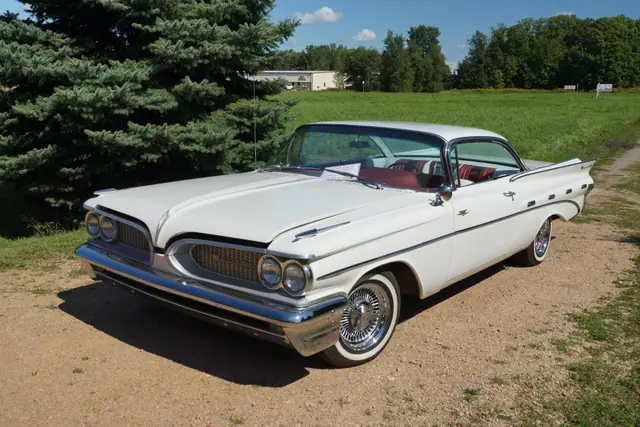
The brand's image was changed by Semon E. "Bunkie" Knudsen, who in 1956, aged 43, became the youngest general manager of any GM division. He removed the old decorations and turned Pontiac towards young buyers and speed. The 1959 models received the "Wide Track", with the wheels set 5 inches further apart, and Pontiac began to present itself as GM's "performance division". In the sixties, when the engineer and later general manager John Z. DeLorean and his colleagues conceived the Pontiac GTO and the Pontiac Firebird arrived in 1967, Pontiac was the third best-selling make in the USA.
After the oil crises Pontiac found it harder to find its place. It made bold attempts, such as the mid-engined two-seater Pontiac Fiero of 1984, but also had failures, such as the odd Aztek. In the crisis of 2008–2009 General Motors, seeking help from the American government, decided to close the make.
The meaning of the logo
Pontiac's name and badge are tied to Pontiac, chief of the Odawa people, who from 1763 to 1766 led an uprising of Native American tribes against the British in the Great Lakes region and attacked the fort at Detroit. The city of Pontiac in Michigan, where the cars were built, was also named after him.
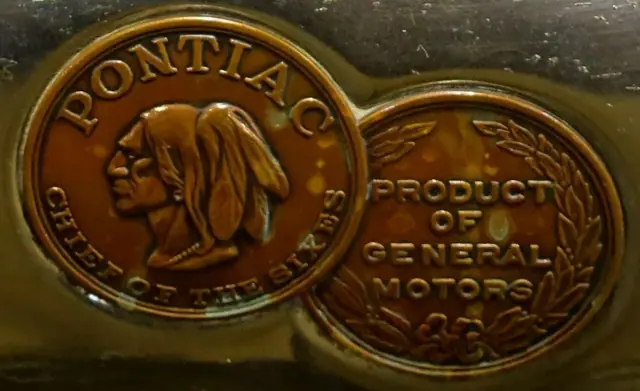
The first badge, from 1926, was a round medallion with the chief's profile, the word PONTIAC and the words "Chief of the Sixes" beneath. The figure of a Native American with feathers, somewhat refined, remained the main motif until the mid-fifties, both on badges and on bonnet ornaments.
When Knudsen was changing the brand's image, the old Native American figure was replaced by a simpler badge: a red downward-pointing arrow, shaped like an arrowhead, with a four-pointed star in the middle. This badge, which enthusiasts call the "Dart", stayed on Pontiacs with minor changes until the end. General Motors never officially explained what the star and the red colour mean, so the link between the arrowhead and the Native American heritage of the name is only an interpretation.
Key moments
- 1893. Edward M. Murphy founds the carriage firm Pontiac Buggy Company in the city of Pontiac.
- 1907. Murphy and Alanson P. Brush found the Oakland Motor Car Company.
- 1909. General Motors buys half of Oakland, and the rest after Murphy's death.
- 1926. In January the first Pontiac, the six-cylinder "Chief of the Sixes", is presented at the New York show; within a few months it outsells the Oakland.
- 1931. GM drops Oakland, and Pontiac becomes a make and division in its own right.
- 1935. Pontiacs receive the chrome "Silver Streak" strips, by which they are recognisable for more than twenty years.
- 1956. Semon E. "Bunkie" Knudsen becomes general manager and turns the brand towards young buyers.
- 1959. The "Wide Track", a wider wheel track, and a new badge in the shape of a red arrowhead.
- 1964. The Pontiac GTO, one of the first American "muscle cars".
- 1967. The Pontiac Firebird is introduced.
- 1968. A record year, with 943,253 cars built.
- 1984. The Pontiac Fiero, the first American series-production car with a mid-mounted engine.
- 2009. On 27 April General Motors announces that it will close the Pontiac make.
- 2010. The last Pontiac, a white G6, is shipped on 4 January from the Orion plant, and the make ceases to operate on 31 October.