Founding and founders
Alejandro de Tomaso was born on 10 July 1928 in Buenos Aires. His father was the politician Antonio de Tomaso, whose own father had emigrated from Italy, and his mother came from a wealthy cattle-ranching family. After his father's early death he left school and ran the family estate. The family was politically prominent, and in 1955 the young de Tomaso was implicated in a plot against President Juan Perón, after which he fled to Italy.
He settled in Modena, the city of Ferrari and Maserati, and became a racing driver. In the first race of the 1957 Formula One World Championship, the Argentine Grand Prix, he drove a Ferrari 500 for the private team Scuderia Centro Sud and finished ninth. In Italy he met Isabelle Haskell, a wealthy American heiress who also raced OSCA cars herself, and married her. Her family provided the money for his business.
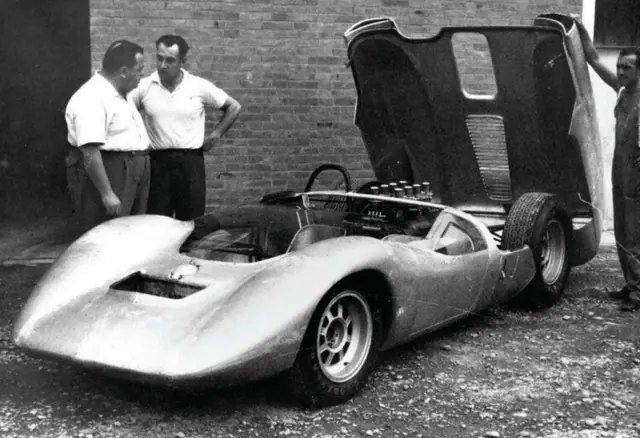
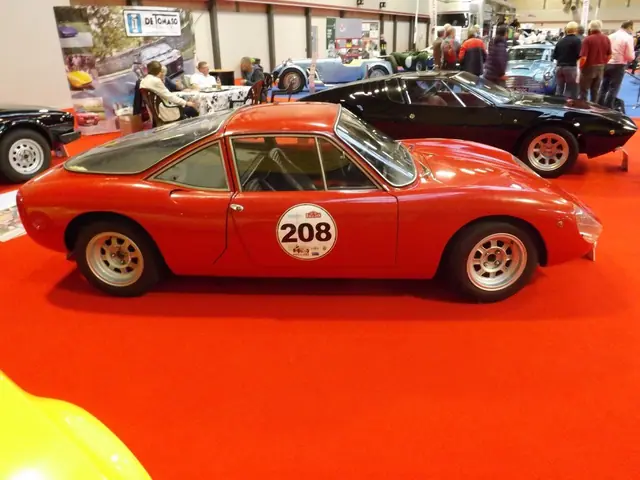
So in 1959 the firm De Tomaso Automobili was born in Modena. At first it built racing cars and prototypes, including a Formula One car for Frank Williams's team in 1970. The first road car was the Vallelunga of 1963, a small mid-engined sports coupé with Ford's four-cylinder engine from the Cortina and a steel backbone chassis, which became the trademark of De Tomaso cars. About 60 were made.
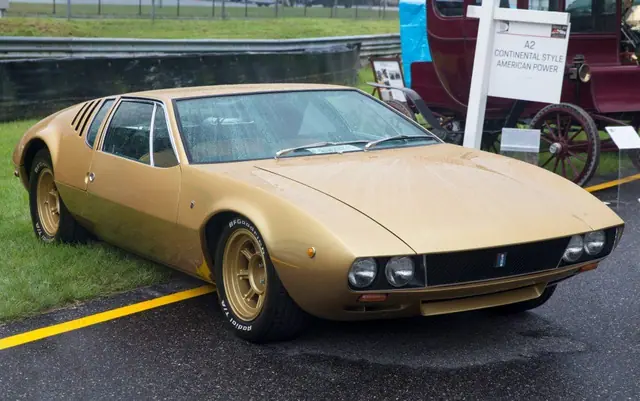
Real success came with American engines. The Mangusta of 1966, with a Ford V8 engine and a body drawn by Giorgetto Giugiaro for the Ghia studio, was built in about 400 examples. It was followed by the Pantera, which Ford sold from 1971 in its Lincoln-Mercury showrooms and which became the best-selling De Tomaso. Meanwhile Alejandro de Tomaso was building a small industrial empire: under his control were the design studios Ghia and Vignale, the motorcycle firms Benelli and Moto Guzzi, the car maker Innocenti, and from 1975 Maserati as well.
The meaning of the logo
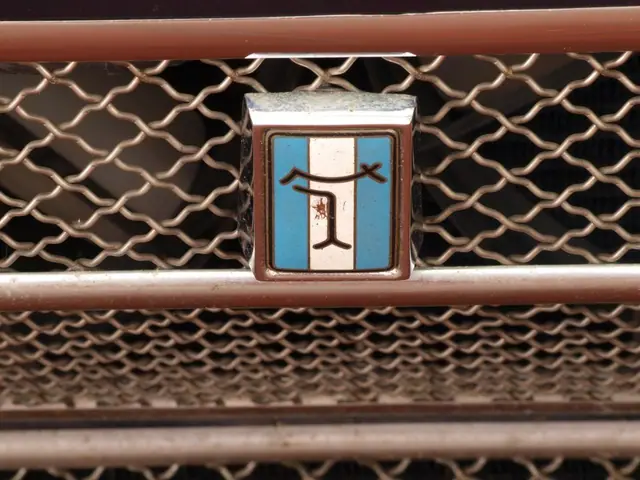
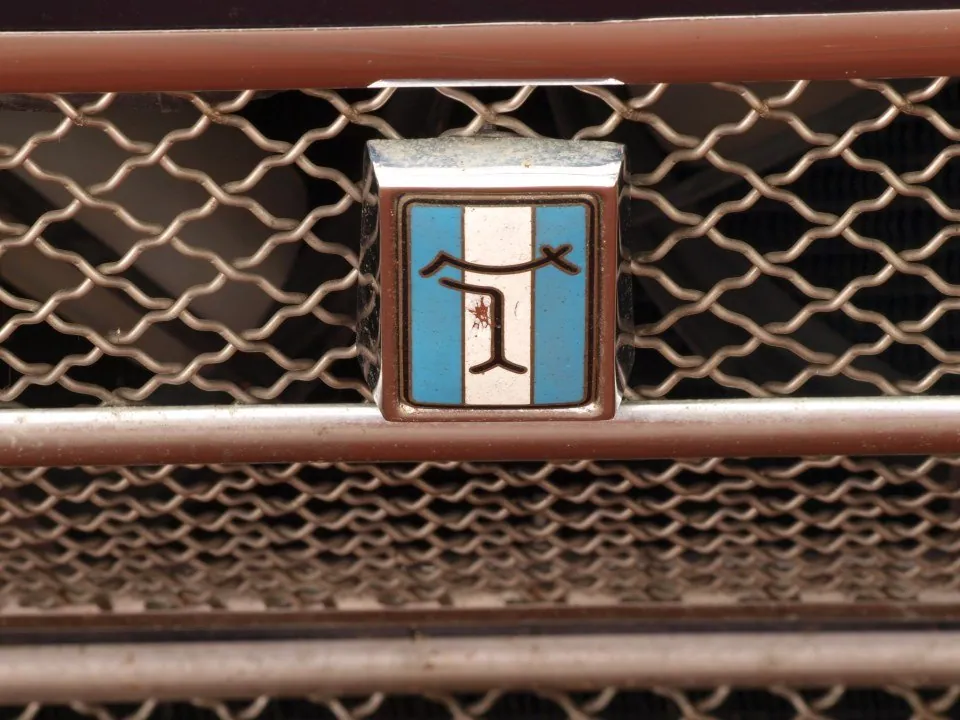
The De Tomaso emblem recalls the founder's origins. It is a small rectangle with three upright stripes, light blue, white and light blue, and these colours are taken from the Argentine flag, because Alejandro de Tomaso was born and grew up in Argentina. Over the stripes sits a black stylised letter T, and according to Italian Wikipedia and other sources this is the same mark that his mother's family used to brand cattle on their estate in Argentina. Some sources link that estate to the Cevallos (Ceballos) family, from which his mother came. We did not find an official description of the logo from the company itself, so the cattle-brand story should be taken as widely accepted but not documented.
Key moments
- 1955. After the plot against Perón, Alejandro de Tomaso flees Argentina and settles in Modena.
- 1957. He drives in the Argentine Grand Prix, the first race of the Formula One season, and finishes ninth.
- 1959. He founds De Tomaso Automobili in Modena, which at first builds racing cars.
- 1962. The De Tomaso 801 racing car with its own V8 engine fails to qualify for the Italian Grand Prix.
- 1963. The Vallelunga, the first road-going De Tomaso, with a mid-mounted engine and a backbone chassis.
- 1966. The Mangusta with a Ford V8 engine and a Ghia body.
- 1970. Ford buys a majority stake in De Tomaso, Ghia and Vignale; the De Tomaso car of Frank Williams's team crashes at the Dutch Grand Prix, killing the driver Piers Courage.
- 1971. Sales of the Pantera begin in the USA; the Deauville luxury saloon is also unveiled, followed the next year by the Longchamp coupé.
- 1973. Ghia passes into Ford's ownership; Ford pulls out of the Pantera business, and De Tomaso goes on building it in small numbers.
- 1975. With the help of the Italian government, De Tomaso takes over Maserati from Citroën; Innocenti soon follows, with the sporty Mini De Tomaso.
- 1993. Alejandro de Tomaso suffers a stroke and retires; Maserati and Innocenti are sold to Fiat, and the Pantera is succeeded by the Guarà.
- 2003. Alejandro de Tomaso dies on 21 May in Modena.
- 2004. The family puts the company into liquidation.
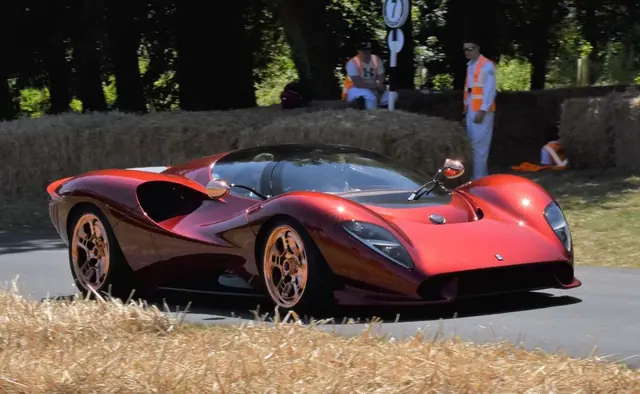
- 2019. The brand's new owner, Ideal Team Ventures, unveils the retro sports car P72 at the Goodwood Festival of Speed, marking the brand's sixtieth anniversary.