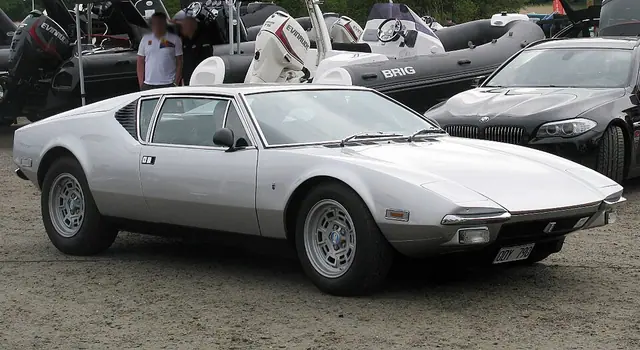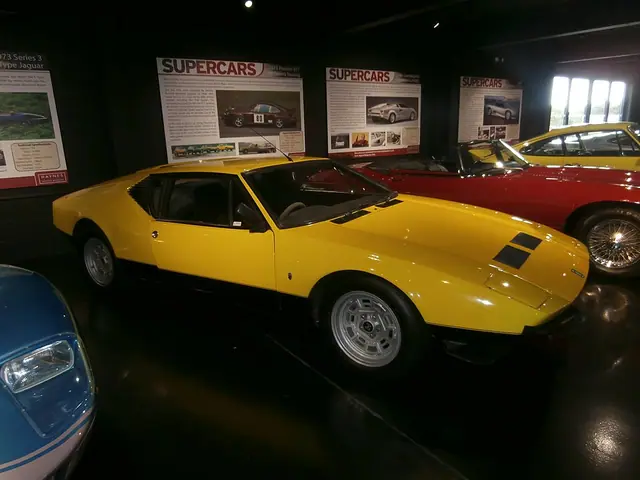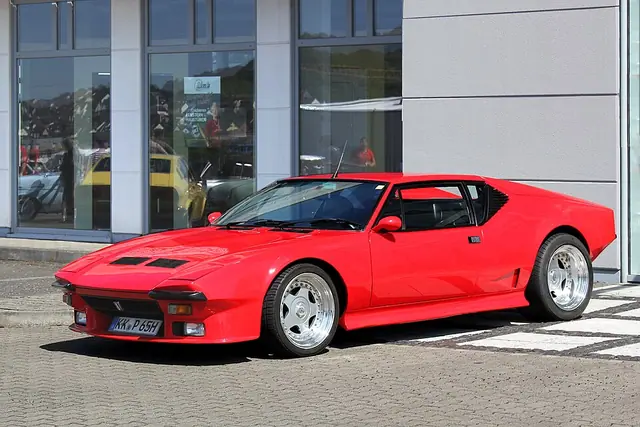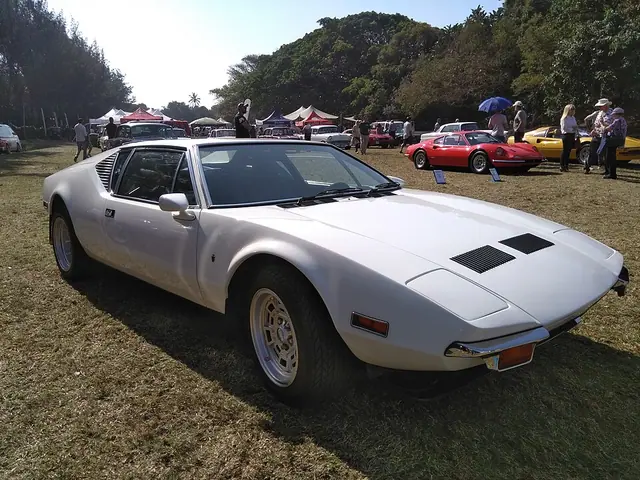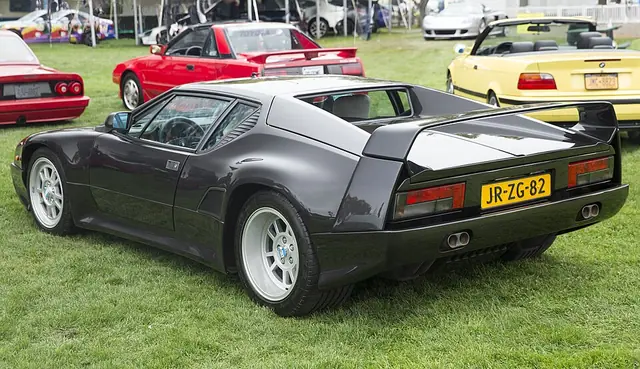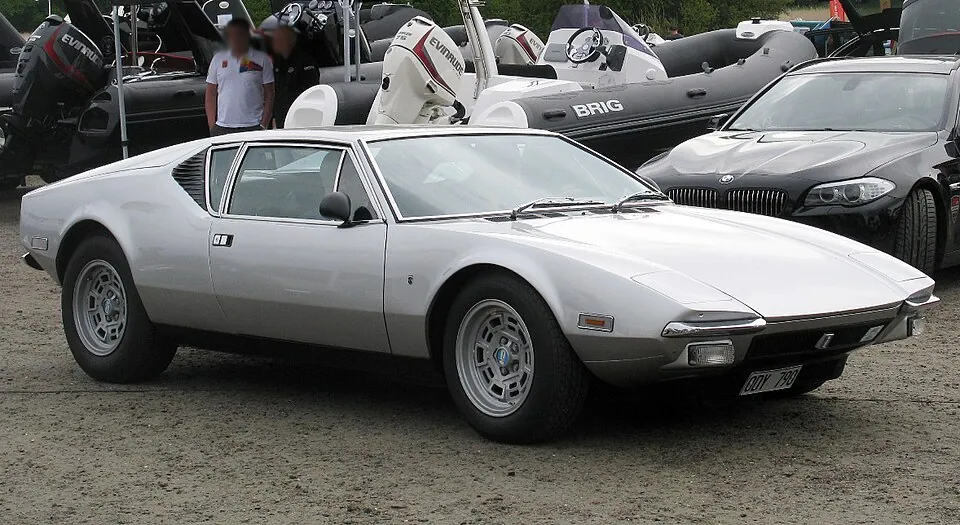
The Pantera is a blend of Italian design and American muscle: the body was drawn in Turin, and behind the driver sits a simple, tough Ford V8. It was sold in American Lincoln-Mercury showrooms, so it was an "exotic" car that could be bought and serviced at an ordinary Ford dealer, for a fraction of the price of a Ferrari or Lamborghini. It stayed in production for more than twenty years, longer than almost any sports car of its time.
Story
Alejandro de Tomaso, an Argentine who had settled in Modena, already had experience with Ford engines: his previous model, the Mangusta, also used an American V8. In the late sixties Ford was looking for a sports car with which to take on Chevrolet's Corvette and raise the image of its Lincoln-Mercury showrooms. De Tomaso offered a solution, and Ford took on the financing and the distribution in the USA.
The body was drawn by the American Tom Tjaarda, who worked at the Ghia studio, and the chassis was developed by Gian Paolo Dallara, an engineer who had previously worked on the Lamborghini Miura. The Pantera was the first De Tomaso with a steel unitary body (monocoque), which made production in larger numbers easier. The name is Italian for "panther".
Sales in America began in 1971. Early cars had problems with build quality and overheating, and American emissions and safety regulations soon cut the engine's power and brought bigger bumpers. After the oil crisis Ford pulled out of the partnership: imports into the USA stopped in 1974, and the last cars were sold up to 1975. By then more than 5,000 Panteras had been sold in America, more than three quarters of all those ever built.
De Tomaso carried on building the Pantera himself, in small numbers, mostly for Europe. Versions with ever wider wings and spoilers followed: the GTS, then the GT5 (1980) with fibreglass flares, and the GT5-S (1984). The last major change was the Pantera 90 Si of 1990, restyled by Marcello Gandini, the designer of the Lamborghini Miura and Countach. Only 41 were built, 38 of which were sold to customers, and with that production ended in 1992.
The most famous Pantera belonged to Elvis Presley. As the story goes, when the car refused to start one day, Elvis angrily fired several bullets into it. That 1971 car, bullet holes and all, is now on display at the Petersen Automotive Museum in Los Angeles.