Founding and founders
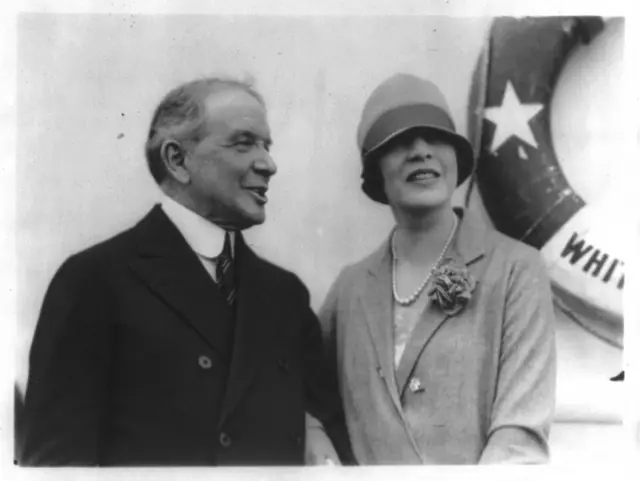
David Dunbar Buick was born on 17 September 1854 in Arbroath, Scotland, and came to Detroit with his family at the age of two. He lost his father early and started work at 15. He joined a plumbing supplies company, which he later took over with a partner. There he proved himself an inventor: among other things, he devised a process for permanently enamelling cast iron, which made white bathtubs cheaper.
In the 1890s Buick became more and more interested in petrol engines, so in 1899 he sold the plumbing business and founded the Buick Auto-Vim and Power Company. Together with the engineers Walter Marr and Eugene Richard he developed the overhead-valve (valve-in-head) engine, more powerful than the side-valve engines of the day. He spent money quickly on development rather than production, so his friend Benjamin Briscoe lent him money. So on 19 May 1903 the Buick Motor Company was born in Detroit. As early as September that year Briscoe sold control of the company to James H. Whiting, owner of the Flint Wagon Works, who moved Buick to Flint. There, in 1904, the first 37 cars for sale were built, the Model B.
Whiting soon ran short of money, so he brought in William C. Durant, a wealthy carriage maker from Flint. Durant took charge on 1 November 1904 and within a few years made Buick the best-selling brand in America: 8,820 cars were built in 1908. David Buick left the company in 1906 and sold his shares. He had no success with his later ventures and died on 5 March 1929 in Detroit, in modest circumstances.
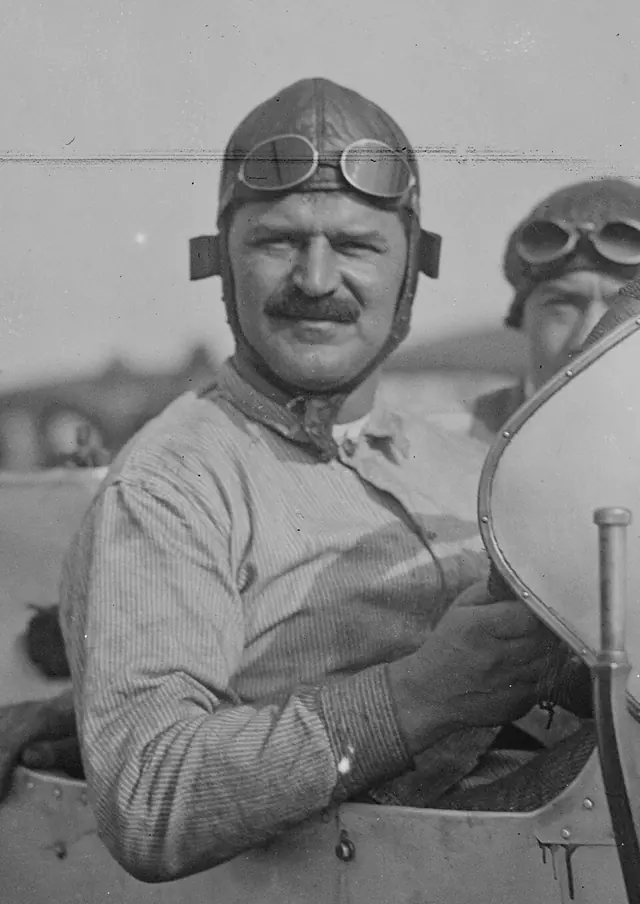
On Buick, Durant built something much bigger. On 16 September 1908 he founded the General Motors holding company, which immediately took over Oldsmobile, followed in 1909 by Cadillac and Oakland. Buick was also a racing team: from 1909 it was driven for by the Swiss Louis Chevrolet, who also learned to design cars there. With Durant's backing he founded the Chevrolet company in 1911, which later became General Motors' biggest brand.
The meaning of the logo
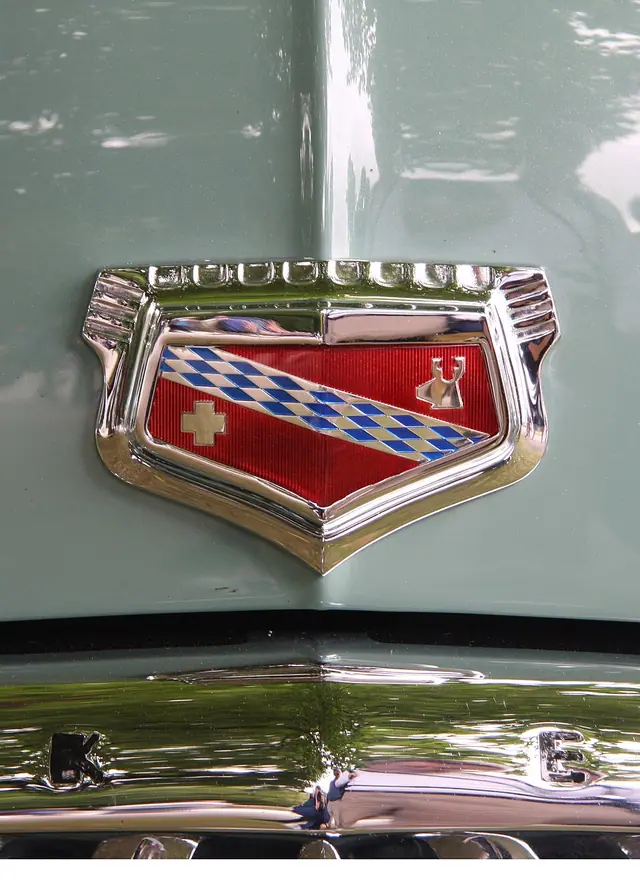
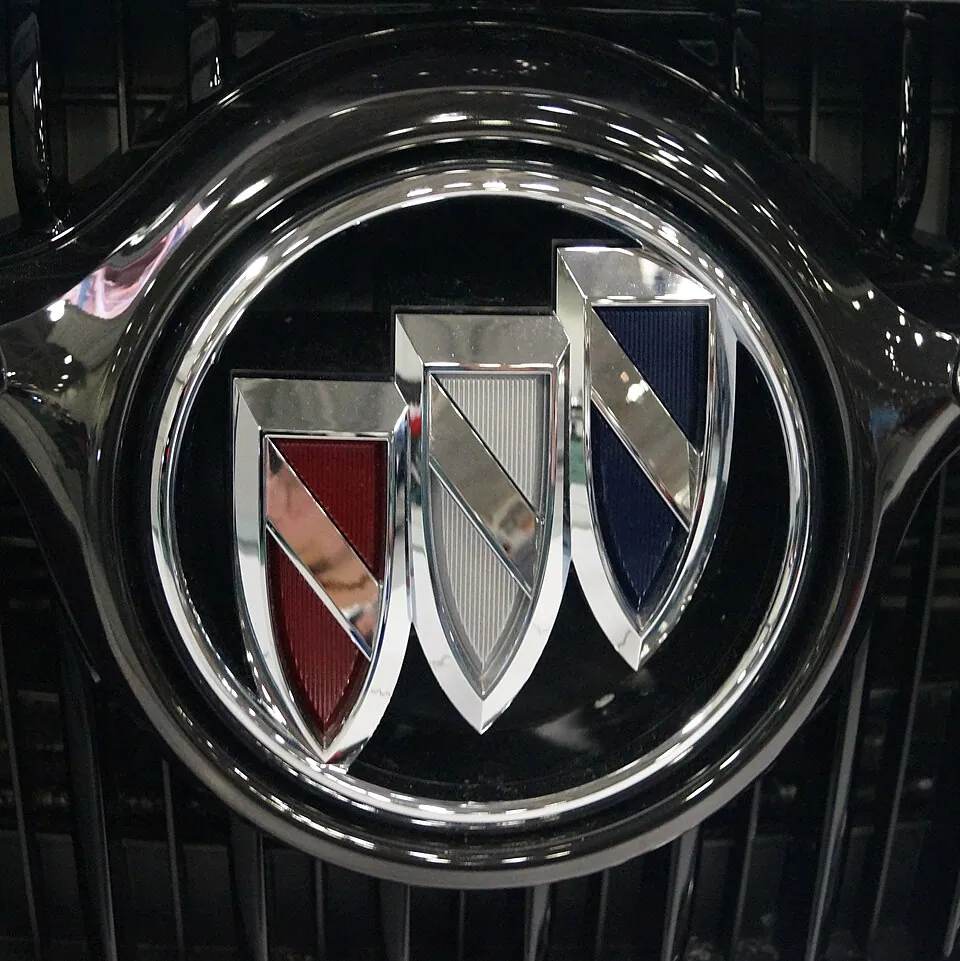
Buick's badge comes from the founder's family coat of arms. In the mid-1930s Ralph Pew, a researcher in General Motors' styling department, found in the Detroit Public Library a description of the arms of the Scottish Buik family (the old form of the surname) in an 1851 edition of Burke's armory. The description had no picture: a red shield with a diagonal band of silver and blue checks, a stag's head with antlers above, and below a gold cross with a hole through which the red background shows.
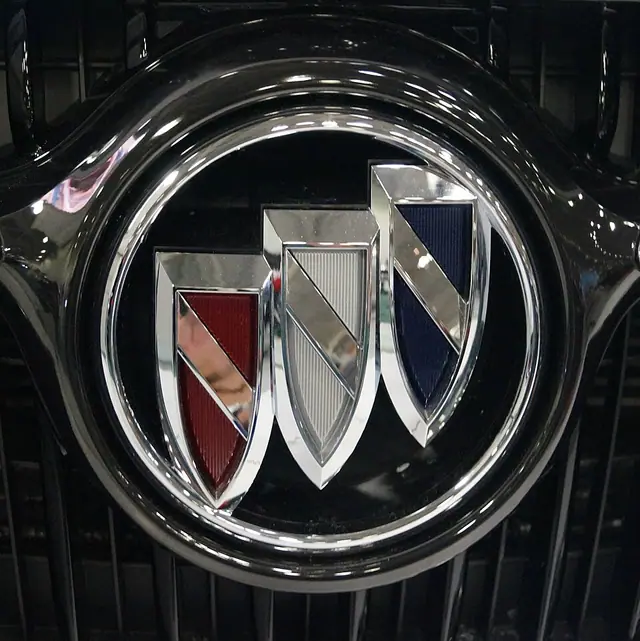
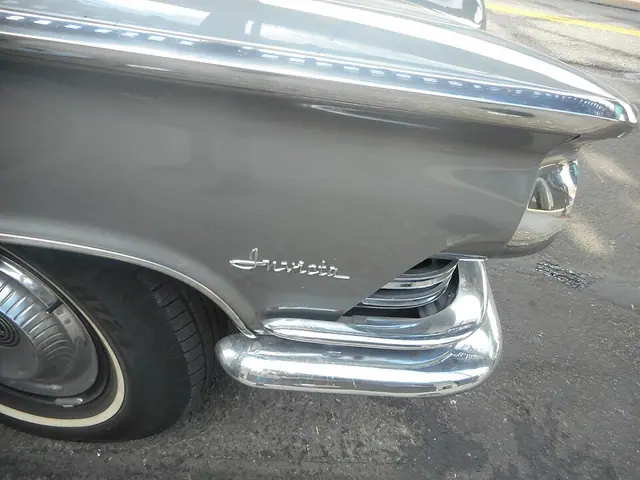
Buick first put these arms on its cars in 1937, above the radiator grille. In 1939 the shield became taller and narrower, and in 1942 it gained ornaments at the top and bottom. For the 1960 model year the single shield was replaced by three, in red, white and blue, representing the three new models introduced in 1959: the LeSabre, Invicta and Electra. In the 1970s the main badge was for a time a hawk, but the three shields returned in the 1980s. Today's badge is simplified: the stag, the cross and the checks have gone, leaving only the outlines of the three shields.
Key moments
- 1899. David Buick founds the Buick Auto-Vim and Power Company and starts developing engines and cars.
- 1903. On 19 May the Buick Motor Company is founded in Detroit; the same year James H. Whiting takes over the company and moves it to Flint.
- 1904. 37 Model B cars are built; William C. Durant takes charge.
- 1906. David Buick leaves the company.
- 1908. Buick is the largest carmaker in the USA, and Durant founds General Motors on it.
- 1909. Bob Burman wins the first race at the new Indianapolis track in a Buick, with Louis Chevrolet second.
- 1911. Louis Chevrolet and Durant found the Chevrolet company.
- 1938. The Buick Y-Job, the work of designer Harley Earl, is regarded as the industry's first concept car.
- 1939. Buick is the first to introduce turn signals.
- 1949. The Buick Roadmaster introduces the round holes on the front wings, the VentiPorts, which become a trademark of the brand.
- 1960. The three-shield badge is introduced.
- 1998. After 95 years the headquarters moves from Flint to Detroit; in Shanghai the first Buick built in China rolls off the line at the plant of the Shanghai GM joint venture.
- 2004. With the end of Oldsmobile, Buick becomes the oldest American car brand still in existence.
- 2009. During General Motors' bankruptcy Buick is kept as one of the core brands, mainly because of its success in China.