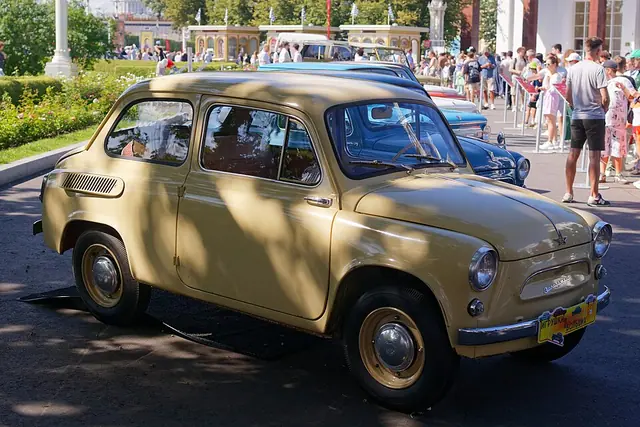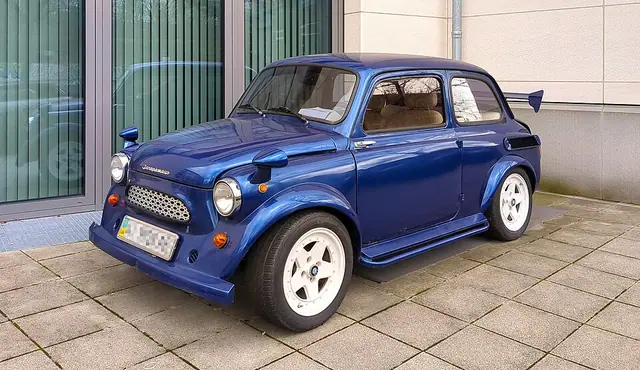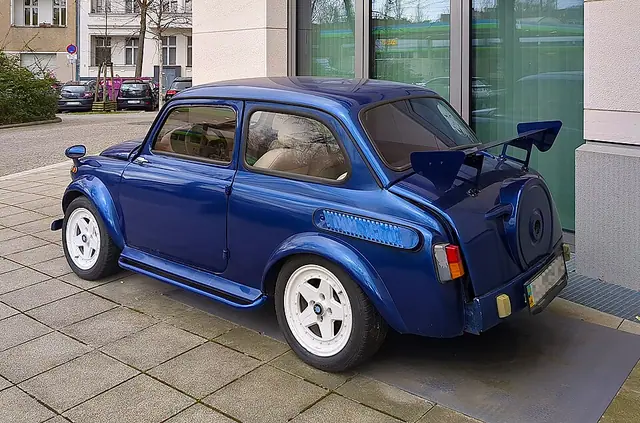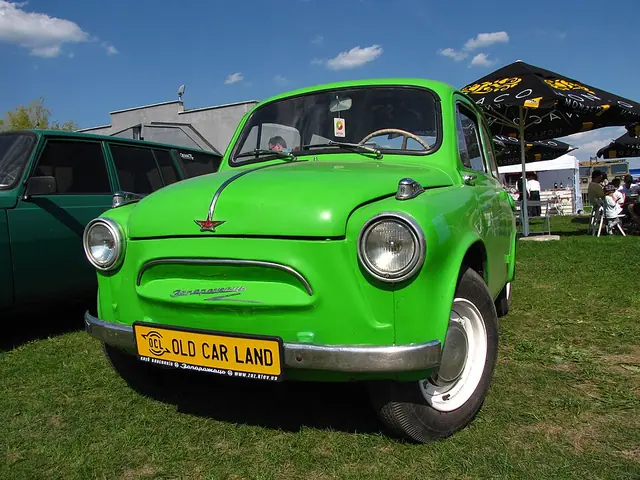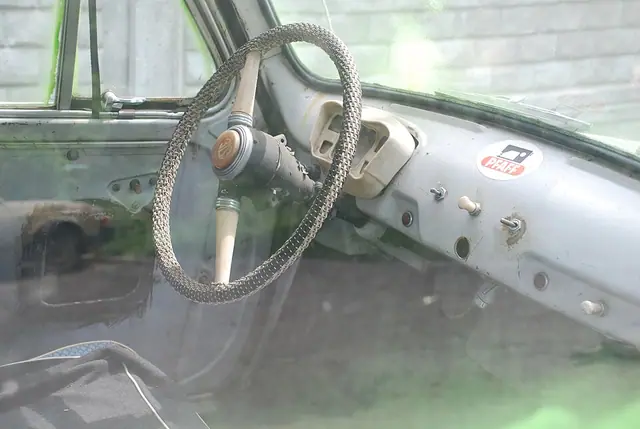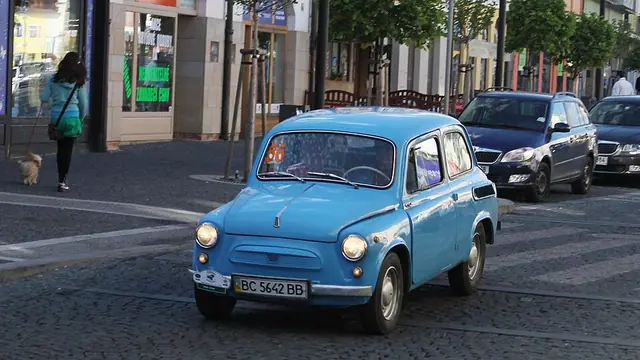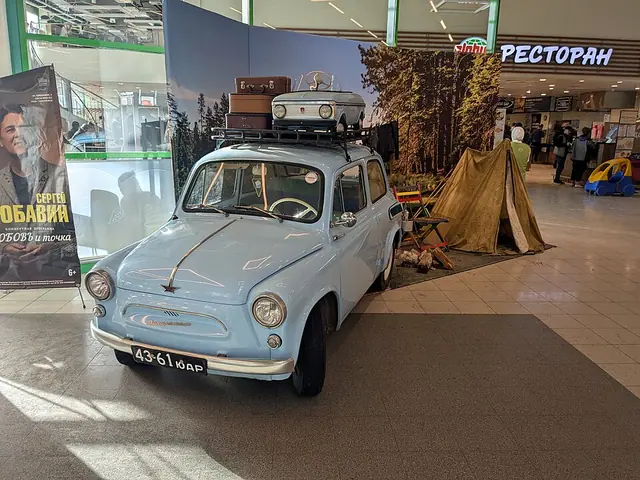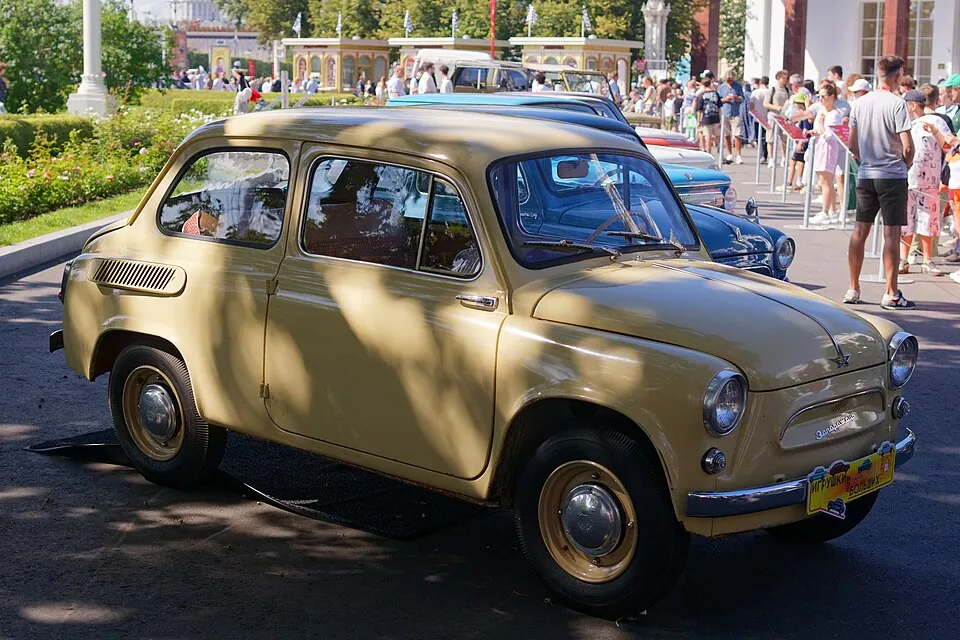
The "hunchback" Zaporozhets was the first true Soviet people's car: the cheapest car in the country, with an air-cooled V4 in the back and a shape reminiscent of the Fiat 600. Though modest and noisy, it was tough, easy to repair and coped well with bad roads, so it became "the car for pensioners and intellectuals". It gave rise to a whole family of Zaporozhets cars that was built until 1994.
Story
Work on a simple, cheap city car began in 1956, partly to replace the Moskvitch 401, which was then going out of production. Small cars at that time accounted for between 25 and 40 per cent of car sales in Europe, and the minister for the automotive industry, Nikolay Strokin, chose the new Fiat 600 as the model to follow. The first prototype, the Moskvitch-444, was built by the Moscow MZMA factory in October 1957. It had 13-inch wheels and 200 mm of ground clearance, and was powered by a flat-twin engine from the Irbit motorcycle plant that produced only 17.5 hp and lasted only 30,000 km between major overhauls.
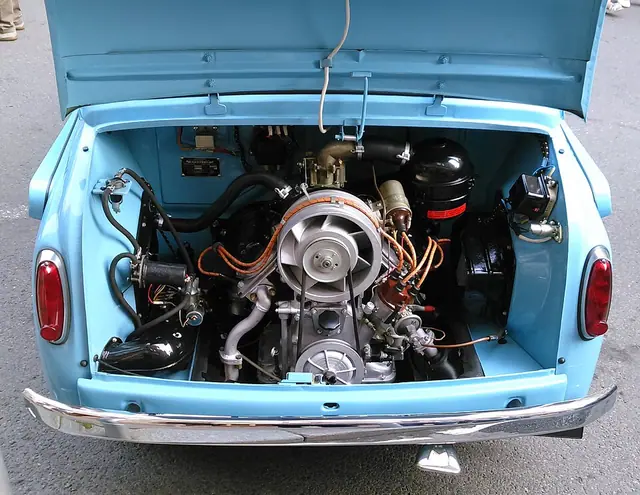
So the air-cooled NAMI-G V4 of 746 cc and 23 hp was chosen, also being developed for the LuAZ-967 off-roader, with a magnesium alloy block. It was built by the MeMZ plant in Melitopol. The engine required the rear of the car and the rear suspension to be redesigned, and under the influence of the LuAZ designers the car was given independent suspension on all four wheels, with torsion bars at the front. The front doors were hinged at the rear, partly to make access easier for disabled people. Although it looked like the Fiat, the Zaporozhets was technically quite a different car, with bigger wheels and a V4 instead of an inline four.
Production was approved on 28 November 1958, when the factory in Zaporizhzhia was renamed the Zaporizhzhia Automobile Factory (ZAZ). The first car was delivered on 12 June 1959, the model was approved on 25 July 1960, and series production began on 25 October 1960. The Zaporozhets cost 1,800 roubles (after the redenomination). There was also a post office van, the ZAZ-965S, with right-hand drive and blanked-off rear windows, and many cars were built in versions for disabled drivers, with hand controls. These were given free or at a large discount, especially to war veterans, and at times made up as much as a quarter of ZAZ's output.
From November 1962 the improved ZAZ-965A was built with an 887 cc engine of 27 hp, and from November 1966 also with 30 hp. The 90-degree V4 layout proved practical in harsh winters, and the rearward weight gave good traction on steep slopes, but at the expense of poor stability in corners. Its modest output gave rise to the joke that the Zaporozhets engine was used as a starter motor for tanks. For export there was the better-equipped ZAZ-965AE "Yalta". The name Zaporozhets means a Cossack of the Zaporizhian Sich or a man from Zaporizhzhia, and the car got the nickname "horbatyi" (hunchback) because of its shape, although factory workers never used it.
From November 1966 to May 1969 the ZAZ-965A was built alongside its successor, the ZAZ-966, and production then ended after about 322,000 cars. The Zaporozhets appeared in the 1963 Soviet comedy "Three Plus Two", and in the James Bond film "GoldenEye" (1995) Bond's CIA contact Jack Wade drives a 1963 ZAZ-965A. The ZAZ-965 also formed the basis for two prototypes that never went into production, the 1962 NAMI 086 "Sputnik" and the 1969 ZAZ KD with a glassfibre body.