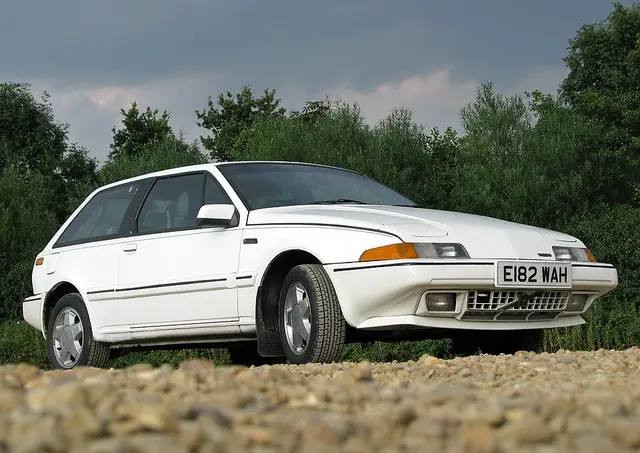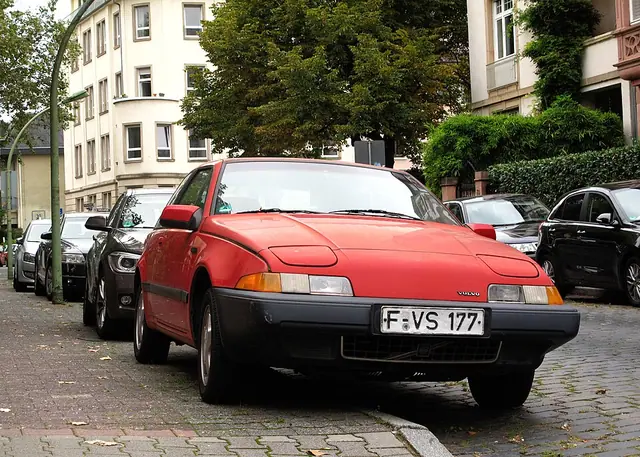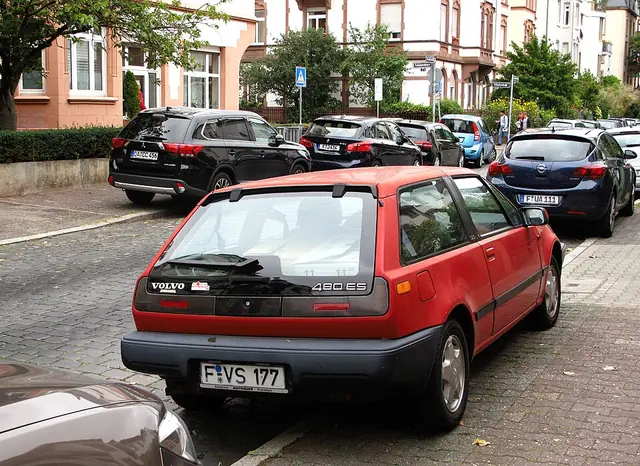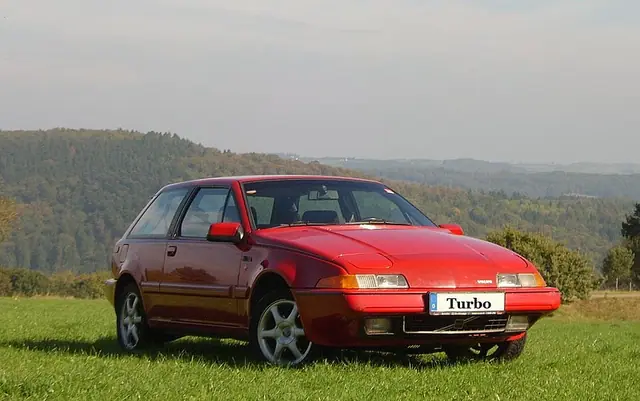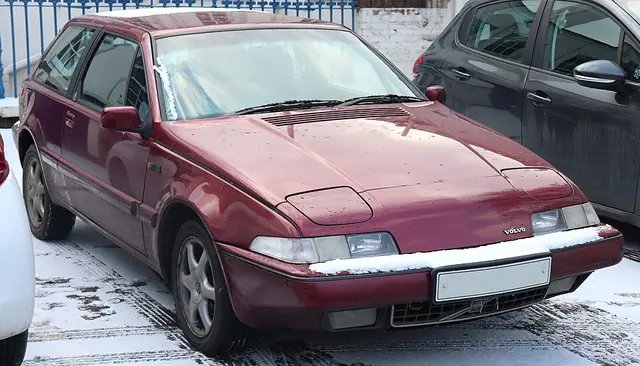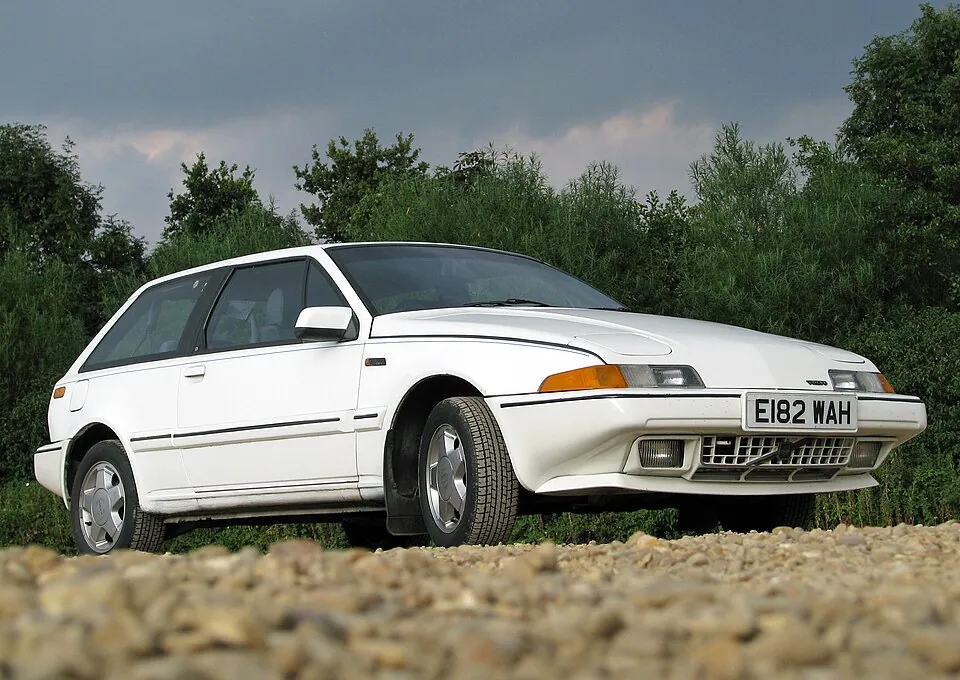
The Volvo 480 is the first front-wheel-drive Volvo and the only Volvo with pop-up headlights. With its wedge-shaped nose and glass tailgate like that of the P1800 ES, it was meant to show that Volvo could build something other than reliable boxes, and it was made in the Netherlands, in the former factory of the DAF brand. Although it sold modestly, it was the first car from the large project through which Volvo moved from rear-wheel to front-wheel drive.
Story
At the end of the seventies Volvo knew that its rear-wheel-drive cars, such as the 200 Series, would not last for ever. In 1978 a large secret project called Galaxy was launched to devise a new generation of cars with front-wheel or four-wheel drive and new engines. The first front-wheel-drive prototype was ready in 1980, and then the work was divided: Volvo in Sweden took on the larger car, which became the 850, while the Dutch subsidiary Volvo Car B.V. took the smaller models, the 440, 460 and 480. The subsidiary's factory in Born had previously built cars of the Dutch DAF brand, among them the DAF 66, and then the Volvo 300 Series, all of them rear-wheel drive. The first of the new family was the 480 itself, which took six years to develop from idea to production.
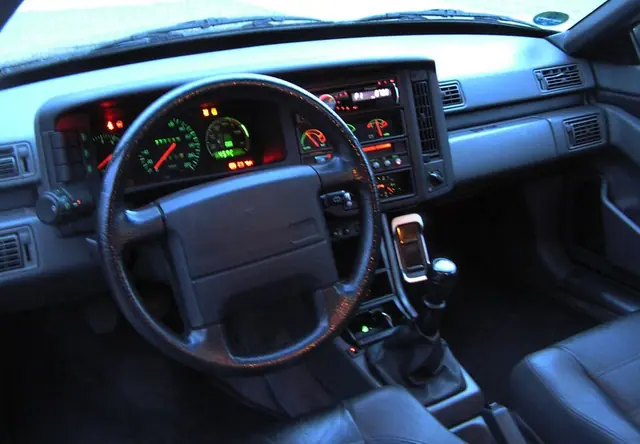
Sketches were also submitted by the famous Italian coachbuilding studio Bertone and by Volvo's chief designer Jan Wilsgaard, but the proposal by John de Vries of the Dutch subsidiary was chosen. The key words were dynamism and character. The low, wedge-shaped car with its pointed nose and pop-up headlights recalled the sports cars of the eighties, and the abruptly cut-off tail with its glass tailgate was a tribute to the P1800 ES of 1971, from which the ES designation was also taken. The pop-up headlights also had a practical reason: Volvo planned to sell the car in the USA, where regulations demanded a minimum headlight height, which low-mounted fixed headlights would not have met. For the same reason the 480 got bumpers that could withstand an impact at 8 km/h without damage. The nose and bonnet were made of composite materials, to save weight and give better pedestrian protection. The interior, with a driver-oriented dashboard and two separate rear seats with adjustable backrests, was drawn by Peter Horbury, later Volvo's chief designer.
Volvo placed special emphasis on electronics. The trip computer, the "electronic information centre", showed average consumption, average speed, range and outside temperature, all digitally. Daytime running lights, headlights that kept lighting the way home for half a minute after the engine was switched off, and a rear wiper that switched on automatically when reversing were rarities at the time. The 1.7-litre engine came from Renault and had 109 hp, enough for 190 km/h. The rear axle was developed with the help of Lotus, so the car was praised for its handling, and in 1987 the British magazine What Car? named it the winner in a comparison with the Honda Accord Aerodeck. From 1988 the 480 Turbo with 120 hp was offered, and in 1993 a 2.0-litre engine with slightly more power and, above all, more torque.
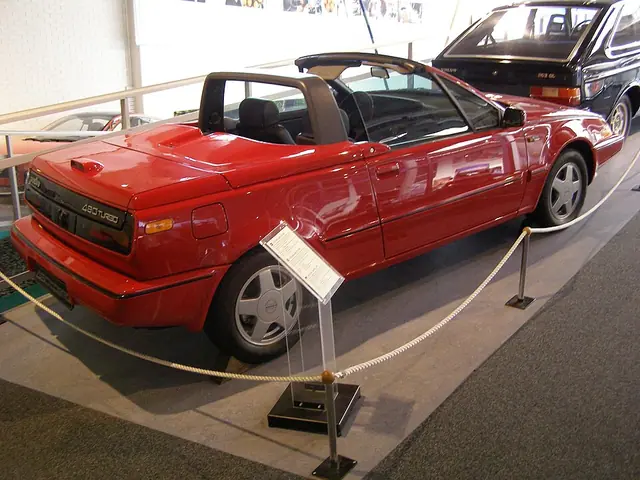
The plans for America did not come to pass. Although Volvo was counting on 25,000 cars a year across the Atlantic, US sales were postponed indefinitely in February 1988 because of the weak dollar and unfavourable market conditions. Thanks to the "American" engine, about 300 Turbos were exported to Japan in 1989, without the decorative bumper strips, so that the width stayed below 1.7 metres and the car fell into a more favourable tax bracket. Early cars had many build-quality problems, so one Dutch magazine called it the "coupé from hell". Several prototypes were built, among them an electric 480 from 1986, with batteries in place of the rear seats and a range of about 120 km, and a convertible was shown at the 1990 Geneva Motor Show. It was due to go into production in early 1991, but was abandoned because of a supplier's bankruptcy and concerns about rollover protection; three prototypes are now kept at the Volvo Museum in Gothenburg.
The Volvo 480 was sold mainly in Europe, and its biggest market was the United Kingdom, with about 22,000 sold. To mark the end of production the special Celebration and Collection editions were built, 480 of each. The last Volvo 480, a grey 2.0 ES, rolled off the line in Born on 7 September 1995 and is now in the Volvo Museum; 76,375 were built in total. Its place in the factory was taken by the new compact Volvo S40. Volvo did not build a similar compact three-door car with a glass tailgate again until the C30 of 2006.