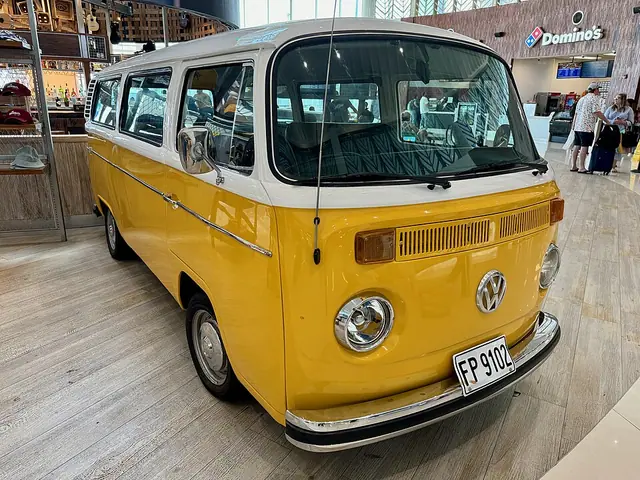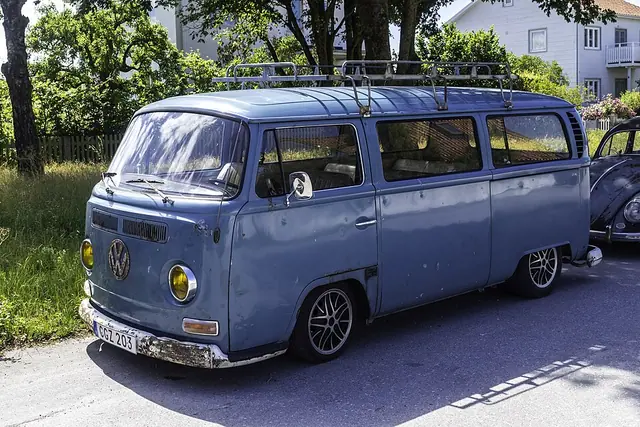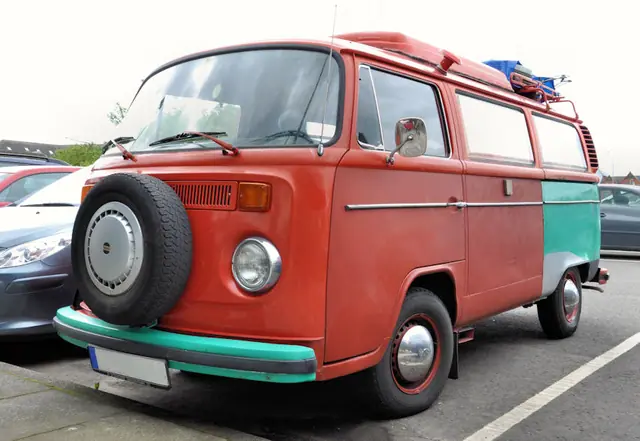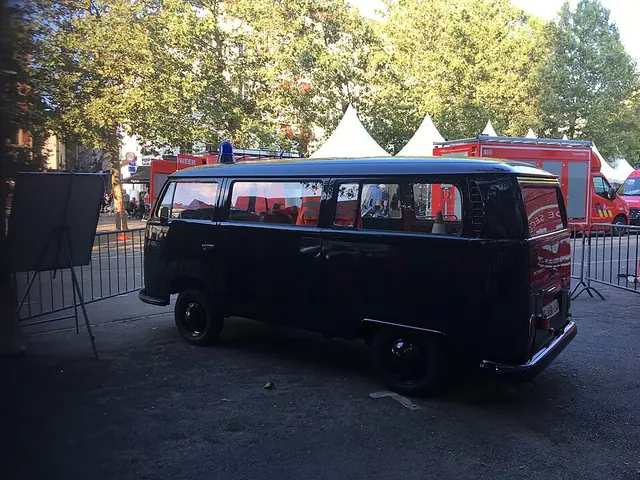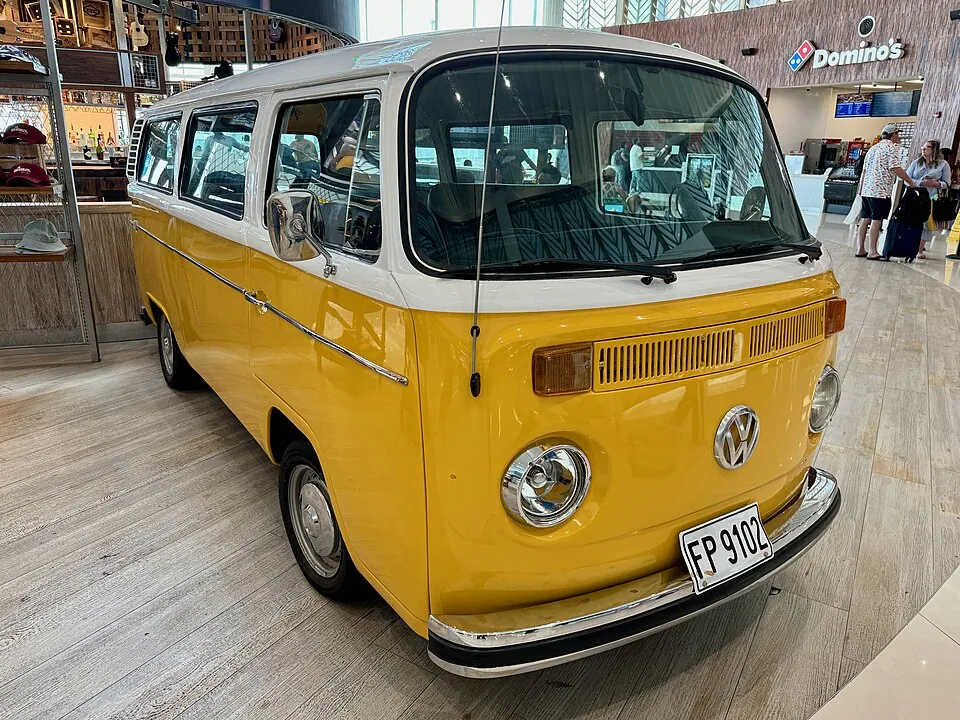
The T2 is the second and longest-lived "Bulli": it was built in Germany for twelve years, and in Brazil, in modernised form, right up to the end of 2013. That made it the last rear-engined Volkswagen, a descendant of the Beetle. It became a symbol of travel and of the counterculture of the sixties and seventies, so many people still call it the "hippie van".
Story
The idea of a van based on the Beetle came from the Dutch Volkswagen importer Ben Pon, who in April 1947 sketched a vehicle with the driver at the front and the engine at the back. The first Transporter (now called the T1) went into production in 1950 and was recognisable by its two-piece split windscreen and the large V on the front.
The second generation was unveiled in 1967. It had a single curved windscreen, which earned it the name "Bay Window" in the English-speaking world, was about twenty centimetres longer and offered more space and better visibility. A sliding side door became standard, the electrical system switched to 12 volts, and a new rear suspension with jointed half-shafts replaced the old Beetle-style swing axle. The engine remained an air-cooled rear-mounted boxer, but over the years it grew from 1.6 to 2.0 litres. From 1972 there was also an experimental electric version.
By 1979, when it was replaced by the T3, more than two million had been built in Hanover. In Latin America the story continued: in Mexico the T2 was built until 1994, and in Brazil, under the name Kombi, until 31 December 2013. In 2005 the Brazilian Kombi got a water-cooled engine that also runs on ethanol. Production was finally stopped by new Brazilian regulations requiring airbags and ABS, and the final series was called "56 Anos Kombi – Last Edition".