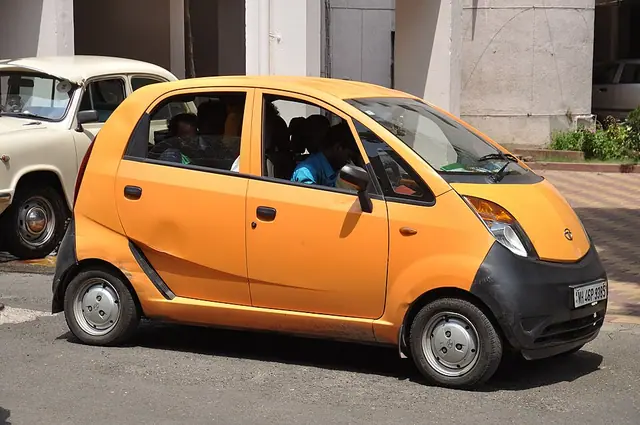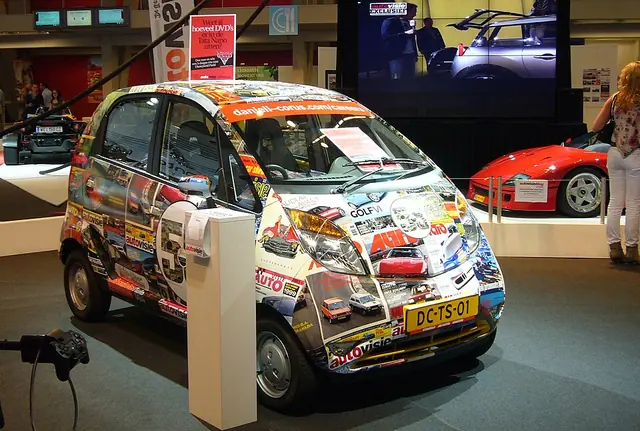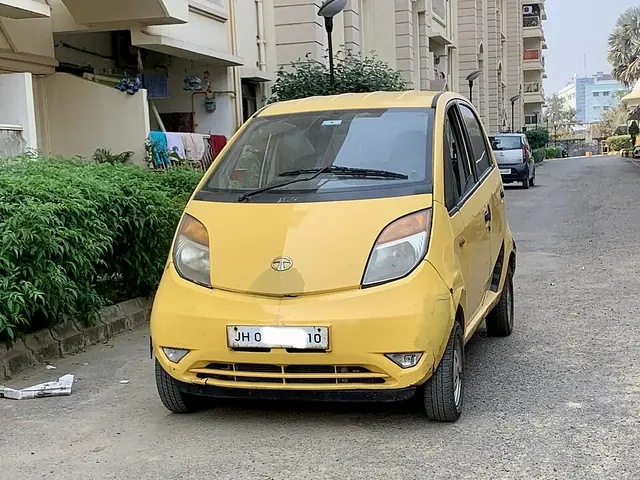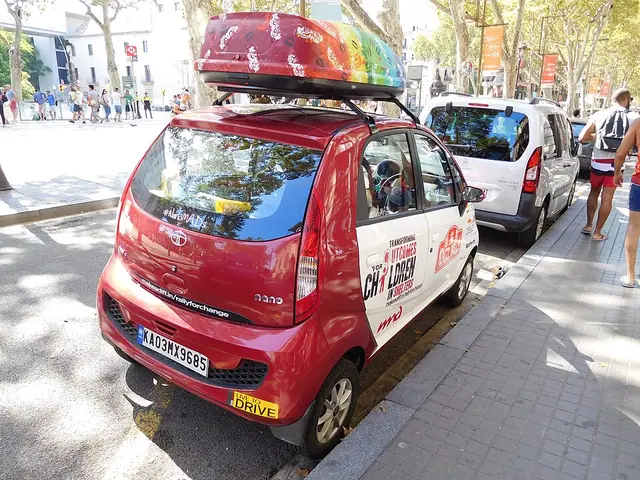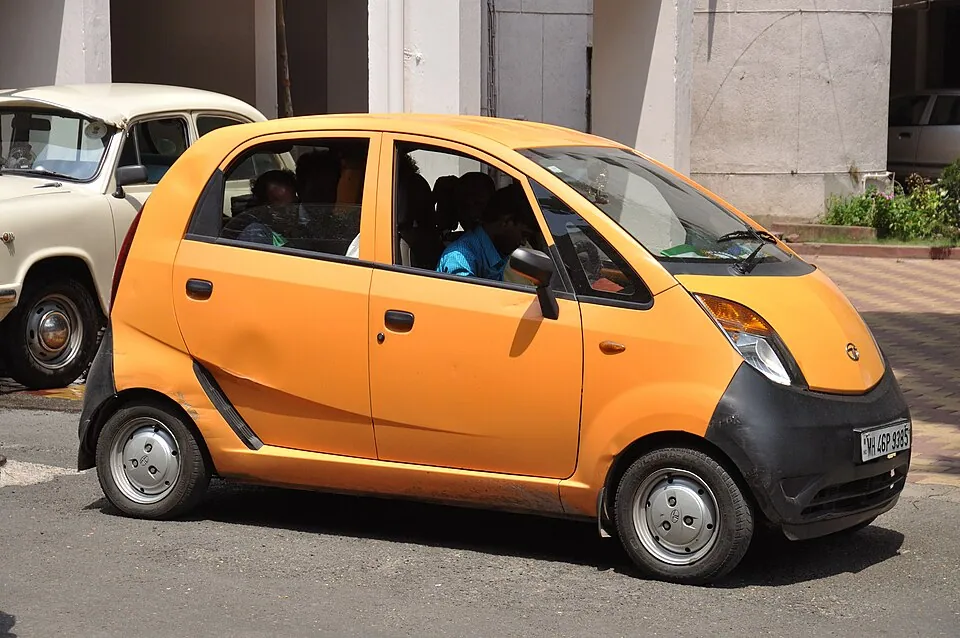
The Nano was the cheapest production car in the world, known even before it had a name as the "one lakh car", i.e. 100,000 rupees. It was conceived for Indians who rode motorcycles and scooters, and to make it so cheap Tata left out everything that was not essential, from the second wiper to the fourth wheel nut. It became a symbol of the Indian industry's ambition, but also an example of how an impression of excessive cost-cutting can put buyers off.
Story
After the success of the low-cost Tata Ace small truck in 2005, Tata Motors began developing an affordable passenger car for motorcycle and scooter owners. The exterior and interior were styled at the Italian I.DE.A institute (designer Justyn Norek) and at Tata's own studio (Pierre Castinel), and the project was led by Girish Wagh. Group chairman Ratan Tata promised a car for one lakh rupees, so before it had a name the Nano was known as the "One Lakh Car". During development 31 design patents and 37 technology patents were filed.
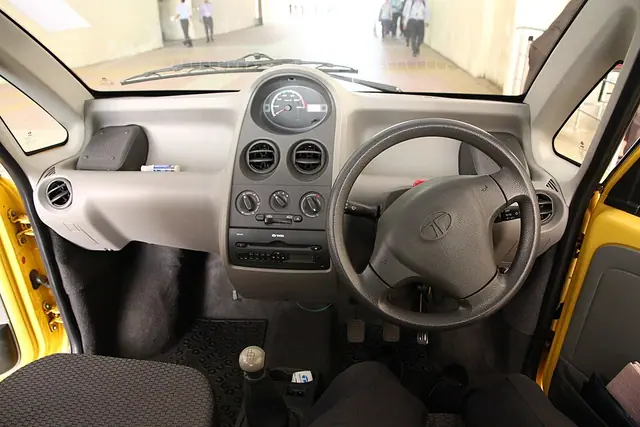
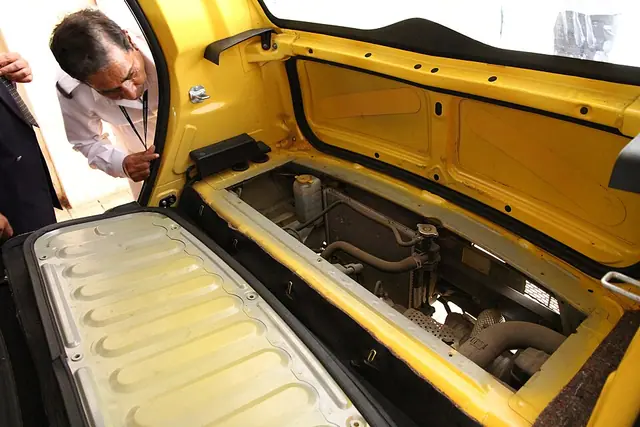
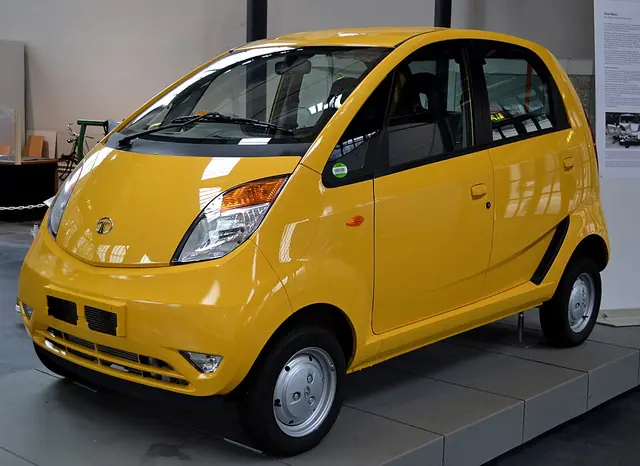
The price was achieved by doing without everything superfluous. The Nano had only one wiper, only one door mirror on the base version, three wheel nuts per wheel, drum brakes all round, no airbags and no power steering, and the fuel filler was under the front lid. The luggage space behind the rear seat could only be reached from inside. Some joints were bonded rather than welded. The 624 cc two-cylinder engine with a single balancer shaft, developed with help from the German firm FEV of Aachen, was mounted at the rear and produced 38 PS. The Nano reached 105 km/h and, according to the factory, used 4.24 l per 100 km.
The car was unveiled on 10 January 2008 at the Auto Expo in New Delhi and immediately attracted huge attention; used-car prices fell, and sales of its nearest rival, the Maruti 800, dropped by 20 per cent at once. The factory was to be in Singur in West Bengal, but local farmers protested against the acquisition of their land, so Tata delayed the launch and moved production to Sanand in Gujarat. The right to buy the first 100,000 cars was drawn by lottery, and the promised price applied only to them. On 17 July 2009 in Mumbai, Ratan Tata personally handed the first Nano to the customs officer Raghunath Vichare, who had won the right to the first purchase.
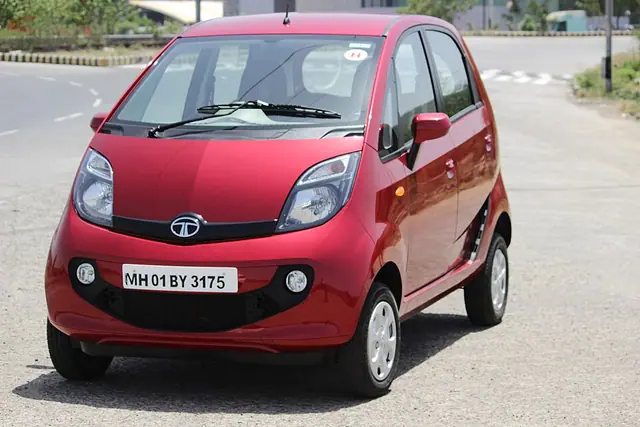
Expectations were enormous: in 2008 the agency CRISIL predicted the Nano would expand the Indian car market by 65 per cent, and Tata planned capacity for 250,000 cars a year. Reality was different. In the first two years about 70,000 cars a year were sold, several Nanos caught fire in 2009, and buyers saw it as unsafe and too frugally built. The price soon rose almost to double. In 2012 Ratan Tata admitted that early opportunities had been wasted because of initial problems. Attempts to revive the model brought the CNG emax natural-gas version (2013) and the facelifted GenX Nano (2015) with a hatch, air conditioning and an automated manual gearbox, but without much success.
Sales fell to 7,591 cars in the 2016/17 financial year, and in October 2017 only 57 were built. The project lost money, as confirmed by Cyrus Mistry and by Tata Motors management; in June 2018 only one Nano was built, and production was ended. Neither the European Nano Europa version, shown at Geneva in 2009, nor the electric Nano, shown there in 2010, ever arrived. Still, the Nano remains an example of a bold engineering idea, and one car now stands in the Deutsches Museum in Munich.