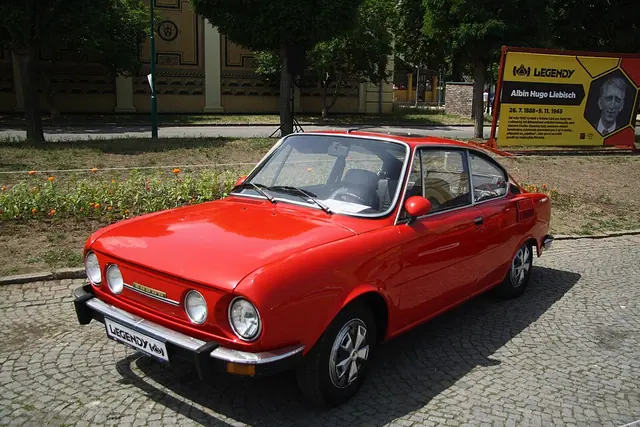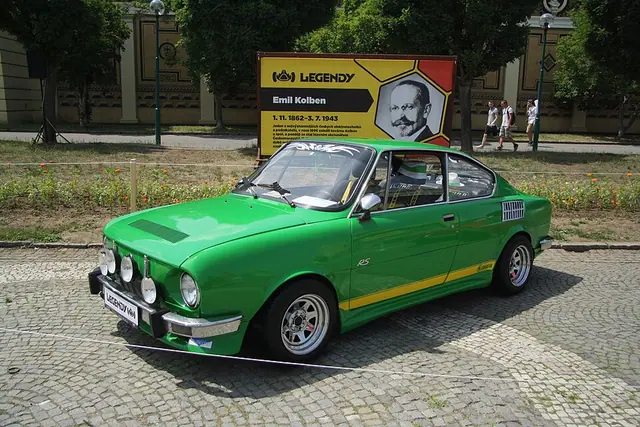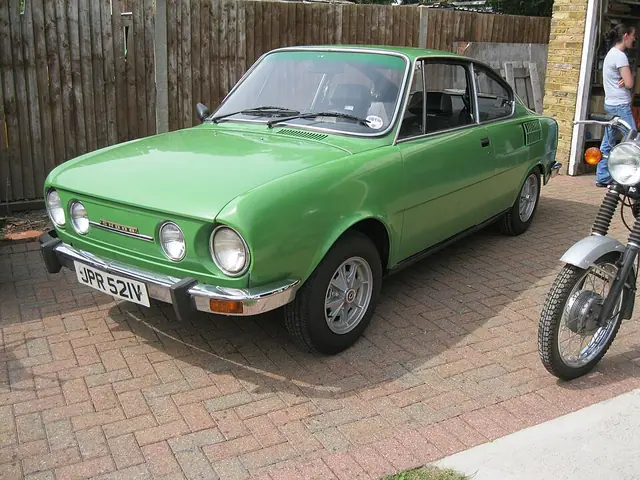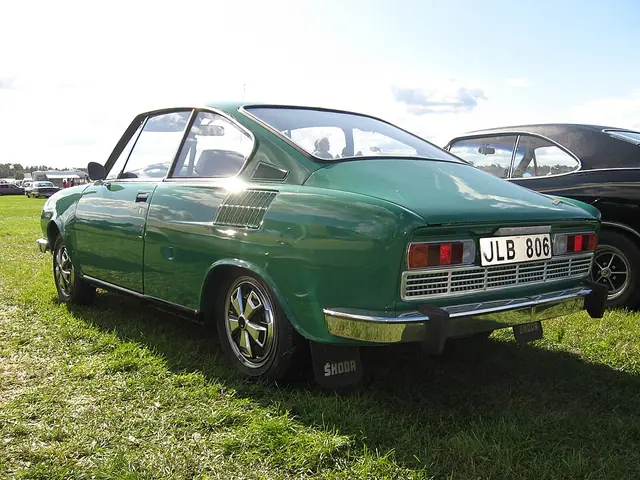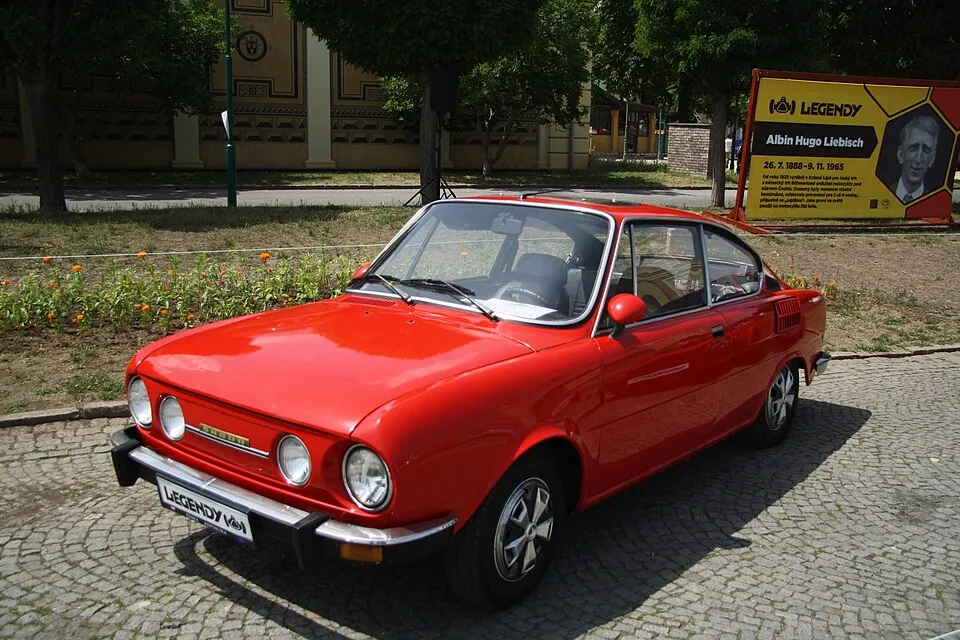
The Škoda 110 R was the only true sports coupe offered by the Czechoslovak industry in the 1970s: with its rear engine, four headlights and elegant fastback roof, it was the dream of many drivers behind the Iron Curtain. It was the basis of the Škoda 130 RS and 200 RS competition cars, which beat much more powerful Western cars in rallies and on circuits.
Story
Its predecessors, the two-door sporting 1000 MBX and 1100 MBX from the Škoda 1000 MB family, sold poorly because their pillarless body was awkward. Škoda needed a proper sports coupe, and the French Simca 1200S served as a model: testing and dismantling one of these cars sped up development. The first 110 R prototype was built in 1968, and series production began in 1970 at the Kvasiny plant. The front end was almost the same as on the Škoda 110 saloon, but the car had only two doors with frameless windows, opening rear side windows and a distinctive sloping tail.
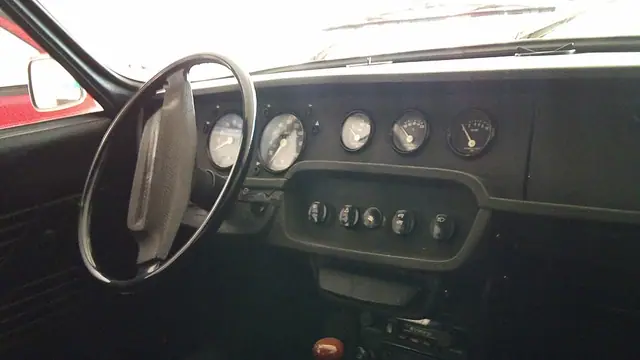
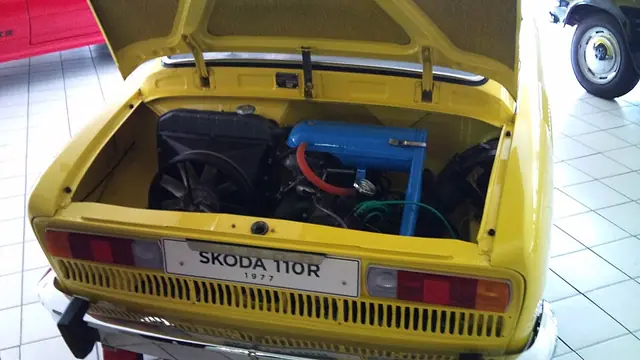
The engineering was familiar from Škoda's rear-engined saloons. The water-cooled 1,107 cc four-cylinder engine, mounted behind the rear axle, produced 52 PS DIN (62 hp SAE) in coupe form, and with a fully synchronised four-speed gearbox the car reached 145 km/h and accelerated to 100 km/h in 18.5 seconds. The 32 l fuel tank sat at the front, under the luggage compartment, and consumption was about 8.5 l per 100 km. The brakes were dual-circuit, with discs at the front. Inside there were two sports seats and two occasional seats at the back, and the dashboard also had a rev counter, a temperature gauge and an oil pressure gauge. The coupe was 4,155 mm long and weighed 880 kg.
Over ten years of production the changes were small. The first models (1971) had decorative strips on the front wings, a dashboard with imitation wood and a grille with two headlights. From August 1971 it gained head restraints and ventilation grilles on the rear pillars, and in early 1973 a new grille with four headlights, for which it is best known. Later mainly the colour range and optional extras changed, and the last cars from the second half of 1980 got a heated rear window and 13-inch wheels. Production ended in 1980, after 57,085 cars according to factory data, and its successor, the Škoda Garde, a coupe based on the 105/120 series, was introduced in November 1981.
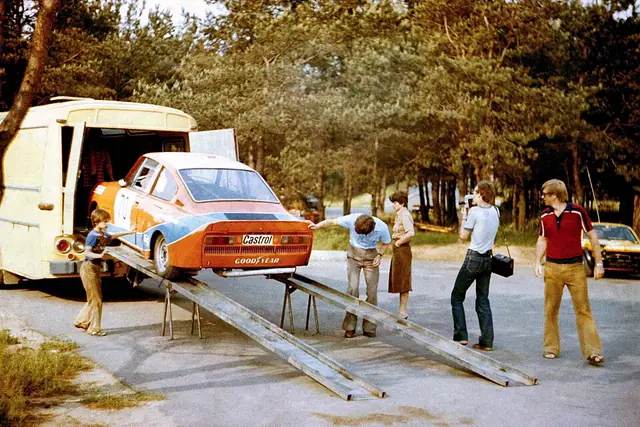
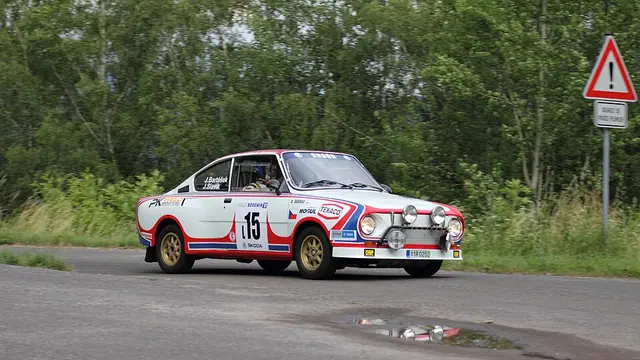
The coupe also became the basis of successful competition Škodas. It gave rise to the 110 R Rallye, the one-off 180 RS and 200 RS with 1.8 and 2.0 l overhead-camshaft engines, and above all the homologated 130 RS rally car. The ultimate development was Bořivoj Kořínek's 1975 2000 MI, with fuel injection and 250 hp. There was also a small civilian series of the 130 RS with a 100 hp engine, a few dozen cars sold for hard currency through Tuzex and exported to West Germany.
After 1990 many 110 Rs were modified, often without much taste, for example by fitting engines from the Favorit. Today the coupe is much sought after by collectors, with cars preserved in original condition valued most.