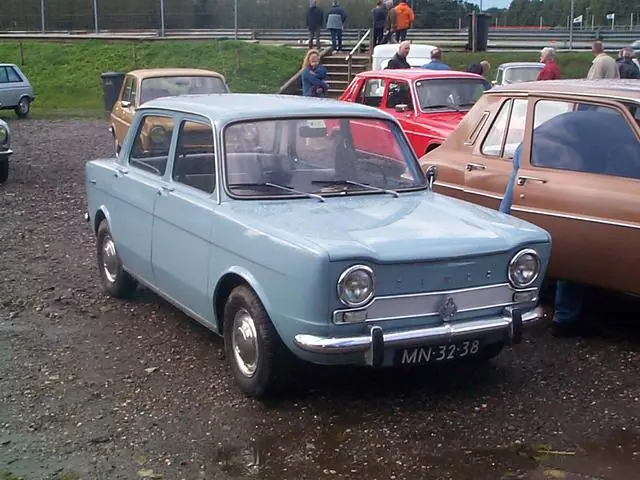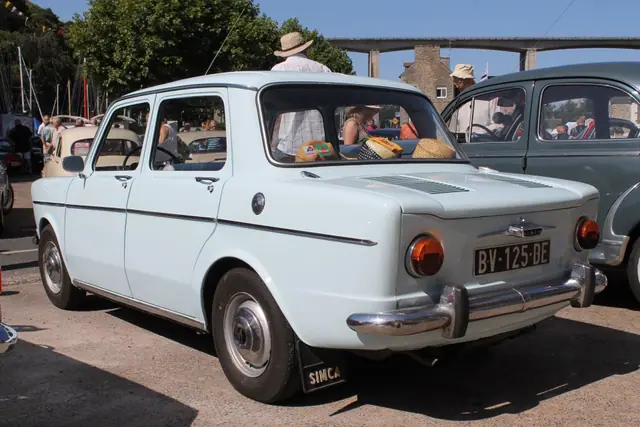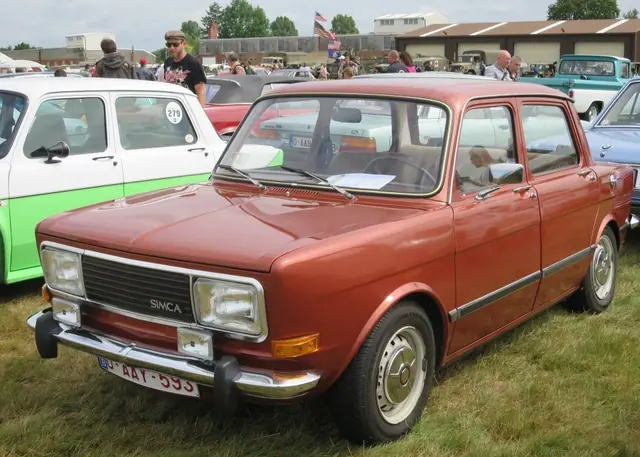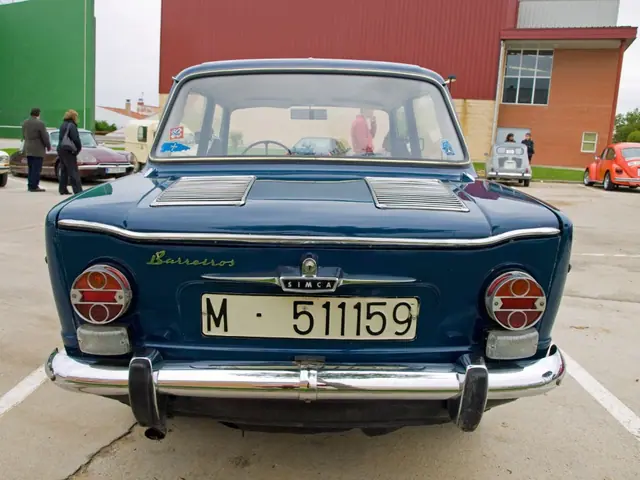
The Simca 1000 is really "the Fiat that never was": it grew out of Fiat's project for a successor to the Fiat 600, which Henri Pigozzi picked for Simca while Fiat went on to build the 850. The small, boxy rear-engined car sold more than a hundred thousand a year in France throughout the 1960s, and almost two million were sold in 17 years. Its sporty Rallye versions created a whole generation of French amateur rally drivers.
Story
Simca's boss Henri Pigozzi was born in Turin and had been a friend of Fiat founder Giovanni Agnelli since 1922, and Fiat was Simca's largest shareholder until 1963. Pigozzi therefore had access to Fiat's development department, where Dante Giacosa's team was working on a successor to the Fiat 600. There were two projects: "119", with two doors, and "122", with four doors and more radically different. Pigozzi chose Project 122 for Simca, and Fiat turned Project 119 into the Fiat 850. Simca's head of styling, Mario Revelli de Beaumont, worked from 1959 to 1961 with Fiat's Felice Mario Boano to get the car ready for production.
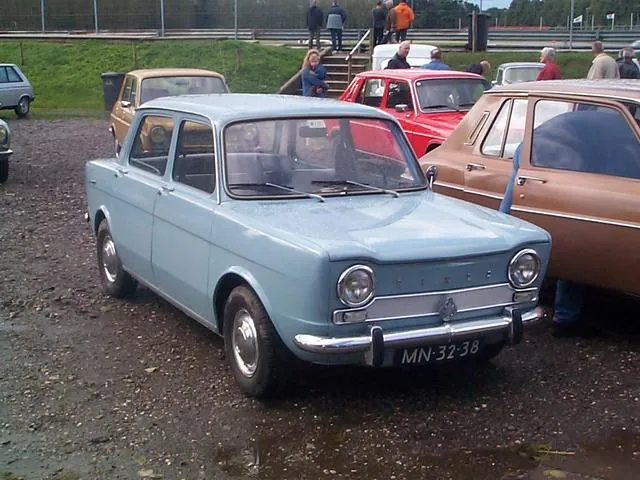
The Simca 1000, "Simca Mille" in French, went into production on 27 July 1961 and was officially unveiled with a big publicity campaign at the Paris Motor Show on 10 October 1961. Pigozzi stressed that it was a Simca, without mentioning Fiat. It had a new water-cooled 944 cc engine at the rear, four doors, surprisingly generous space for four and the boxy shape that makes it instantly recognisable. With the engine and fuel tank at the back, 65 per cent of the weight was on the rear axle, so the front end was very light and the car tended to oversteer in corners. In Paris, Simca, which owned a taxi company, immediately replaced 50 of its taxis with the new model.
The Simca 1000 was a hit: 154,282 were built in 1962, its first full year, and French sales stayed above 100,000 a year until 1974. It was built in many versions, from the cheap 900 to the luxurious Spécial, with engines from 777 to 1,294 cc, and could also be had with a semi-automatic gearbox. In Spain it was built by Barreiros from 1965, and in Colombia by Chrysler Colmotores, where it also served as a taxi. It was sold in the United States from 1963.
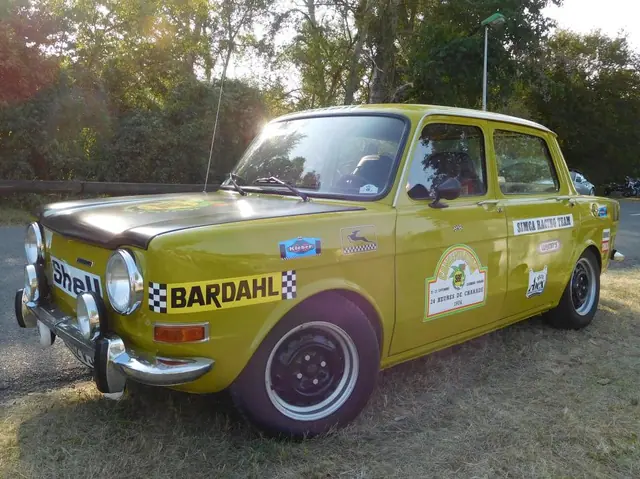
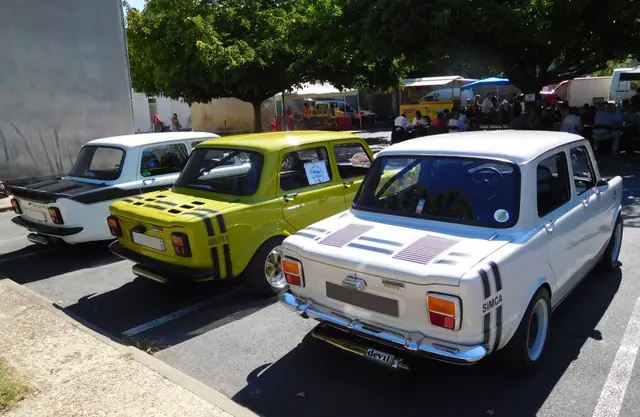
The Italian tuner Abarth built Simca-Abarth sports versions with up to 65 PS, and Simca itself later offered the Simca 1000 Rallye. The Rallye 1, 2 and 3, with a matt black bonnet and up to 103 PS in the last version, were a cheap way into rallying and racing for young French drivers. The last Rallye 3 was built in 1978 in just 1,000 cars. In 1977 the Simca 1000 got rectangular headlights and the names 1005 and 1006, and production ended in 1978 without a direct successor.