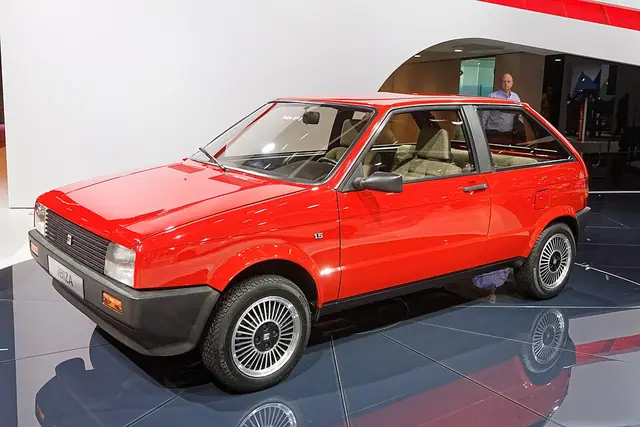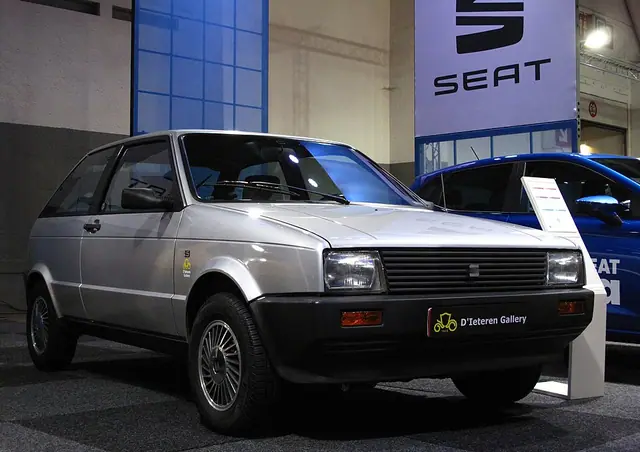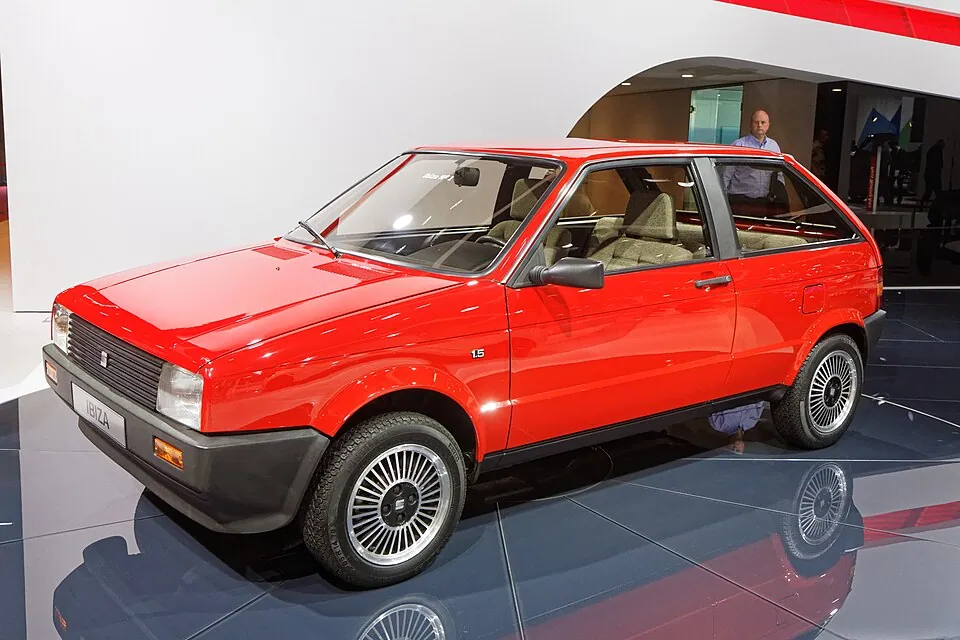
The Ibiza was the first car SEAT developed as an independent company, after a long period of building Fiat-based models. Advertised as having "Italian styling and German engines", with a shape by Giorgetto Giugiaro and engines bearing the "System Porsche" inscription, it became the best-selling SEAT and the foundation of the brand. It is named after the Spanish island of Ibiza, and five generations have been built so far.
Story
As the first model SEAT developed on its own, the Ibiza was developed from the SEAT Ronda, itself derived from the Fiat Ritmo, with the help of three well-known firms: the shape was drawn by Giorgetto Giugiaro at Italdesign, Germany's Karmann prepared it for industrial production, and the engine and gearbox were developed together with Porsche. According to the English source, Giugiaro reused his proposal for the second-generation Volkswagen Golf, which Volkswagen had rejected. SEAT was allowed to put the "System Porsche" inscription on the engine blocks only after paying Porsche a royalty of seven German marks per car sold.
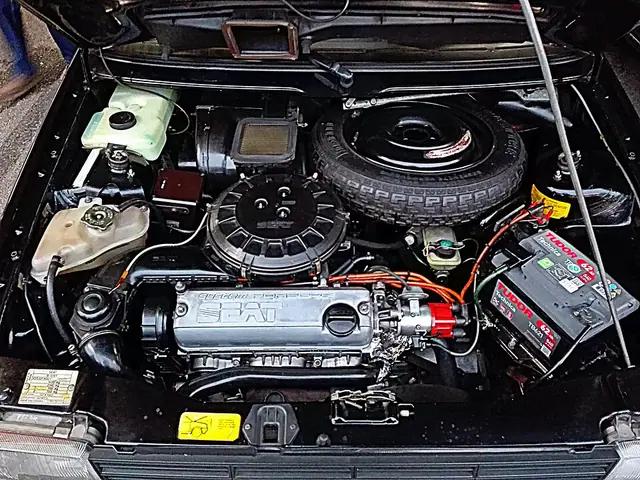
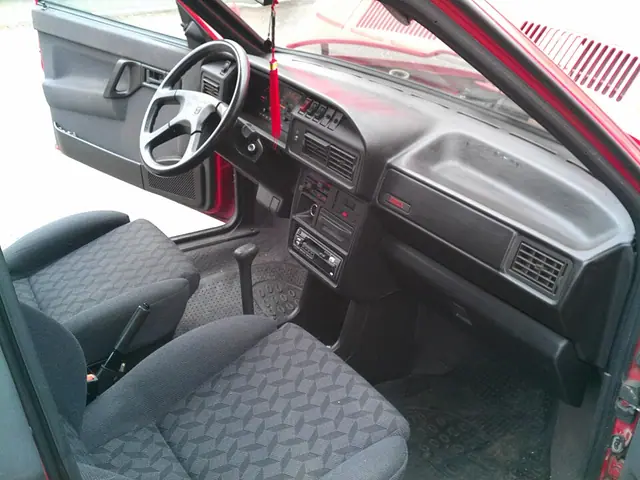
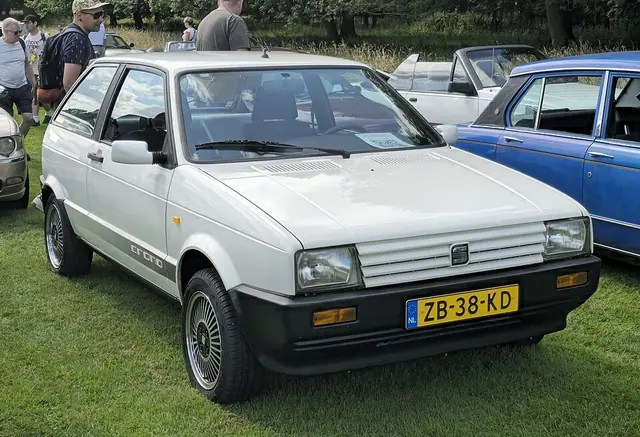
Production began on 27 April 1984 at the Zona Franca plant in Barcelona, and the car was unveiled at the Paris Motor Show that autumn. The Ibiza was larger than most superminis, such as the Ford Fiesta and Opel Corsa, but smaller than the Escort and Kadett; the boot held 320 l, or 1,200 l with the seats folded. The interior was roomy but unusual: it had no stalks, so the indicators were worked by a rocker switch and the headlights by a sliding switch. It was offered in L, GL and GLX trim and many special versions, such as the Special, Disco, Crono and SXi. Engines ranged from Fiat's 0.9 l with 46 PS to the fuel-injected 1.5 l "Porsche" unit with 100 PS (from 1988), and in 1989 a 109 PS turbo version was made for Switzerland.
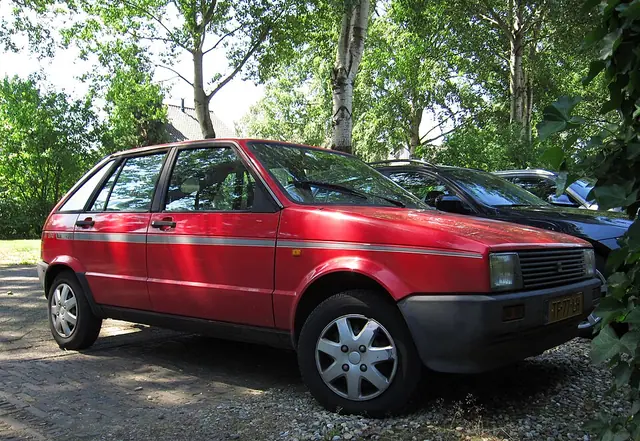
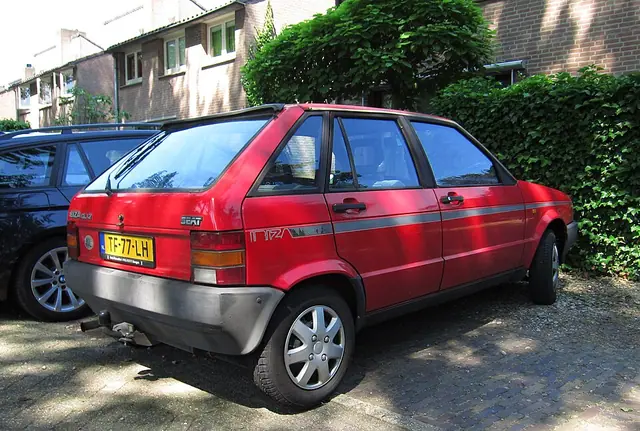
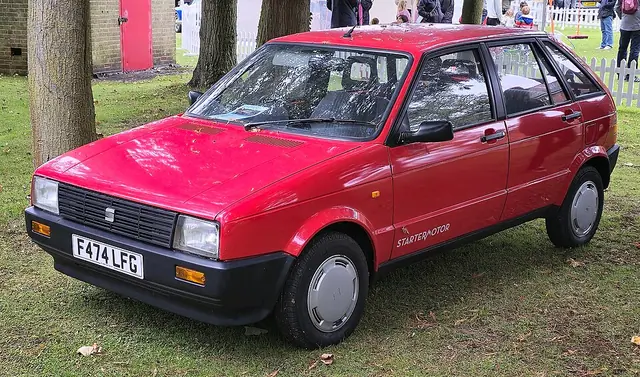
The Ibiza reached Britain in September 1985, as a cheaper and more modern alternative to Lada, Škoda, Yugo and FSO. Meanwhile SEAT had signed a cooperation agreement with Volkswagen in 1982, and in 1986 Volkswagen became its majority shareholder. In early 1989 the Ibiza was mildly facelifted, with a new four-bar body-coloured grille, an all-new interior and an improved gearbox; at that time 1,100 cars a day were being built, and half a million had been made in total. The New Style version came in 1991, and in February 1992 the "Serie Olímpica", as the Ibiza and Toledo were the official cars of the Barcelona Olympic Games. In rallying the 1986 Ibiza Bimotor stood out, with two engines and four-wheel drive.
By the arrival of the second generation in 1993, 1,342,001 first-generation Ibizas had been sold. In 1997 the licence for its design was bought by a joint venture of China's Nanjing group and Malaysia's Lion group, and in China it was built from 1999 as the Eagle and then as the Nanjing Yuejin Soyat, until 2008. The following generations were built on Volkswagen platforms: the second (6K) in 1993, the third (6L) in 2002, the fourth (6J) in 2008 and the fifth in 2017. All were SEAT's best-selling models, and by 2014 more than five million Ibizas of all generations had been sold.