Founding and founders
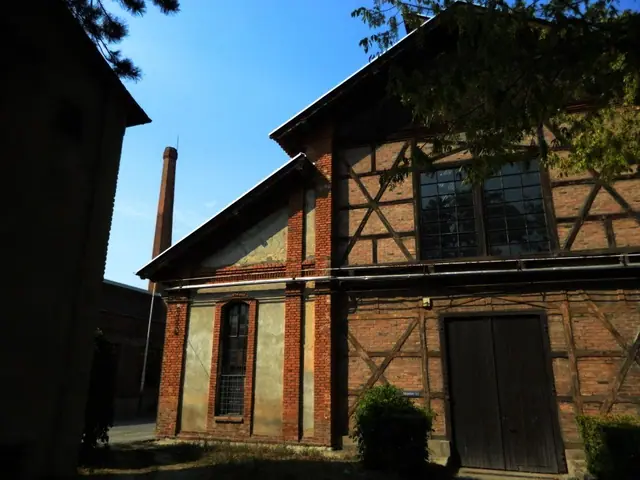
Zastava was not founded as a car factory but as Serbia's first state-owned factory. In 1851 Prince Aleksandar Karađorđević moved a small cannon foundry from Belgrade to Kragujevac, which lay farther from the border and was safer. The work was led by the French expert Šarl Lubri, and on 27 October 1853 the first cannon barrels were successfully cast at the Cannon Foundry (Topolivnica): four six-pounders and two short howitzers. Zastava takes that day as the day of its founding. The Cannon Foundry became the Military Technical Institute (Vojnotehnički zavod), where steam engines and electric lighting were used for the first time in Serbia, and at the end of the 19th century it also began making rifles. As early as 1904 the first car repair workshop was opened, and in 1939 assembly of American Chevrolet military trucks began; about 400 had been built by the time the war reached Yugoslavia in 1941.
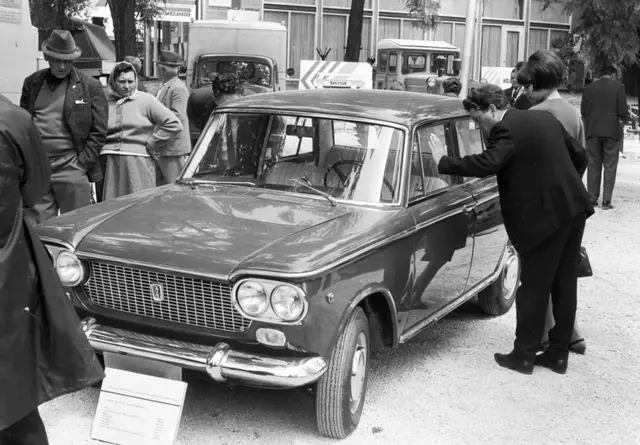
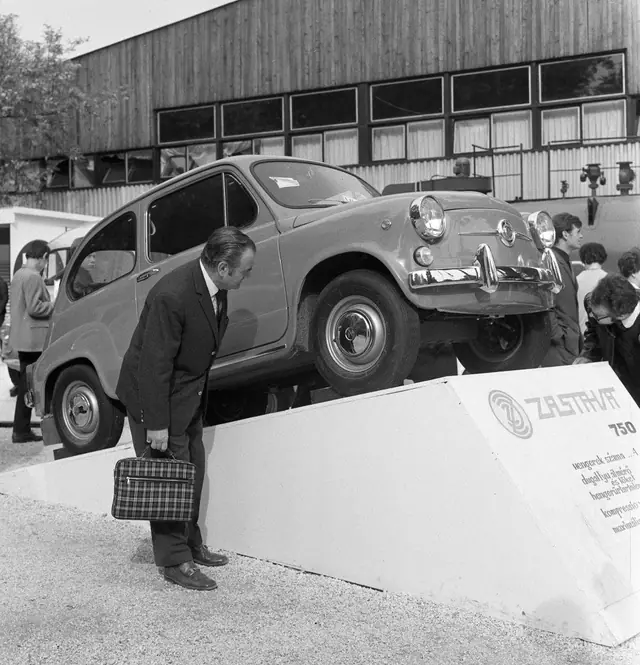
After the Second World War the factory was named Zavodi "Crvena zastava" (Red Flag Works). In a referendum on 26 August 1953 more than 96 per cent of the employees voted to invest the profits in a car industry, and that year 162 Willys jeeps were assembled. The agreement with Fiat was signed on 12 August 1954, and three months later assembly began of the AR-55 Campagnola off-roader and the Fiat 1400 BJ and 1100 B cars. The director, Prvoslav Raković, realised that these were too expensive for Yugoslavia, and after the 1955 Geneva Motor Show he pushed for a small people's car. So on 18 October 1955 the first Fiat 600 was built in Kragujevac; it is remembered as the Fića, and from 1962, when production was taken over entirely in Kragujevac, it was called the Zastava 750. The Fića was built until 18 November 1985, 923,487 in all, and it put the whole country on wheels.
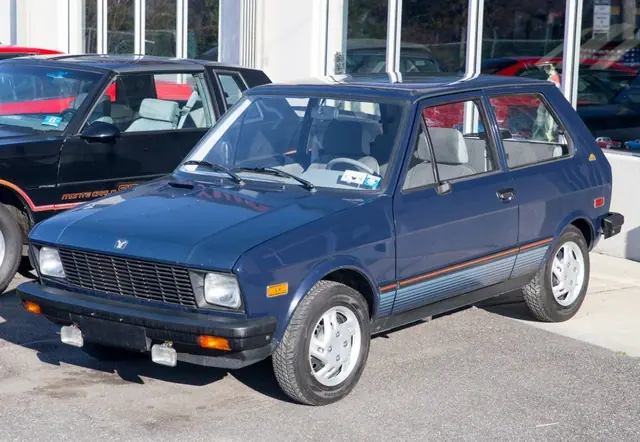
In the 1960s Zastava gained a new car factory, opened on 6 July 1962, and the 1300 model, the popular "tristać", Yugoslavia's favourite upmarket car, which people also called the "Yugoslav Mercedes". From 15 October 1971 the Zastava 101 "Stojadin" was built, a hatchback based on the Fiat 128 that Fiat never produced under its own name, and from 1980 also the Yugo, a small car developed by Zastava's engineers. From 1985 the Yugo was also sold in the United States: Malcolm Bricklin offered it for 3,990 dollars as the cheapest new car in the country, and more than 141,000 were sold there by 1992. In 1988 production began of the Florida, styled by Giorgetto Giugiaro. At the end of the 1980s Zastava was one of the largest companies in Yugoslavia, with more than 50,000 employees and hundreds of suppliers across the country.
The break-up of Yugoslavia and the sanctions from 1992 cut off exports and the supply of parts. On the nights of 9 and 12 April 1999 NATO bombed the factory in Kragujevac, even though the workers had announced that they would stay in the factory to guard it; about 120 workers were injured, and about 160,000 square metres of production space were destroyed. Production was restored, and in 2005 an agreement was signed with Fiat to assemble the Punto under the name Zastava 10. On 29 September 2008 the Serbian government and Fiat signed an agreement to set up the joint venture Fiat Automobili Srbija, in which Fiat held 67 per cent and the state 33 per cent. In November 2008 the last Yugo, Stojadin and Florida left the lines, and with them the Zastava name disappeared from cars. In the rebuilt factory the Fiat 500L was produced in series from July 2012.
The meaning of the logo
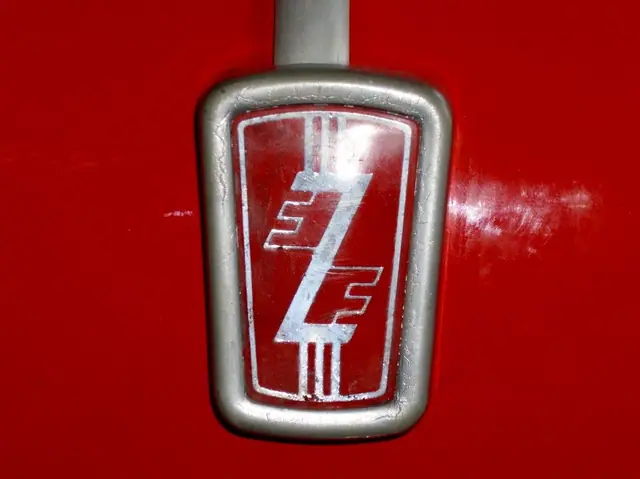
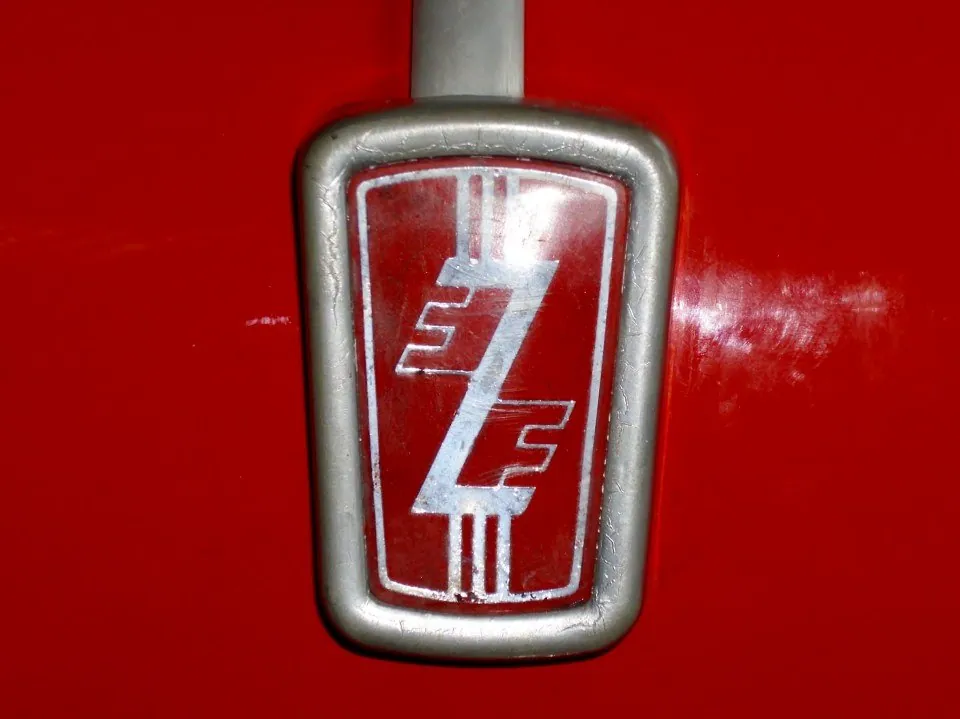
The name Zastava comes from the factory's post-war name, Zavodi "Crvena zastava" (Red Flag Works); the word "crvena" (red) was later dropped. The old badge on the cars, like the one in the gallery, is shield-shaped: on a red field there is a large, sharply angled letter Z with two smaller angular signs beside it, and three narrow vertical lines above and below. A badge with a large letter Z in a circle was used on Zastava's stands at fairs, as in the 1970 photograph of the Fića, while later models, for example the Zastava 850, carry a round badge with the lettering ZASTAVA. The last badge was a silver oval with a stylised letter Z and the lettering ZASTAVA below. Cars for export bore the name Yugo and their own badge.
We did not find an official explanation of the shapes and colours of the badges, or the name of their designer, in the sources we checked. Logo websites give differing years and descriptions, so we do not present them as established.
Key moments
- 1853. At the Cannon Foundry in Kragujevac, moved from Belgrade in 1851, the first cannon barrels are cast on 27 October; Zastava celebrates that day as its founding day.
- 1904. The first car repair workshop opens within the Military Technical Institute.
- 1939. Assembly of Chevrolet military trucks begins; about 400 are built by 1941.
- 1953. In a referendum on 26 August the employees of Zavodi "Crvena zastava" decide to turn the factory to cars; 162 Willys jeeps are assembled.
- 1954. The agreement with Fiat is signed on 12 August; assembly of the Fiat 1400 BJ, the 1100 B and the Campagnola off-roader begins.
- 1955. The first Fića, the Fiat 600 from Kragujevac, is built on 18 October.
- 1962. The new car factory opens on 6 July; the Fića becomes the Zastava 750.
- 1965. Exports officially begin, with 6,000 cars sent to Poland.
- 1971. The Zastava 101 "Stojadin" is built from 15 October.
- 1980. Series production of the Yugo 45 begins on 28 November.
- 1985. The first Yugo 55 GV for the USA is built on 9 September; the last Fića is built on 18 November.
- 1988. The Florida, styled by Giorgetto Giugiaro, leaves the line on 2 October.
- 1999. NATO bombs the factory on 9 and 12 April; about 120 workers are injured.
- 2008. On 29 September Fiat and the Serbian government sign the agreement to set up Fiat Automobili Srbija; in November production of Zastava-branded cars ends.