Founding and founders
Tatra is one of the oldest vehicle makers in the world. Its roots go back to 1850, when Ignác Šustala, a wheelwright from the Moravian town of Kopřivnice, called Nesselsdorf in German, began building carriages. The business grew quickly: the firm became a purveyor to the Habsburg court, and from the 1880s it also built railway carriages. In the early 1890s it became a joint-stock company under the name Nesselsdorfer Wagenbau-Fabriks-Gesellschaft, and after Šustala's death in 1891 it was run by the technical director Hugo Fischer von Röslerstamm.
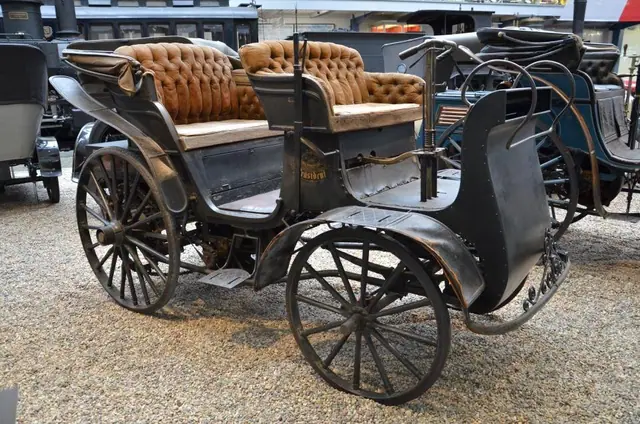
Fischer was enthusiastic about the new motor car. In 1897 the company bought a Benz engine and built the Präsident, the first factory-built petrol-engined car in Central and Eastern Europe. Among those who worked on it was a young Austrian mechanic, Hans Ledwinka, who would become the most important man in the history of the marque. The very next year the first truck left Kopřivnice.
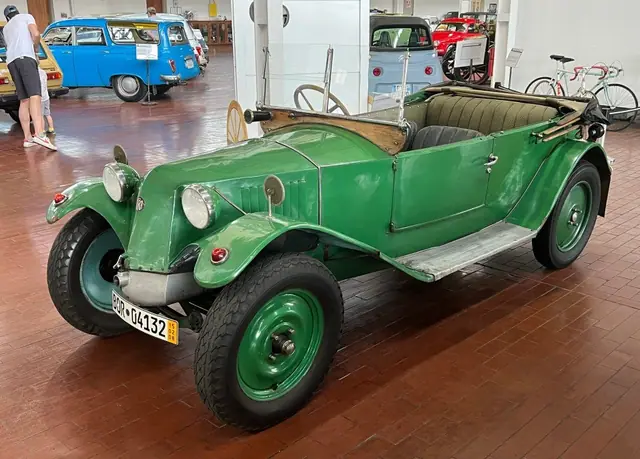
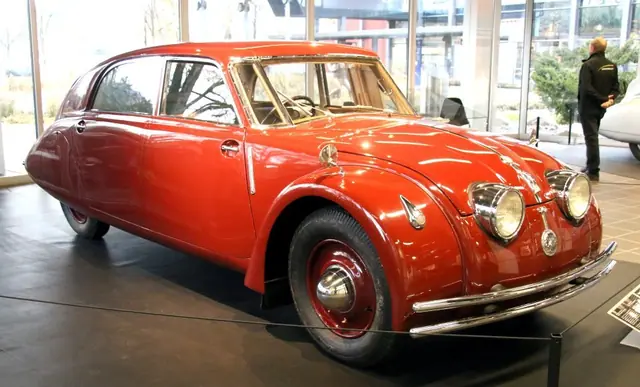
After the First World War Kopřivnice found itself in a new country, Czechoslovakia, and the company took the Czech name Kopřivnická vozovka. After a few years at Steyr in Austria, Ledwinka returned in 1921 to run car production, and in 1923 he presented the Tatra 11, with a central tube as its backbone chassis, swing half-axles and an air-cooled engine. This layout became Tatra's trademark. In the 1930s Ledwinka, with his son Erich and the engineer Erich Übelacker, and drawing on Paul Jaray's patents, created streamlined rear-engined cars, the Tatra 77 and the Tatra 87, which were far ahead of their time.
The meaning of the logo
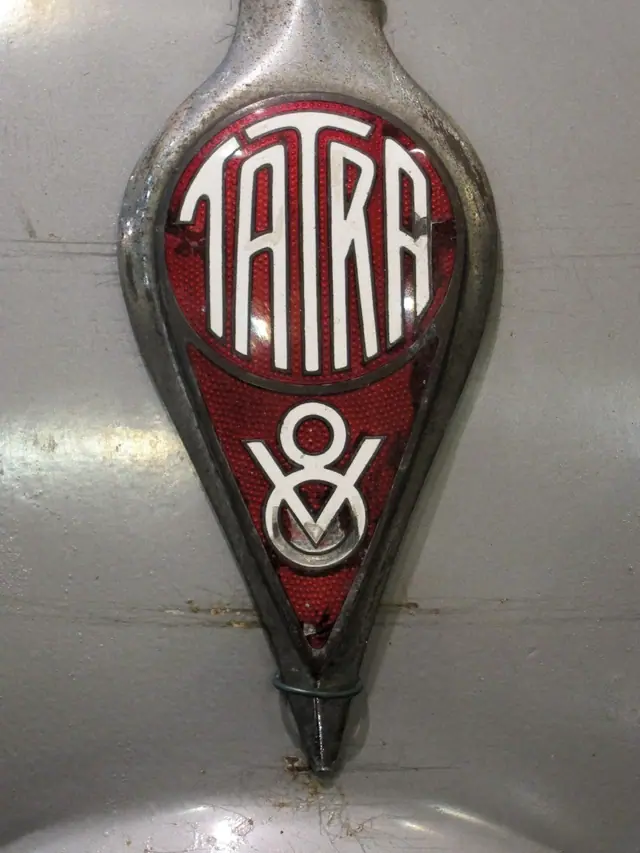
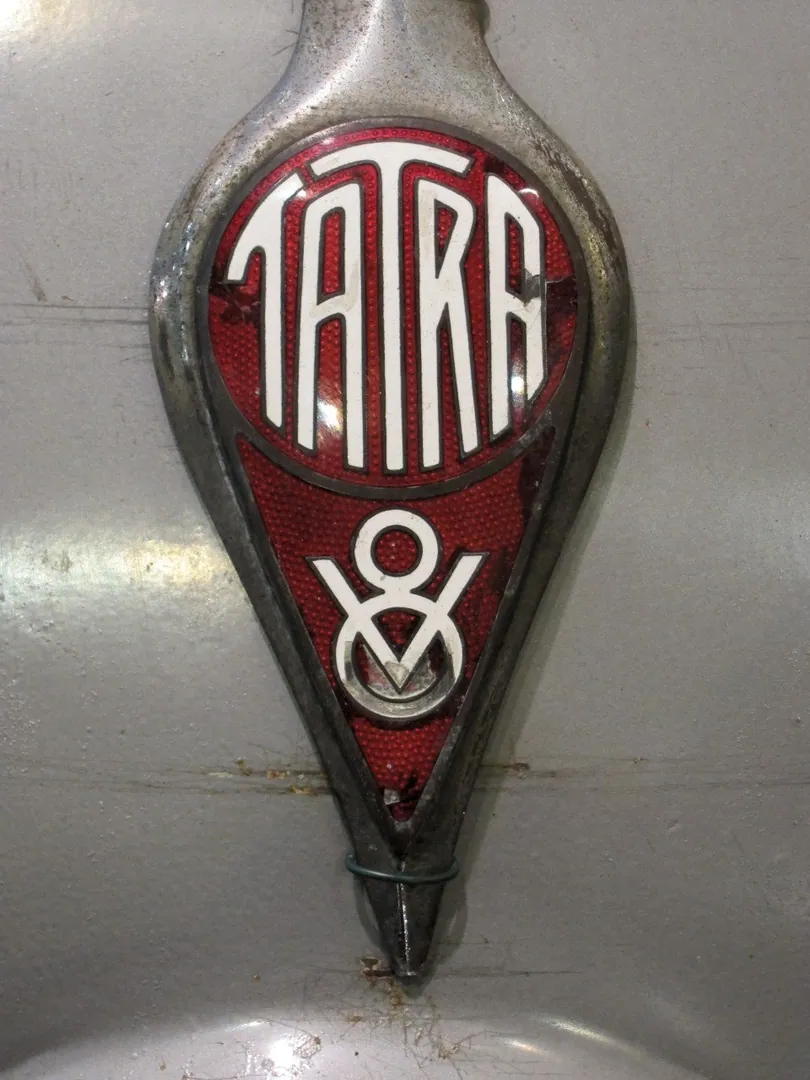
The name Tatra was born in 1919. According to the recollection of driver Josef Veřmiřovský, a car from Kopřivnice was on winter test drives in the snowbound High Tatras, around Tatranská Lomnica, in early 1919. When they saw it, the locals supposedly said that this was "a car for the Tatras". Jan Novák, head of the car department, proposed that the vehicles from Kopřivnice be named Tatra and had a round badge made with that inscription. The Tatras are mountains on what was then the border between Czechoslovakia and Poland, and is today the border between Slovakia and Poland, so the name stressed the link with the new country. Some sources regard this story as a legend, but all the sources we checked confirm the date of 1919.
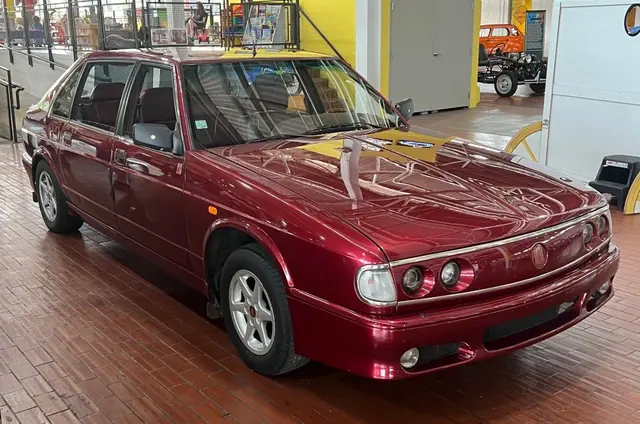
The badge is simple: the word TATRA in white letters in a red circle. It was registered as a trademark in the mid-1930s, with Jan Novák named as its author in the documents. Before that the cars carried an NW badge (Nesselsdorfer Wagenbau) or a double-headed eagle with the word Nesselsdorf. The name Tatra entered the company's name only in 1927, when it became Závody Tatra.
Key moments
- 1850. Ignác Šustala begins building carriages in Kopřivnice.
- 1891. The firm operates as the joint-stock company Nesselsdorfer Wagenbau-Fabriks-Gesellschaft; Šustala dies.
- 1897. The Präsident, the first factory-built petrol-engined car in Central and Eastern Europe.
- 1898. The first truck from Kopřivnice.
- 1919. Vehicles from Kopřivnice get the name Tatra; on 29 March the first ten TL 4 military trucks leave the factory.
- 1923. Hans Ledwinka's Tatra 11, with a central tube as its backbone chassis.
- 1934. The Tatra 77, the first production car designed according to the laws of aerodynamics.
- 1936. The Tatra 87, with an air-cooled V8 engine at the rear; in series production from 1938.
- 1945. After the Second World War the factory is nationalised, and Ledwinka is arrested and later convicted of collaborating with the occupiers; the Supreme Court cleared him posthumously in 1992.
- 1948. The Tatraplan (T600), the first post-war car; in 1951 the state decides that cars will no longer be built in Kopřivnice.
- 1956. The Tatra 603, an official limousine with a rear V8, brings Tatra back to car production.
- 1974. The Tatra 613, with an angular body drawn by Vignale.
- 1999. Production of the Tatra 700, the marque's last passenger car, ends; Tatra builds only trucks.
- 2013. The company is taken over by the Czech groups Czechoslovak Group and Promet Group and trades as Tatra Trucks.