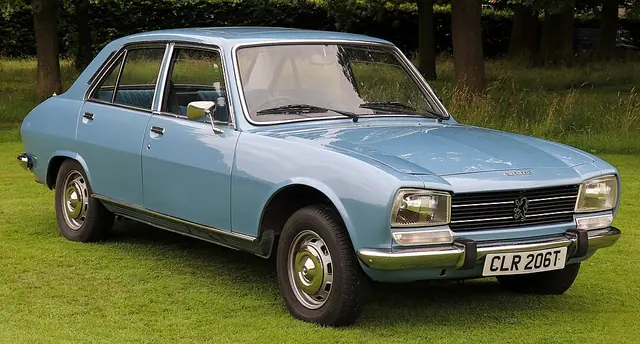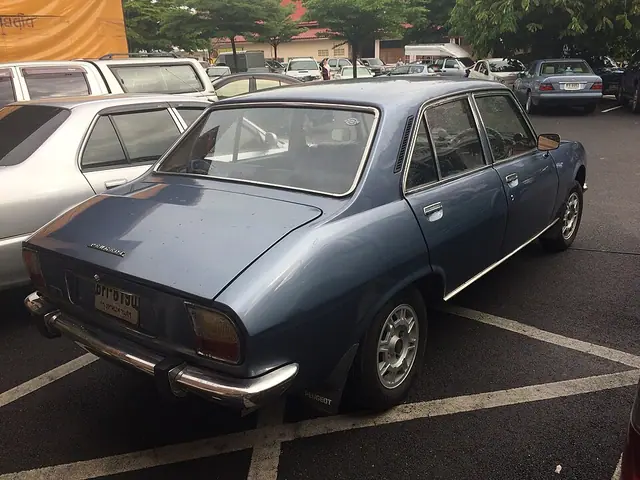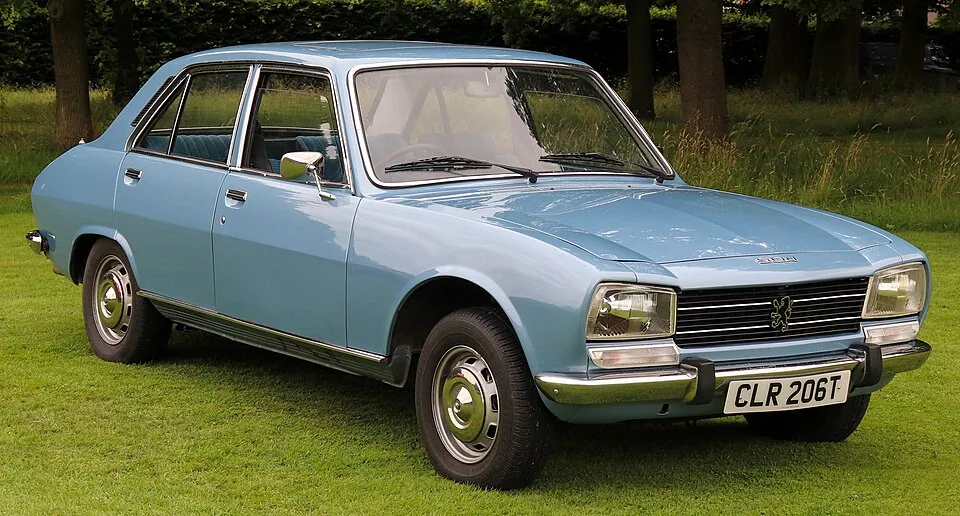
In Europe the Peugeot 504 was a respected family saloon with elegant "cat's eyes" drawn by Pininfarina, but it won real fame in Africa, where it is called the "king of African roads". Its strong body, long-travel suspension and almost indestructible diesel engines made it a favourite taxi from the Sahara to Cape Town, and production in Nigeria continued until 2006, almost forty years after its premiere.
Story
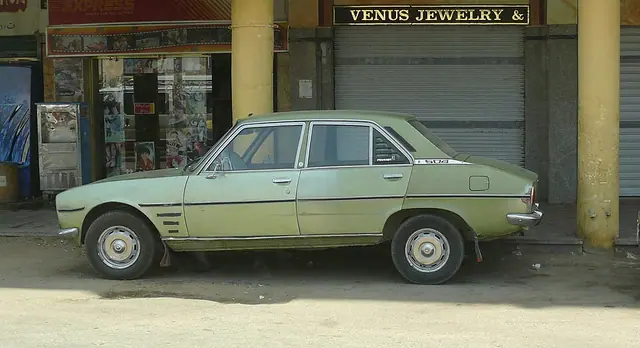
The Peugeot 504 was due to be presented to journalists in June 1968, but the student protests and strikes that swept France in May that year delayed both the premiere and the start of production. The marque's new flagship was not shown to the public until 12 September 1968 at the Paris Motor Show. It was a four-door saloon with a sunroof, whose lines were drawn at the Pininfarina studio by Aldo Brovarone. Its mechanicals relied largely on its predecessor, the 404, but the 504 was the first rear-wheel-drive Peugeot with independent suspension on all four wheels and disc brakes on all four wheels. The propeller shaft was enclosed in a rigid tube connecting the gearbox and differential, which spared the body from drivetrain reactions. The very next year the 504 was named European Car of the Year 1969, and the jury praised its lines, build quality, comfort, visibility and strong engine.
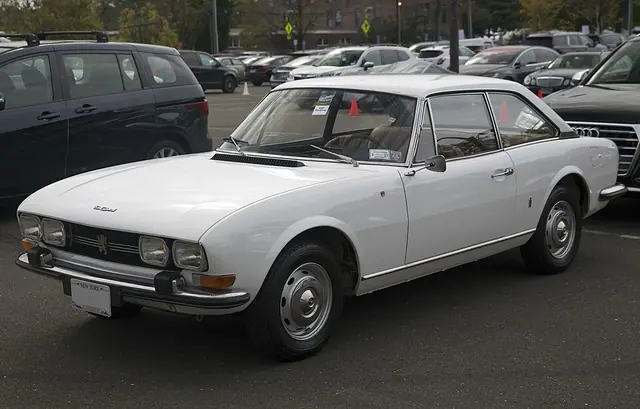
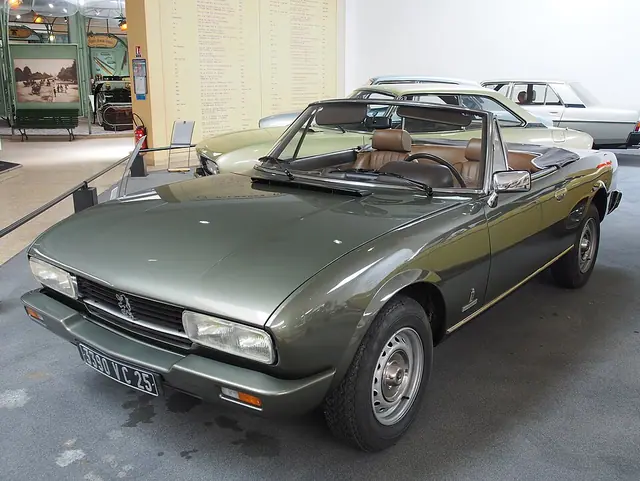
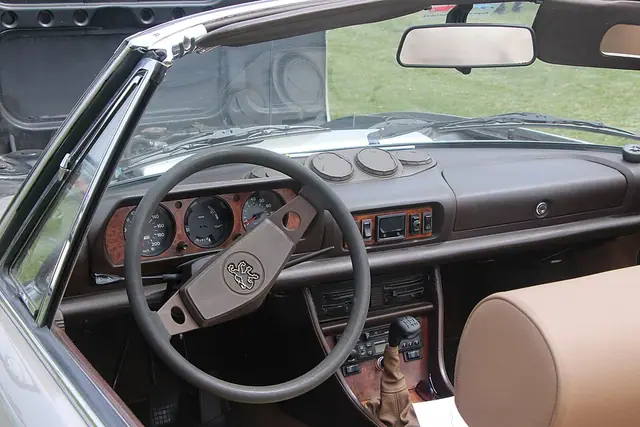
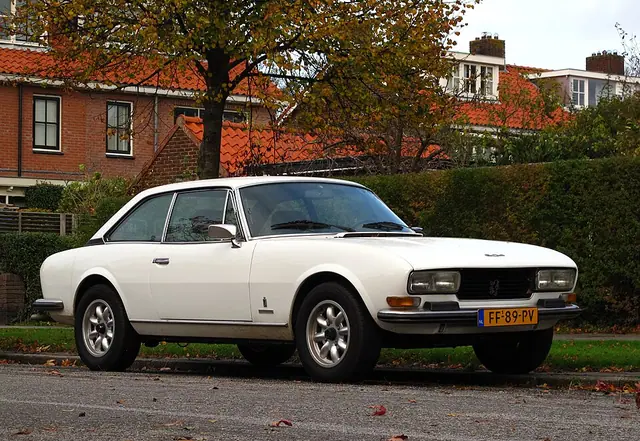
At the Geneva Motor Show in March 1969 came the coupé and convertible, again from Pininfarina, but drawn by Franco Martinengo. They had a shorter wheelbase and a wider rear track, and the bodies were built in Turin and sent by train to Sochaux for final assembly. At first they shared the saloon's fuel-injected four-cylinder engine, and only in 1974, with the arrival of the 604, did the coupé get an engine worthy of its lines: the new 2.7-litre V6 with an aluminium block, developed together with Renault and Volvo (the PRV engine), with 136 hp. At the same time the twin headlights were replaced by wide one-piece units. In the middle of the oil crisis the thirsty V6 sold poorly, so the V6 convertible was dropped after only 970 cars, and in 1977 the coupé got fuel injection, a five-speed gearbox and 144 hp. The V6 coupé was also a successful rally car: in 1978 it won the Safari Rally in Kenya, and it twice won the Bandama Rally in Ivory Coast. Production of the two-door versions ended in August 1983, after 31,163 cars.
The 504 family grew quickly. From 1970 the saloon got a 2-litre engine and a 2.1-litre diesel, and in autumn of that year the Break estate was introduced, with a longer wheelbase and a rigid rear axle, as well as the Familiale with three rows of seats for seven passengers. Because of the oil crisis, Peugeot offered a simpler 504 L version in 1973 with a 1.8-litre engine and a rigid rear axle. The 1.95, 2.1 and 2.3-litre Indenor diesel engines were particularly valued, and the 504 was one of the few cars of the time that could be bought with a diesel engine and an automatic gearbox. In the USA it was for several years the only Peugeot on offer. When its successor, the 505, arrived in 1979, European production of the saloon was gradually wound down and ended in 1983, after more than three million cars. The pick-up, which arrived only in 1979 because turning the monocoque body into a load carrier took a whole decade, remained in the European range until 1993, and the Dangel company also built a four-wheel-drive version.
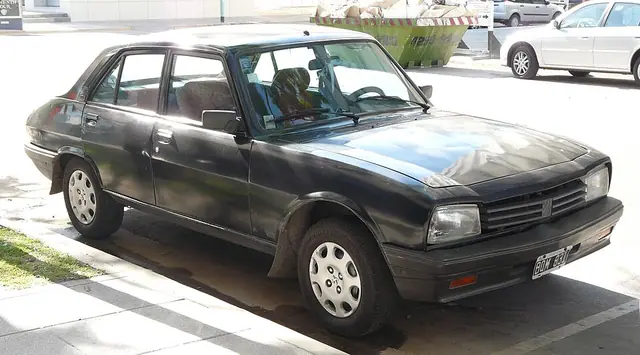
The 504 got its real second life outside Europe. In Argentina it was built from 1969 by SAFRAR, and later by Sevel, right up to 1999; in Australia it was assembled by Renault, and in China it was made as a double-cab pick-up until 1997. In Africa the 504 became a byword: about 27,000 were assembled in Kenya, and in Nigeria, at the factory in Kaduna, about 425,000, right up to 2006. The high-riding body, big wheels and strong suspension coped well with potholes and gravel, and the simple mechanicals could be repaired in any village workshop. The 504 estate was one of the most common "bush taxis", carrying ten or more passengers between the towns of West Africa, and in 2013 the Los Angeles Times called it "Africa's workhorse". On African rally stages the 504 was just as successful, with wins in the Safari, Morocco and Bandama rallies.
The model also had an unusual political career. Iranian president Mahmoud Ahmadinejad drove a white 1977 504 as a symbol of modesty, and in 2011 he sold it at an international auction for $2.5 million for charity. Today 504 saloons and estates are rare in Europe, while the Pininfarina coupé and convertible have become sought-after classics, especially the V6 versions. Counting licensed production on three continents, some version of the 504 was in production for a full 38 years, a rare achievement for a European car.