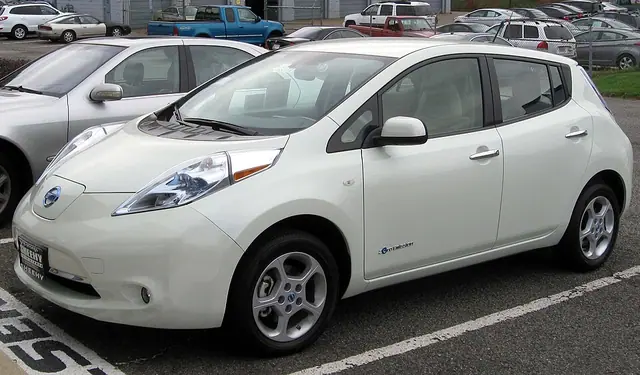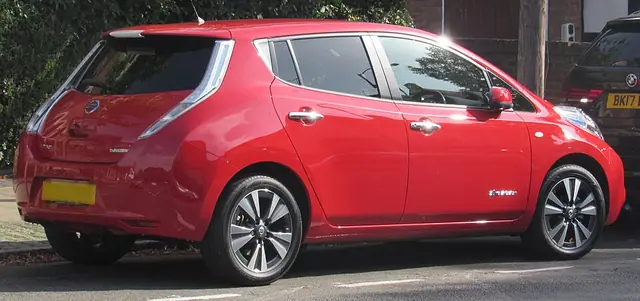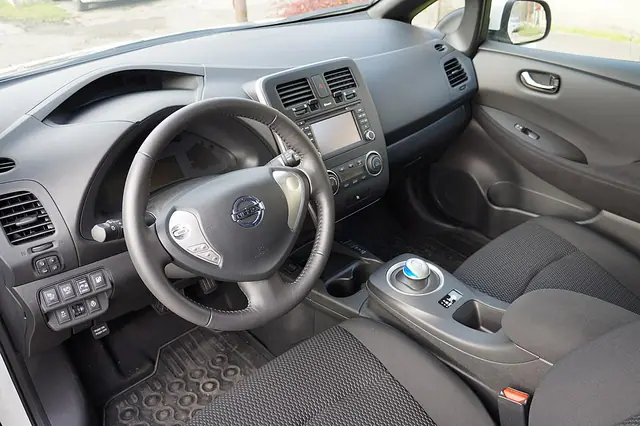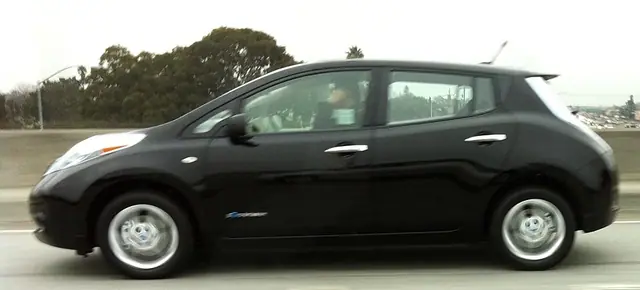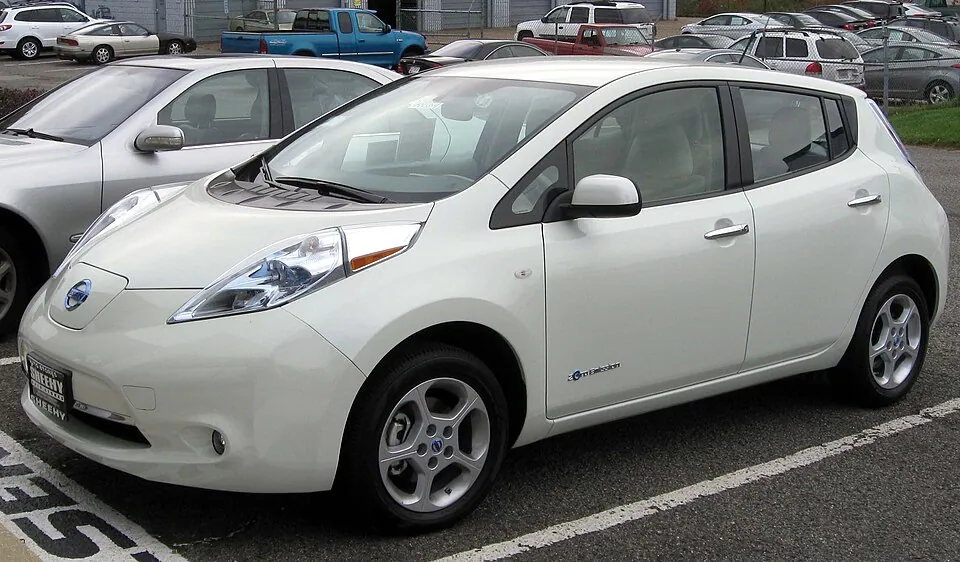
The Leaf was the first electric car conceived from the start for a mass market of millions: an ordinary five-door family hatchback, built in three factories on three continents and sold in dozens of countries. For almost ten years it was the world's best-selling electric car, and for many drivers it was their first encounter with driving without petrol, charging from a socket and the famous "range anxiety".
Story
Nissan had made electric cars before. Tama, the forerunner of the Prince marque that Nissan later took over, built a small electric car in 1947, during the post-war petrol shortage, and in the late nineties Nissan, like other manufacturers under pressure from the Californian regulations that also led to the GM EV1, built about 200 examples of the electric Altra and the small Hypermini city car. The key difference was the battery: with NEC, Nissan developed its own flat, laminated lithium-ion cells, and the joint venture AESC began producing them in large quantities. The drivetrain was tried out in the EV-01 and EV-02 test cars, built from the Cube, and the EV-11, based on the Tiida.
The Leaf was unveiled on 2 August 2009 at Nissan's new headquarters in Yokohama. The name means just that in English, and it is also explained as an acronym of "leading environmentally-friendly affordable family car". On that occasion Nissan promised that the Leaf would go on sale in Japan and North America by the end of 2010. Production began on 22 October 2010 at the Oppama plant, and the first customers received their cars in December. Unlike the test cars, the Leaf was not converted from an existing model, and Britain's Guardian compared its prominent headlights to "frog's eyes".
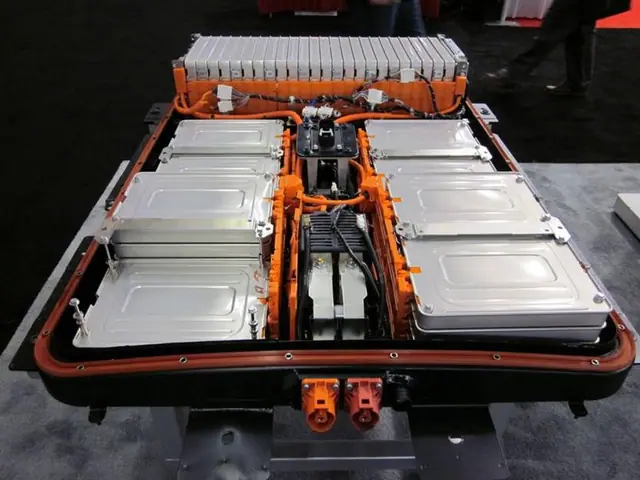
The 24 kWh battery, with 192 cells arranged in 48 modules, sat under the floor and seats, where it lowered the centre of gravity and stiffened the body. The 80 kW electric motor drove the front wheels, and Nissan promised a range of about 160 km, while the American EPA measured 117 km. Charging from an ordinary socket took hours, but through its CHAdeMO port the Leaf could charge its battery to 80% in about half an hour. It also had the CarWings system, through which the owner could use a mobile phone to check the battery's state, find charging points and switch on the heating or air conditioning in advance while the car was still plugged in. Because an electric car is almost silent at low speeds, Nissan worked with psychologists to develop a special warning sound for pedestrians, and particularly for blind and partially sighted people.
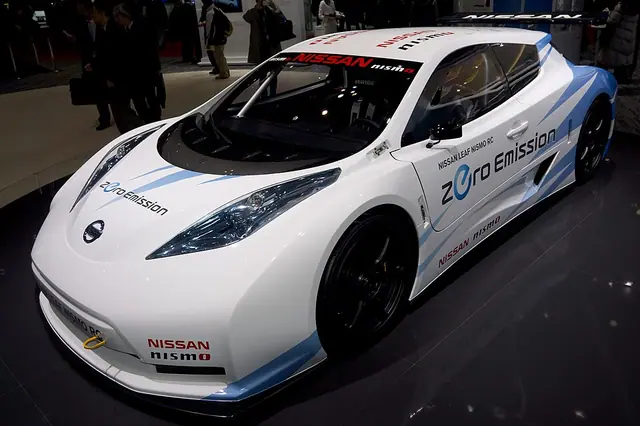
In 2011 the Leaf was named European and World Car of the Year. Its first year on sale was spoiled by the earthquake and tsunami in Japan in March 2011, which slowed production at the Oppama plant for months. 2012 did not bring the expected growth either, and Ghosn admitted his disappointment and blamed the strong yen. The solution was to build closer to the customers: from January 2013 the Leaf and its batteries were made in Smyrna, Tennessee, with a $1.4 billion loan from the US Department of Energy, and from March 2013 also in Sunderland, England. The price of the 2013 model in the USA was cut by 18%, better-equipped versions got a heat pump for heating, and range rose to 200 km on the European cycle. From the end of 2015 a 30 kWh battery was also offered, with a range of 250 km. There were special versions too: the Leaf Nismo RC racing car of 2011, with a carbon-fibre body and rear-wheel drive, was built in eight examples.
Reviews were mixed. Its quiet, smooth ride, roomy interior and low running costs were praised, while cheap materials, limited range, especially in winter, and long charging times were criticised. The battery had only passive air cooling, which was changed only in the third generation. Even so, the Leaf outsold all other electric cars and remained the world's best seller until early 2020, when it was overtaken by the Tesla Model 3. According to Nissan, more than 300,000 Leafs had been sold by early 2018, and by the end of 2016 their owners had together covered three billion kilometres.
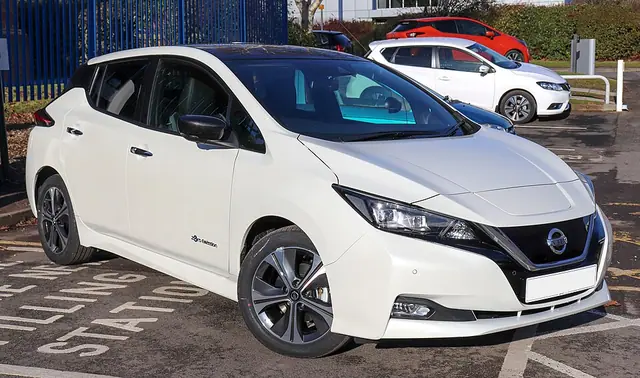
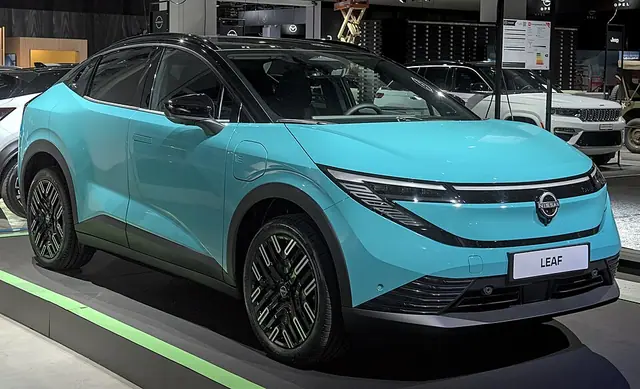
The second generation, unveiled in October 2017, kept the technical basis but got a sharper look, a 40 kWh battery, a 110 kW motor and the e-Pedal system for one-pedal driving, and from 2019 an e+ version with a 62 kWh battery. The 500,000th Leaf was built in September 2020, and production in Sunderland, where 270,000 cars of both generations were made, ended in March 2024. The third generation, unveiled on 17 June 2025, is no longer a hatchback but a small crossover on the Ariya platform, with 52 and 75 kWh batteries that for the first time have liquid cooling, and a range of up to about 490 km on the EPA cycle. It is built in Japan and once again in Sunderland.