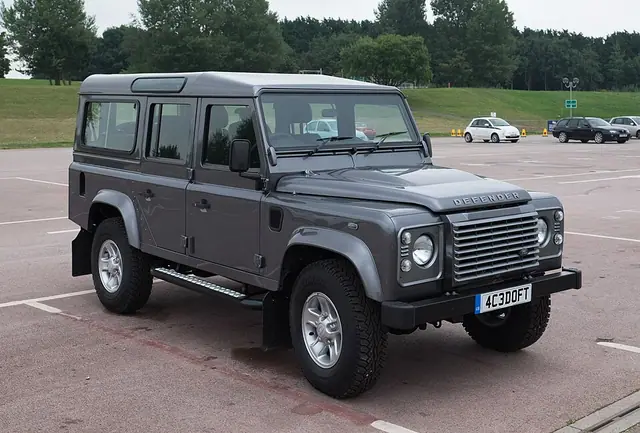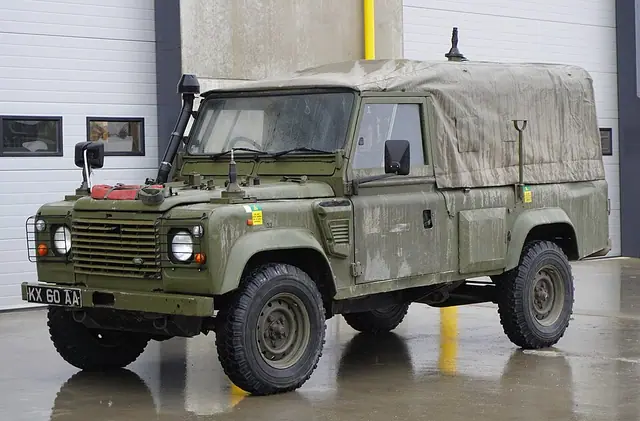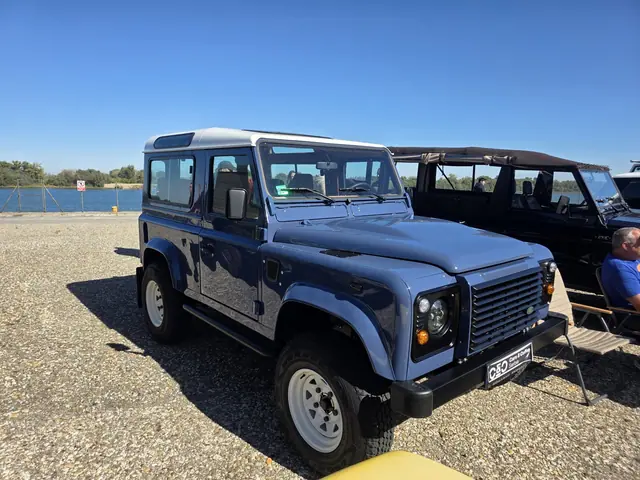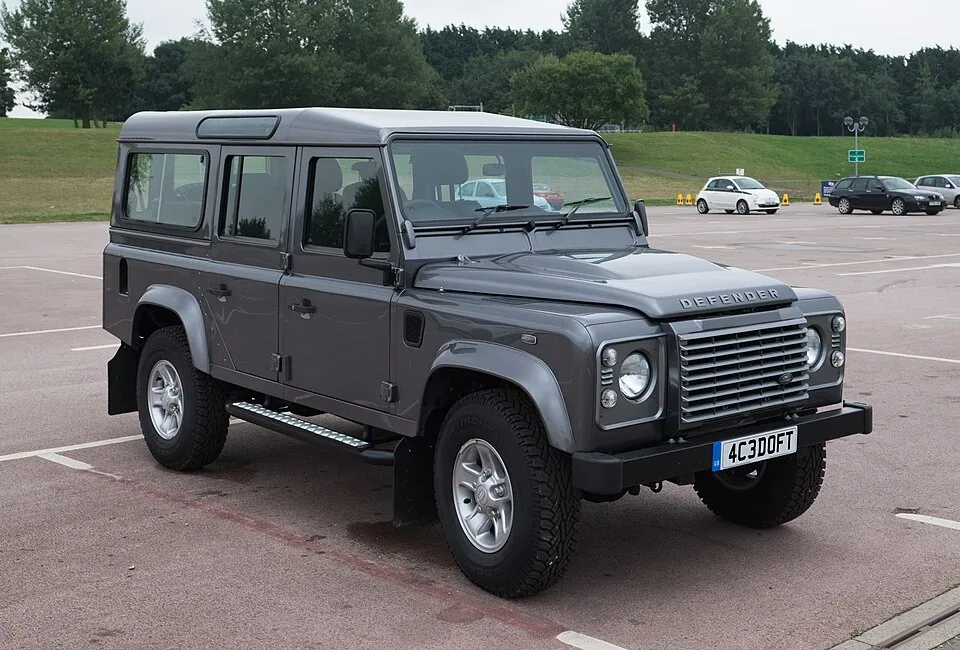
The Defender is a direct descendant of the first Land Rover of 1948, and the Series and Defender were built continuously for 68 years in the same plant in Solihull. In all that time the shape barely changed: a steel ladder-frame chassis, an aluminium body and flat panels that are easy to repair. When production stopped, it was its very end that prompted the creation of the Ineos Grenadier.
Story
The first Land Rover, later called the Series I, was unveiled in April 1948 at the Amsterdam motor show and went into series production in Solihull the same year. It had a steel ladder-frame chassis, an aluminium-alloy body and adapted Rover engines. The Series II and III followed, always with leaf springs.
The big change came in 1983 with the One Ten: the number was the wheelbase in inches. On the outside it barely differed from the Series III, but it had coil springs instead of leaf springs, which brought both a more comfortable ride and better off-road behaviour, and permanent four-wheel drive thanks to a centre differential. In 1984 came the shorter Ninety, and in 1985 the long One Two Seven, which often served as the basis for ambulances, fire engines and workshop vehicles. The first engines were too weak, and the only strong one, the V8, was thirsty, so more modern turbodiesels were gradually introduced.
When the Discovery arrived in 1989, "Land Rover" became the name of the whole brand rather than of a single model, so from the 1991 model year the 90, 110 and 127 (now 130) were named Defender. The Defender served in many armies, aid organisations and on farms around the world. For years it was adapted to ever stricter safety and emissions rules, and production ended on 29 January 2016. The last one, a Defender 90 Heritage soft top, was the 2,016,933rd Land Rover, and it was painted Grasmere Green, like the first. The new Defender of 2019 shares not a single part with its predecessor and has an aluminium monocoque body.