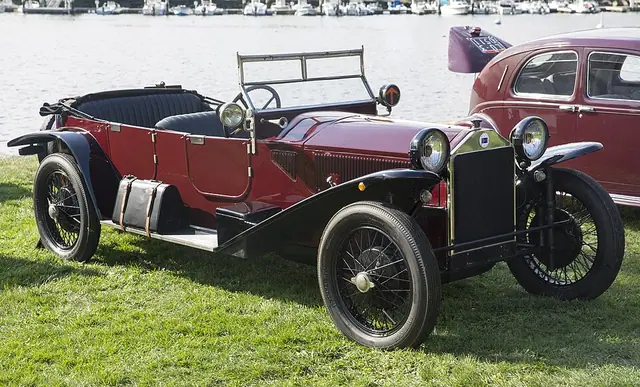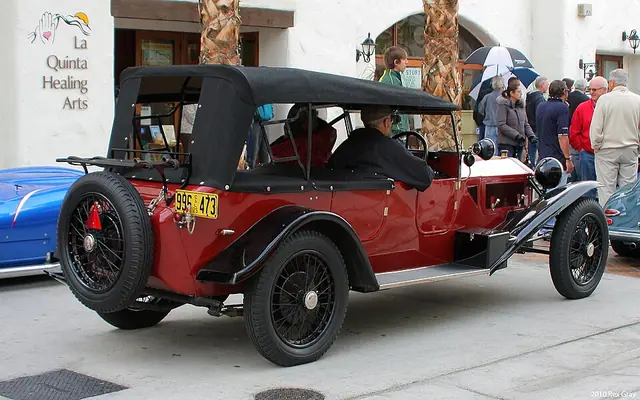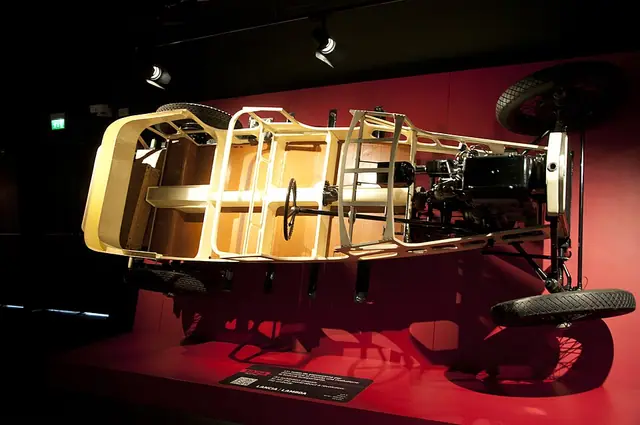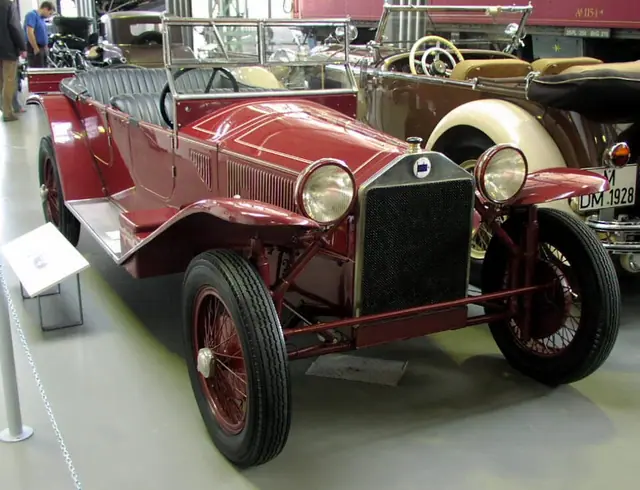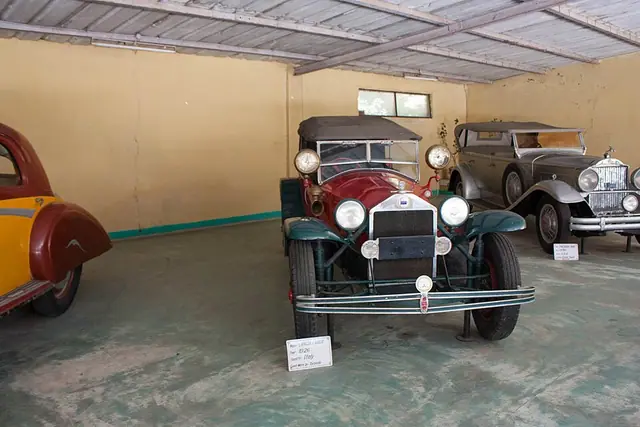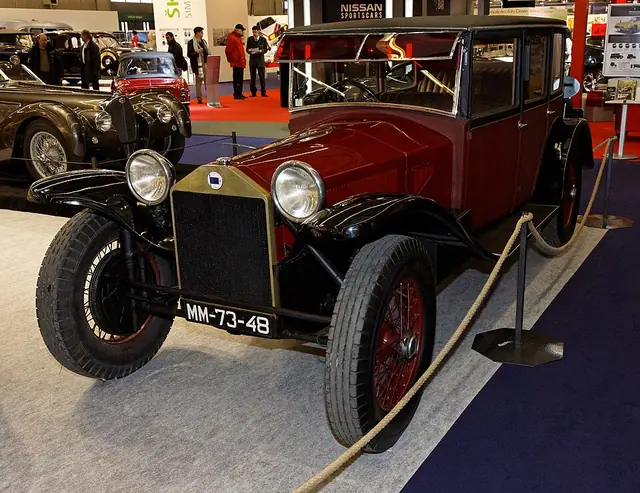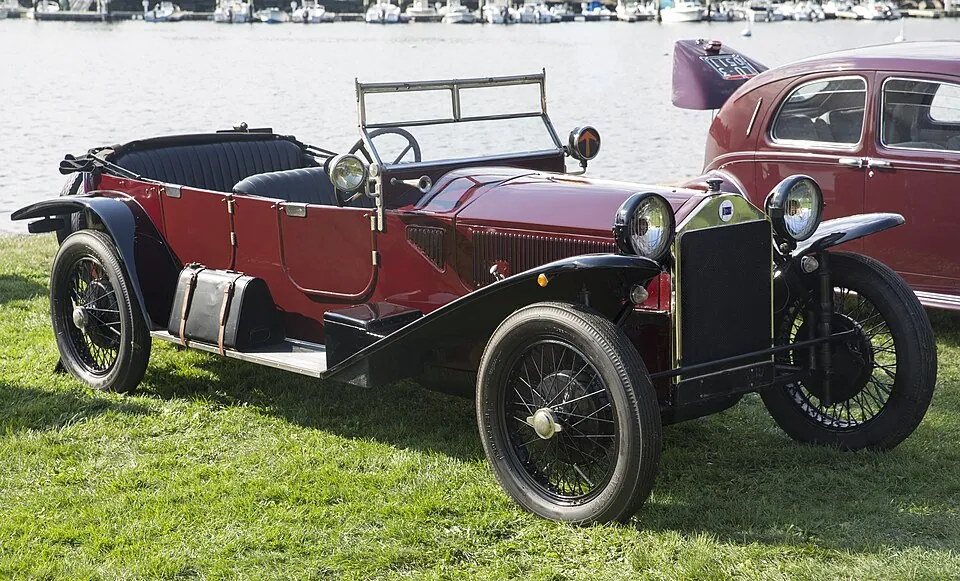
The Lambda was the first car with a load-bearing body instead of a conventional chassis with side members, and the first series car built in significant numbers with independent front suspension. Thanks to its stiff body and suspension it held the road far better than its contemporaries, especially on the poor roads of the day. The ideas Vincenzo Lancia patented in 1918–1919 later became the basis of almost every modern car.
Story
The Lambda's story begins on 7 December 1918, when Vincenzo Lancia filed a patent application, granted on 28 March 1919 under number 171922, with drawings of a spindle-shaped car with a round radiator and, most importantly, no conventional chassis: much of the pressed-steel body was to carry the loads. According to Pinin Farina, the idea of the load-bearing body came to Lancia while watching the structure of a ship, and the idea of independent front suspension after a front leaf spring broke on his Lancia Kappa on a bad road. The bodies were built from the start by the Stola workshop, with which Lancia worked for decades.
According to Battista Falchetto, at a meeting in March 1921 Lancia set out his idea of a car without a chassis and with front wheels that moved independently; Falchetto showed him 14 sketches, of which Lancia chose one. Independent suspension was not entirely new, as the French Decauville had used it as early as 1898, but the Lambda was the first series car built in significant numbers to have it. The designers Rocco and Cantarini produced a narrow V4 engine revving to 3,250 rpm. The first prototype was ready on 1 September 1921, and Lancia drove it himself from Turin to the Mont Cenis pass. The prototype had no front brakes, as Lancia distrusted them, but the production car had brakes on all four wheels. The suspension, with telescopic pillars and coil springs, could not take ordinary friction dampers, so Lancia developed a hydraulic damper housed inside the spring.
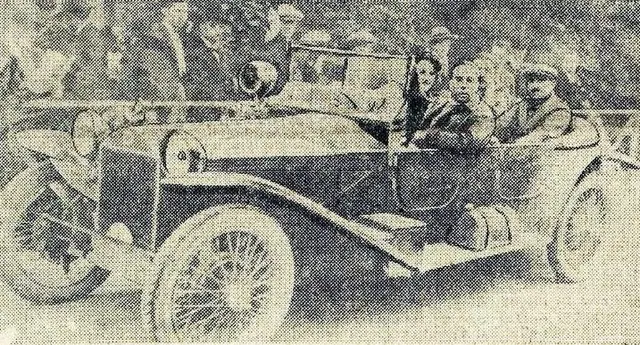
The Lambda was unveiled in autumn 1922 at the Paris and London motor shows, and production and deliveries began in mid-1923. The propeller shaft ran through a tunnel inside the cabin rather than under the floor, so the floor was much lower and the passengers sat either side of the tunnel. The early series did not exceed 115 km/h, while later ones went over 120 km/h. A first-series torpedo cost 43,000 lire in Italy, expensive but not prohibitive, and from 1926 to 1930 more than 40 per cent of production was exported. The Lambda was also used by the Italian Royal Air Force.
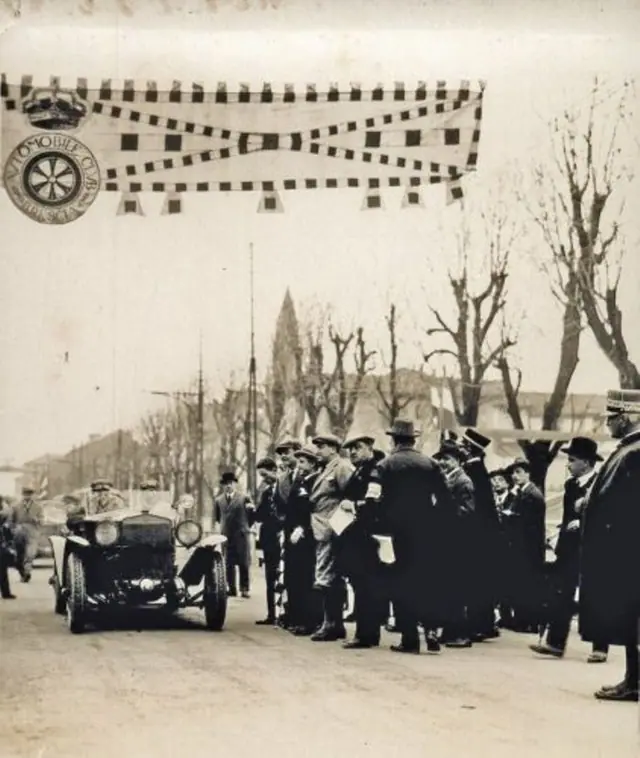
Nine series were built over eight years. The fifth series (1925) got a four-speed gearbox instead of a three-speed one, the sixth (1925–1926) a long wheelbase and the sale of bare chassis for other coachbuilders, the seventh (1926–1928) a 2,375 cc engine, and the eighth (1928–1930) a 2,569 cc engine with 69 PS; the last, ninth series of 1931 was sold only as a chassis. The eighth series was the most numerous, with 3,903 cars. From the second half of the twenties Lambdas raced successfully in the up-to-three-litre class, including the first Mille Miglia in 1927.
In autumn 1931, at the Paris motor show, Lancia replaced the Lambda with the more conventional and cheaper Artena. See also the later Lancia Aurelia and the Citroën Traction Avant, another early car with a unitary body. Today Lambdas are kept in museums in Turin, Munich and elsewhere, and they still take part in the revived Mille Miglia.