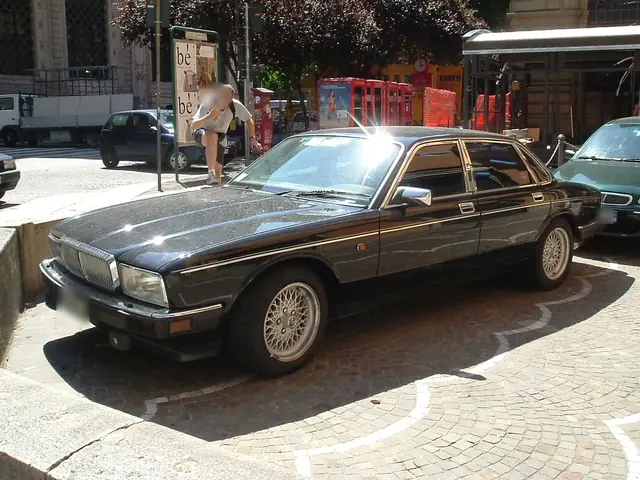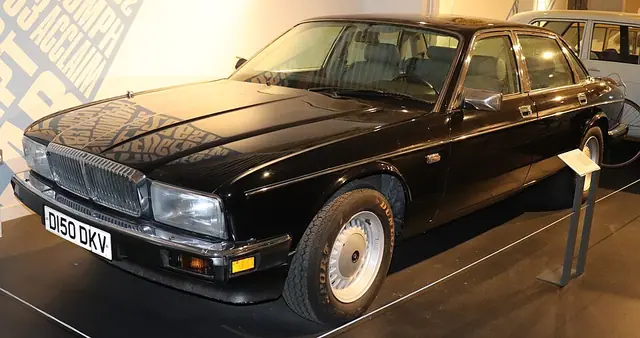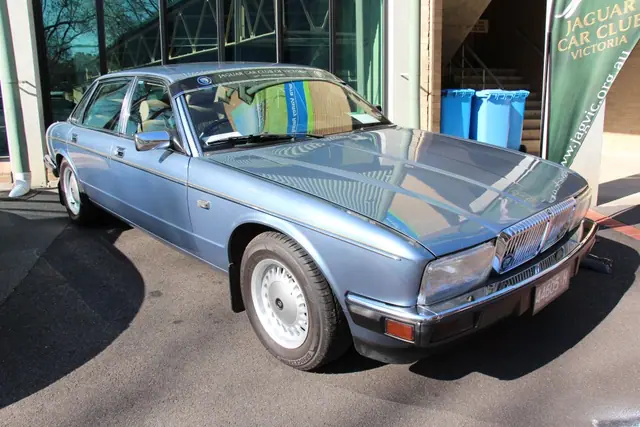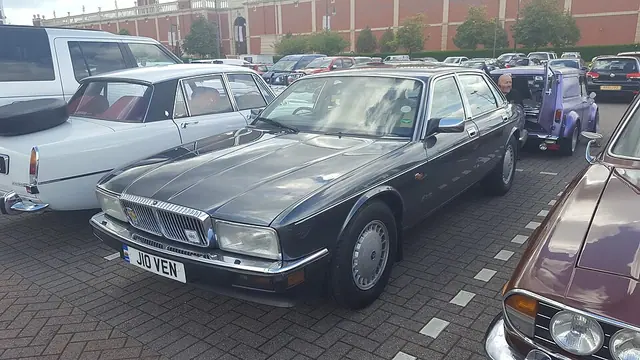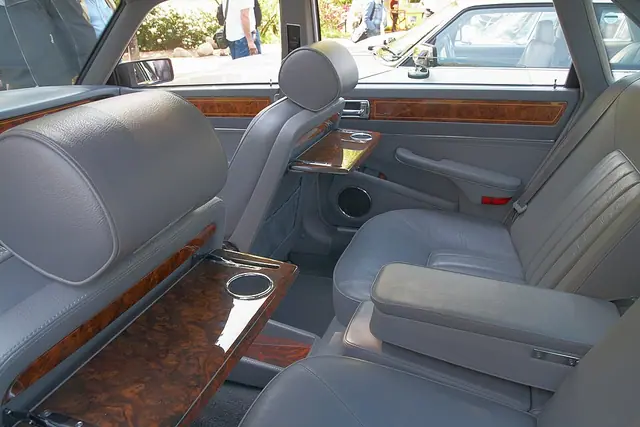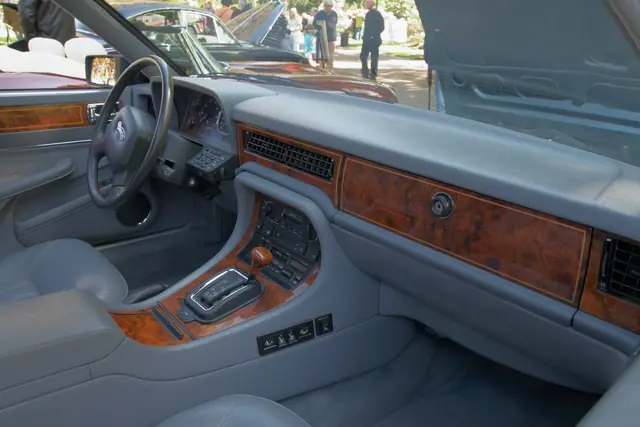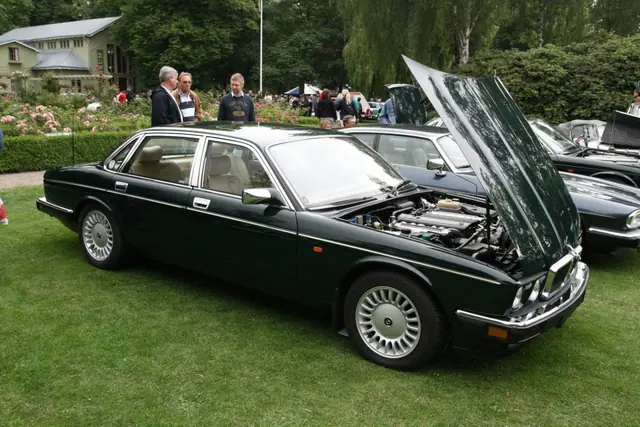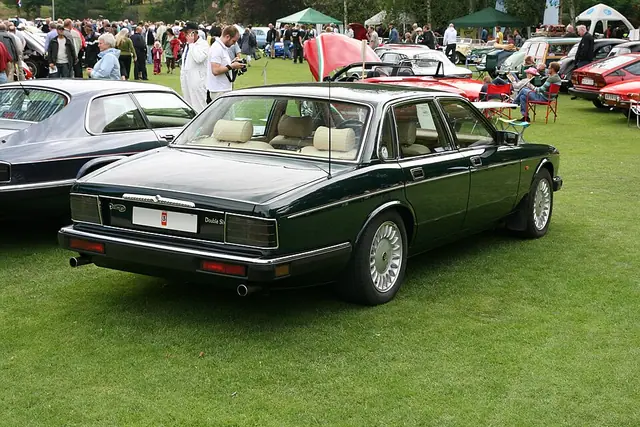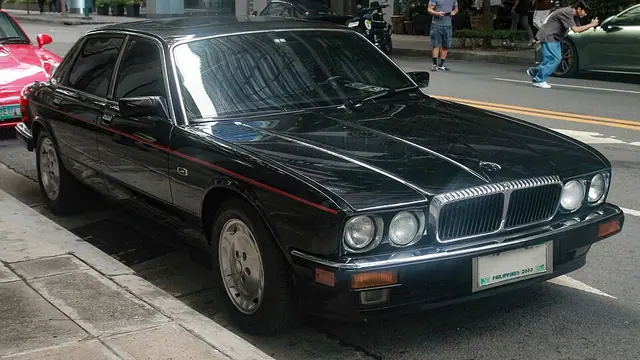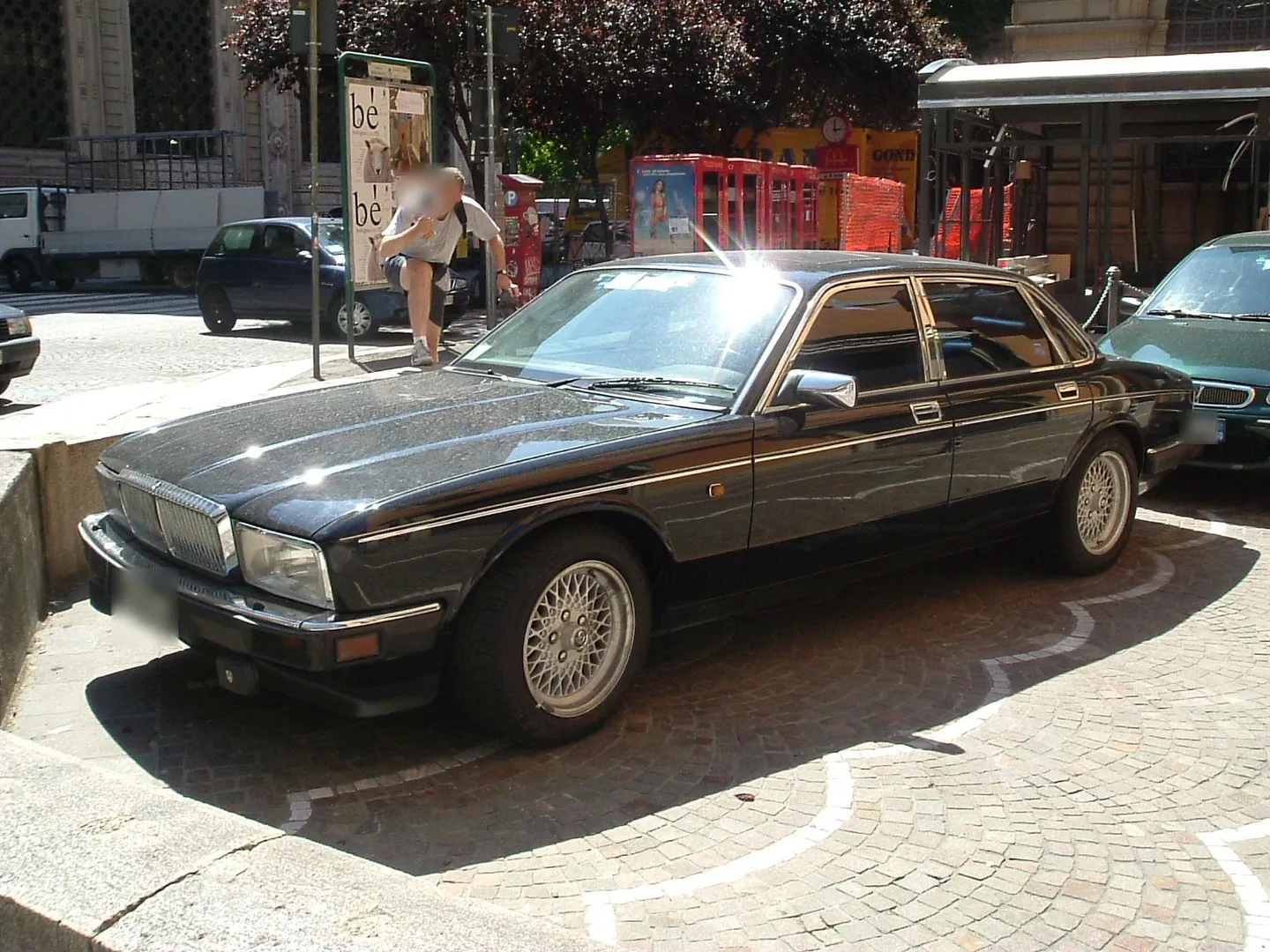
The Daimler XJ40 was the most luxurious version of the second-generation Jaguar XJ, the last Jaguar developed while the company was independent and the last seen by its founder, Sir William Lyons. Outside it differed from the Jaguar only in its fluted grille, Daimler's traditional mark since the early 20th century, and inside in its wooden tables and two comfortable rear seats. It was the Daimler of the era when Britain's oldest marque had become simply Jaguar's top trim level.
Story
Jaguar bought Daimler in 1960, and from the late sixties Daimlers were more luxurious versions of Jaguar models. Jaguar worked on a successor to the first XJ saloon, project XJ40, throughout the seventies: the first scale models were built as early as 1972, but the 1973 oil crisis and problems at the parent group British Leyland kept delaying it. Production funding was only approved in 1981, and when Jaguar became independent again in 1984, its chief John Egan put the launch back two more years, because the old XJ was still selling well. Sir William Lyons, Jaguar's founder, advised on the early stages of the project and saw the final prototype shortly before his death in 1985.
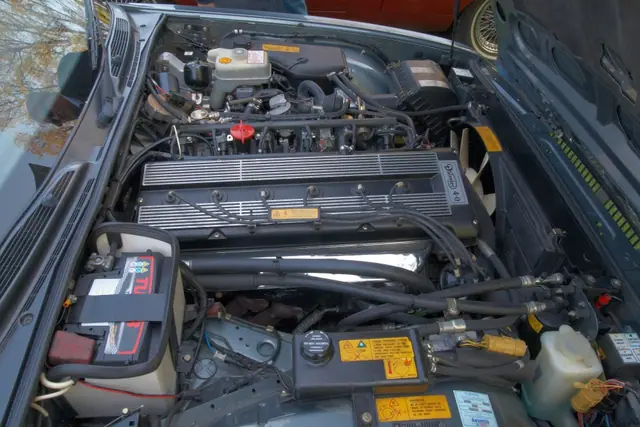
The new XJ was unveiled on 8 October 1986. It was more angular than its predecessor, with 25 per cent fewer body panels, making it lighter and stiffer, and it had electronic instruments. The Daimler was the best-equipped version: it had rectangular headlamps, the fluted grille and boot-lid plinth, and at the back two separate seats instead of a bench for three and fold-out wooden tables on the backs of the front seats. It was powered by a 3.6-litre six, a 4-litre from 1990, with an automatic gearbox and the J-gate selector, which allowed manual selection of gears and stayed on Jaguars until 2008. The Daimler name was not used in the US, so the same version was sold there as the Jaguar Vanden Plas.
The XJ40 body was allegedly engineered so that no V engine would fit, to stop British Leyland from imposing the Rover V8. As a result the V12 version only arrived in February 1993, when the Jaguar XJ12 and Daimler Double Six with a 6-litre engine were unveiled at the Amsterdam Motor Show; until then the old Series III Daimler Double-Six and XJ12 were built alongside. Early XJ40s suffered from electrical and build-quality problems, but the 1993 XJ6 was named the safest car in Britain in a government survey, and the Jaguar XJ40 was used by prime ministers John Major and Tony Blair.
Ford bought Jaguar in 1990, and in 1994 the XJ40 was replaced by the thoroughly updated X300 generation, with Daimler Six and Double Six versions. Daimlers were built until 2009, when the marque was retired.